Crushing and Screening Equipment Manufacturing: A Comprehensive Quotation and Procurement Guide
Introduction
In the global aggregates, mining, and construction industries, the terms “crushing” and “screening” refer to the essential mechanical processes that reduce large rock, ore, or recycled concrete into specified particle sizes and grades. The equipment used for these tasks—jaw crushers, cone crushers, impact crushers, vibrating screens, feeders, and conveyors—represents a significant capital investment. Consequently, the process of obtaining a crushing and screening equipment manufacturing quotation is not a mere administrative formality; it is a critical engineering, financial, and logistical exercise. A quotation is not simply a price list; it is a technical proposal, a delivery schedule, a warranty statement, and a risk assessment document.
This article provides a detailed, professional, and objective examination of the quotation process for crushing and screening equipment. It covers the scope of equipment, the technical parameters that influence pricing, the structure of a professional quotation, cost drivers, evaluation criteria, and common pitfalls. The goal is to equip procurement managers, project engineers, and quarry operators with the knowledge required to navigate this complex purchasing landscape effectively.
1. Scope of Equipment Covered in a Quotation
A quotation for crushing and screening equipment can range from a single standalone machine to a fully integrated, multi-stage processing plant. The scope is typically defined by the project’s throughput (tons per hour, TPH), feed material characteristics, and final product specifications. The major categories include:
- Primary Crushers: Jaw crushers and gyratory crushers. These handle large feed sizes (up to 1.5 meters) and produce a coarse output (150–300 mm). Quotations for primary units must include the feed opening dimensions, eccentric throw, and motor power.
- Secondary and Tertiary Crushers: Cone crushers, horizontal shaft impactors (HSI), and vertical shaft impactors (VSI). These reduce material to 10–80 mm. VSI units are often used for shaping and producing high-quality sand.
- Screening Equipment: Vibrating screens (inclined, horizontal, or banana type), trommel screens, and grizzly feeders. Key parameters include screen area (m²), number of decks, mesh size, and vibration frequency.
- Feeding and Conveying Systems: Apron feeders, belt feeders, and heavy-duty conveyor belts. These are often quoted as auxiliary items but are critical for plant integration.
- Washing Systems (Optional): Hydrocyclones, log washers, and sand screws, if the final product requires low clay content or specific cleanliness.
A professional quotation must clearly delineate which components are included (e.g., electric motors, starters, hydraulic power packs, chutes, and support structures) and which are excluded (e.g., site civil works, installation labor, or external power transformers).
2. Technical Parameters That Drive the Quotation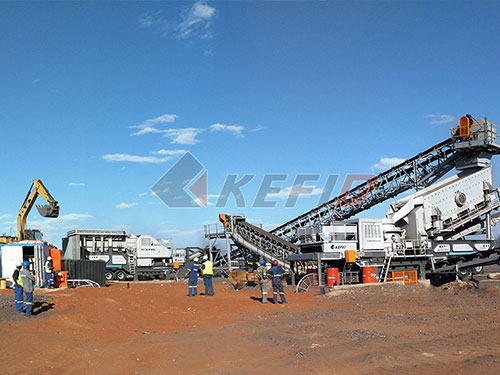
The manufacturing cost of crushing and screening equipment is heavily influenced by engineering specifications. A quotation is only valid when these parameters are precisely defined. The following are the most critical:
- Feed Material Properties: Hardness (Mohs scale or Bond Work Index), abrasiveness (silica content), moisture content, and clay content. A granite quarry (abrasive, high compressive strength) requires different wear parts and crusher geometry than a limestone quarry (soft, low abrasion). Quotations must state the assumed material density (typically 1.6 t/m³ for bulk aggregates) and the maximum feed size.
- Throughput Requirement: The required TPH determines the crusher size and power. For example, a 150 TPH jaw crusher will have a different price point than a 600 TPH unit. The quotation should specify whether the TPH is based on closed-side setting (CSS) or open-side setting (OSS) and whether it refers to feed rate or product rate.
- Product Gradation: The desired final product size distribution (e.g., 0–5 mm, 5–20 mm, 20–40 mm) dictates the number of crushing stages and the screen deck configuration. A quotation for a single-stage plant is simpler than for a three-stage plant with recirculation.
- Power Supply and Environmental Compliance: Motors may be specified for 50 Hz or 60 Hz, and for voltages such as 380V, 415V, or 11kV. Additionally, dust suppression systems, noise reduction enclosures, and water spray systems are increasingly mandatory. These add significant cost and must be itemized.
- Mobility vs. Stationary: A quotation for a track-mounted mobile crusher (e.g., a Lokotrack-style unit) will include the diesel engine, hydraulic tracks, and onboard conveyors. A stationary plant quotation includes concrete foundations, steel structures, and fixed chutes. Mobile units are generally 20–40% more expensive per ton of capacity due to the added mobility systems.
3. Structure of a Professional Manufacturing Quotation
A credible manufacturer’s quotation should not be a one-page email. It must be a structured document containing at least the following sections:
- Executive Summary: A brief description of the proposed solution, total price, and validity period (typically 30–60 days).
- Technical Specification Sheet: A detailed list of each equipment item, including model number, dimensions, weight, motor power, and capacity tables. This section must align with the client’s process flow diagram.
- Scope of Supply: A clear list of what is included (e.g., crusher body, main shaft, mantle, concave, lubrication system, control panel) and what is optional (e.g., remote monitoring, spare wear parts, special paint).
- Exclusions: A list of items not included, such as site preparation, crane hire, installation supervision (unless specified), commissioning consumables, and import duties.
- Commercial Terms: Price in a specified currency (USD, EUR, CNY), Incoterms (e.g., FOB, CIF, EXW), payment schedule (e.g., 30% advance, 60% before shipment, 10% after commissioning), and delivery lead time (e.g., 12–16 weeks).
- Warranty and After-Sales Support: Standard warranty (usually 12–24 months from commissioning or 18 months from shipment, whichever is earlier), availability of spare parts, and response time for technical support.
- Drawings and Documentation: The quotation should state that general arrangement drawings, foundation loads, and electrical schematics will be provided upon order confirmation.
4. Cost Drivers and Pricing Logic
Understanding why a quotation is priced at a certain level is essential for negotiation. The major cost components are:
- Raw Materials and Castings: The crusher main frame, shafts, and wear liners are made of high-grade steel (e.g., Manganese steel for wear parts, 42CrMo for shafts). Global steel price volatility directly impacts quotations.
- Machining and Fabrication: Large-scale CNC machining, heat treatment, and welding are labor-intensive. Countries with lower labor costs (e.g., China, India) often offer lower base prices but may have higher freight costs.
- Hydraulic and Electrical Components: Premium brands (e.g., Bosch Rexroth, Siemens, ABB) cost more but offer higher reliability. A quotation that specifies “or equivalent” allows the manufacturer to substitute cheaper components, which may affect performance.
- Engineering and Design: Customized plants require significant engineering hours. A standard, proven design is cheaper than a bespoke solution.
- Freight and Logistics: For international shipments, the quotation must include packing (e.g., shrink-wrapped, wooden crates, or open-top containers), sea freight, and marine insurance. Heavy items (over 30 tons) may require flat-rack containers or break-bulk shipping, which is expensive.
- Compliance and Certification: CE marking, ISO 9001, or GOST certification adds administrative and testing costs.
5. Evaluation Criteria for Quotations
When comparing quotations from multiple manufacturers, procurement teams should not focus solely on the lowest price. A weighted evaluation matrix is recommended, with the following criteria:
- Technical Compliance (30%): Does the equipment meet the required TPH, product size, and power consumption? Are the wear parts designed for the specific material?
- Total Cost of Ownership (25%): Include estimated operating costs (power consumption per ton, wear part replacement frequency), maintenance costs, and residual value.
- Delivery Lead Time (15%): A shorter lead time may justify a higher price if the project has a tight schedule.
- After-Sales Support (15%): Availability of local service engineers, spare parts stock, and training programs.
- Warranty and Performance Guarantees (10%): Does the manufacturer guarantee throughput and product gradation? What is the penalty for non-performance?
- Financial Terms (5%): Flexible payment schedules and bank guarantees.
6. Common Pitfalls in the Quotation Process
- Ambiguous Scope: A quotation that does not explicitly state the feed size or required CSS may lead to underpowered equipment. Always request a process flow diagram and a material test report.
- Hidden Costs: Freight, customs clearance, installation tools, and first-fill lubricants are often excluded. Ask for a “fully landed cost” quotation.
- Wear Part Life Claims: Some manufacturers quote unrealistic wear life (e.g., 5000 hours) to win the order. Request a reference list of similar applications and their actual wear life.
- Performance Guarantees: Ensure the quotation includes a performance test at the manufacturer’s facility (e.g., a dry test run) and a field test protocol. If the equipment fails to meet the guaranteed TPH, the contract should specify remedies.
- Currency and Indexation: For long lead times, steel prices may fluctuate. A quotation with a fixed price for 6 months is preferable. Alternatively, a price adjustment clause based on a published steel index can be agreed upon.
7. The Role of Digital Tools and Simulation
Modern manufacturers increasingly use discrete element method (DEM) simulation and computational fluid dynamics (CFD) to optimize crusher chamber design and screen efficiency. When requesting a quotation, clients should ask whether the manufacturer has performed a simulation for the specific feed material. This adds credibility to the performance claims. Additionally, some manufacturers offer digital twins—virtual replicas of the plant that allow clients to simulate different operating scenarios before purchase. While this may increase the engineering cost, it significantly reduces the risk of underperformance.
8. Conclusion
A crushing and screening equipment manufacturing quotation is a multi-faceted document that requires careful preparation and scrutiny. It is not merely a price but a technical and commercial contract that defines the success of a mining or construction project. Procurement professionals must provide detailed material specifications, throughput requirements, and environmental constraints to receive accurate quotes. Conversely, manufacturers must present transparent, itemized quotations that clearly state inclusions, exclusions, and performance guarantees.
By understanding the technical parameters, cost drivers, and evaluation criteria outlined in this article, buyers can make informed decisions that balance upfront capital expenditure with long-term operational efficiency. The lowest quotation is rarely the most economical over a 10-year equipment life. A well-structured quotation, supported by robust engineering data and realistic delivery schedules, is the foundation of a profitable and sustainable crushing operation. Ultimately, the goal is not just to purchase a machine, but to secure a reliable production partner.
