
Eco-Friendly Iron Ore Crushing Plant Procurement: A Comprehensive Guide to Sustainable Capital Investment
Introduction
The global steel industry is undergoing a paradigm shift. Driven by tightening environmental regulations, carbon border adjustment mechanisms (CBAM), and corporate net-zero commitments, the procurement of iron ore crushing plants is no longer a purely engineering or financial decision—it is a strategic environmental one. Iron ore crushing, the first stage of beneficiation, is traditionally energy-intensive, dust-generating, and water-consuming. However, the emergence of eco-friendly technologies has transformed this segment, offering procurement managers, mining engineers, and sustainability officers a viable path to reduce the Scope 1 and Scope 2 emissions of their upstream operations.
This article provides a professional, objective, and detailed examination of the procurement process for eco-friendly iron ore crushing plants. It covers regulatory drivers, key technological specifications, environmental performance metrics, total cost of ownership (TCO) analysis, vendor evaluation criteria, and risk mitigation strategies. The goal is to equip decision-makers with a structured framework for acquiring equipment that balances operational efficiency with ecological responsibility.
1. Regulatory and Market Drivers: Why Eco-Friendly Is Now Mandatory
The procurement of crushing equipment is increasingly influenced by a complex web of international and regional regulations. The European Union’s CBAM, which began its transitional phase in October 2023, requires importers of iron, steel, and related products to report embedded emissions. While CBAM initially applies to direct emissions, indirect emissions from electricity consumption—which dominate crushing operations—will be included from 2026. Consequently, a crushing plant powered by diesel or grid electricity with a high carbon intensity will render the final steel product less competitive in regulated markets.
Beyond CBAM, national environmental standards in major mining jurisdictions (e.g., Australia’s EPA guidelines, Canada’s Metal and Diamond Mining Effluent Regulations, and China’s Ultra-Low Emission standards for the steel industry) impose strict limits on particulate matter (PM10 and PM2.5), nitrogen oxides (NOx), and noise levels. For example, China’s 2020 Ultra-Low Emission standard mandates that all ore crushing and screening processes achieve a dust concentration of no more than 10 mg/Nm³. Non-compliant plants face fines, forced shutdowns, or loss of export licenses.
Therefore, the procurement specification must be written with these regulatory thresholds as baseline requirements, not optional enhancements. An eco-friendly plant is not a premium add-on; it is a compliance necessity for any operation with international market exposure.
2. Core Technological Components of an Eco-Friendly Crushing Plant
An eco-friendly iron ore crushing plant is defined by its ability to minimize energy consumption, suppress dust at the source, reduce water usage, and lower noise emissions. The following are the critical subsystems that procurement teams must evaluate:
2.1 Primary Crusher Selection: High-Pressure Grinding Rolls (HPGR) vs. Gyratory
Traditional jaw and gyratory crushers are robust but energy-inefficient, often consuming 0.5–1.5 kWh per tonne of ore. In contrast, High-Pressure Grinding Rolls (HPGR) have emerged as the preferred eco-friendly alternative for competent iron ore. HPGR operates by compressing the ore bed between two counter-rotating rolls, generating micro-cracks that reduce downstream grinding energy by 20–30%. For a plant processing 20 million tonnes per year, this translates to annual electricity savings of 10–15 GWh—equivalent to the annual consumption of 1,000–1,500 households.
However, HPGR is not universally superior. For extremely hard, abrasive ores (e.g., BIF-hosted magnetite), a modern gyratory crusher with variable frequency drives (VFDs) and load-sensing hydraulics may still be more reliable. Procurement must therefore include a comprehensive ore characterization study (Bond Work Index, abrasion index) to determine the optimal primary crushing technology.
2.2 Dust Suppression Systems: Dry Fog vs. Water Spray
The most significant environmental challenge in crushing is fugitive dust. Conventional water spray systems consume large volumes of water (often 1–2 m³ per tonne of ore) and can lead to slurry handling issues. Eco-friendly alternatives include:
Procurement specifications should mandate a minimum dust capture efficiency of 99% at all transfer points, with a maximum respirable dust concentration of 0.05 mg/m³ at the plant boundary.
2.3 Energy Recovery and Renewable Integration
Modern eco-friendly plants are designed as micro-grids. Key features include:
2.4 Water Management: Closed-Loop Systems
Iron ore crushing typically requires water for dust suppression and washing. An eco-friendly plant must operate on a closed-loop water system. This involves:
The procurement specification should require a water consumption target of less than 0.1 m³ per tonne of ore processed, with zero liquid discharge to the environment.
3. Environmental Performance Metrics and Verification
To objectively compare bids, procurement teams must define quantifiable Key Performance Indicators (KPIs). These should be included in the tender document as mandatory acceptance criteria:
| Metric | Unit | Eco-Friendly Benchmark | Verification Method |
|---|---|---|---|
| Specific Energy Consumption (SEC) | kWh/t | ≤ 0.8 kWh/t for primary + secondary | On-site power meters during 72-hour performance test |
| Dust Emission (PM10) | mg/Nm³ | ≤ 10 mg/Nm³ at stack; ≤ 0.05 mg/m³ at boundary | ISO 9096 isokinetic sampling |
| Noise Level | dB(A) | ≤ 75 dB(A) at 1 meter from crusher housing | ISO 9612 measurement |
| Water Consumption | m³/t | ≤ 0.1 m³/t (make-up water) | Flow meters on fresh water inlet |
| Equipment Availability | % | ≥ 92% (excluding scheduled maintenance) | SCADA data over 6-month trial |
| Recyclability Rate of Plant Steel | % | ≥ 95% of structural steel is recyclable | Vendor declaration + material certificates |
These KPIs must be contractually binding. The procurement contract should include a liquidated damages clause for failure to meet the SEC or dust emission targets during the performance acceptance test.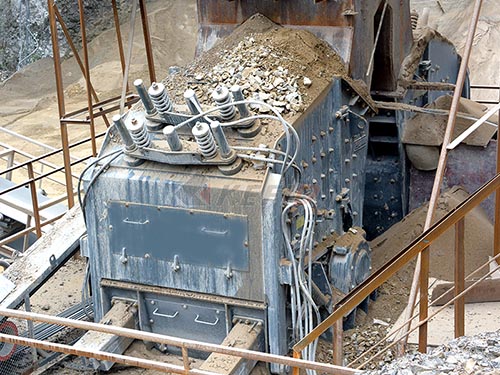
4. Total Cost of Ownership (TCO) Analysis
Eco-friendly equipment often carries a 10–20% higher initial capital expenditure (CAPEX) compared to conventional alternatives. However, a rigorous TCO analysis over a 15-year asset life reveals that the lifecycle cost is frequently lower. The TCO model must include:
A well-structured TCO model should show a payback period of 3–5 years for the eco-friendly premium, with a net present value (NPV) positive outcome at a 10% discount rate.
5. Vendor Evaluation and Due Diligence
Selecting the right supplier is as critical as selecting the right technology. The procurement process should use a weighted scoring matrix that goes beyond price. Recommended criteria and weights are:
During due diligence, procurement teams should conduct site visits to at least two reference installations. They should verify the actual SEC and dust emission data from the plant’s SCADA system, not just the vendor’s marketing brochures. Additionally, they should interview the plant’s environmental manager to understand real-world operational challenges.
6. Risk Mitigation and Contractual Safeguards
Eco-friendly technologies, while proven, carry specific risks that must be contractually managed:
7. Conclusion and Strategic Recommendations
The procurement of an eco-friendly iron ore crushing plant is a complex, multi-disciplinary endeavor that requires alignment between engineering, finance, and sustainability departments. It is no longer sufficient to purchase the cheapest crusher; the procurement must be viewed as a long-term investment in regulatory resilience, operational efficiency, and corporate reputation.
Strategic recommendations for procurement leaders:
In conclusion, eco-friendly iron ore crushing plant procurement is not merely a technical exercise—it is a strategic imperative. By adopting the framework outlined in this article, organizations can secure equipment that delivers superior operational performance while significantly reducing their environmental footprint, thereby ensuring long-term license to operate in an increasingly carbon-constrained world. The upfront effort in rigorous specification, TCO analysis, and vendor due diligence will yield dividends in reduced energy bills, regulatory compliance, and enhanced stakeholder trust for decades to come.
If you have any questions about our products, please feel free to contact us. We take all inquiries and suggestions very seriously.