
Sustainable Stone Crusher Plant Producers: Engineering the Future of Aggregate Manufacturing
Introduction: The Imperative for Sustainability in Crushing
The global construction and infrastructure sectors are undergoing a paradigm shift, driven by an urgent need to decarbonize and minimize environmental footprints. At the heart of this transformation lies the aggregate industry—the producer of crushed stone, sand, and gravel—which forms the literal foundation of modern civilization. Historically, stone crushing plants have been perceived as necessary but environmentally intrusive: dusty, noisy, energy-intensive, and water-wasteful. However, a new generation of sustainable stone crusher plant producers is redefining this narrative. These producers are not merely adding a “green” label; they are fundamentally re-engineering the entire value chain—from primary blasting to final screening—to achieve circularity, energy efficiency, and ecological harmony.
This article provides a comprehensive, technical, and objective examination of what constitutes a sustainable stone crusher plant producer. It explores the core pillars of sustainability—energy, water, emissions, waste, and social responsibility—and details the innovative technologies and operational strategies that distinguish these leaders from conventional operators. The analysis is grounded in current industry standards, emerging regulations, and the practical realities of heavy machinery.
Defining “Sustainable” in the Context of Stone Crushing
Sustainability in this sector is not a single metric but a multi-dimensional framework. A truly sustainable producer adheres to the principles of the Triple Bottom Line: Planet, People, and Profit. Specifically, this translates into:
Pillar I: Energy Efficiency and Decarbonization
The crushing process is inherently energy-intensive. Primary jaw crushers, cone crushers, and high-pressure grinding rolls (HPGR) consume massive amounts of electricity. Sustainable producers attack this challenge from three angles:
A. Electrification and Hybridization
The most significant shift is the move away from diesel-hydraulic drives toward fully electric or hybrid power systems. Leading producers now offer track-mounted crushers with integrated electric motors that can be plugged into the grid or run on high-capacity battery packs. For example, the latest generation of mobile jaw crushers uses electric-drive systems for the crusher itself, while only the tracks are hydraulically driven. This reduces on-site diesel consumption by up to 70%. Furthermore, some producers are integrating solar photovoltaic arrays into stationary plant designs, particularly in sun-rich regions, to offset grid electricity usage.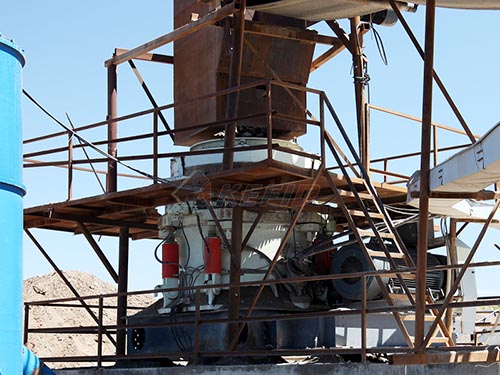
B. Intelligent Load Management and Automation
Sustainability is not just about the hardware; it is about the software. Advanced automation systems, such as Metso’s IC™ process control or Sandvik’s AutoMine® for crushing, continuously monitor the feed rate, crusher cavity level, and power draw. By optimizing the “choke feed” condition and preventing empty or overloaded runs, these systems ensure that the crusher operates at its most energy-efficient point. Variable Frequency Drives (VFDs) on conveyors and screens allow motors to run at optimal speeds, reducing energy consumption by 15-25% compared to fixed-speed operation.
C. High-Efficiency Comminution
Sustainable producers are adopting comminution technologies that reduce energy per ton of finished product. For instance, using a high-pressure grinding roll (HPGR) ahead of a ball mill (in aggregate applications, a vertical shaft impactor or VSI) can reduce total energy consumption by 20-30% compared to traditional cone crushing alone. Additionally, the use of “smart” crusher wear parts—such as optimized chamber geometries—reduces the energy required to fracture rock, as less energy is lost as heat and sound.
Pillar II: Water Conservation and Closed-Loop Systems
Water is critical for dust suppression and washing aggregates. Traditional plants use once-through water systems, discharging slurry into settling ponds. Sustainable producers implement closed-loop water management:
Pillar III: Emission Control and Air Quality
Dust is the most visible environmental impact of a crushing plant. Sustainable producers employ a multi-layered suppression strategy:
A. Enclosed Transfer Points and Chutes
All conveyor transfer points are fully enclosed with rubber sealing skirts and dust-collection hoods. This prevents fugitive dust from escaping at the moment of impact.
B. High-Pressure Atomized Water Sprays
Instead of high-volume, low-pressure sprays that waste water and create mud, sustainable plants use atomized misting systems. These produce micro-droplets (50-100 microns) that bind with dust particles in the air and cause them to settle. These systems are activated by sensors that detect particulate levels, ensuring water is only used when needed.
C. Baghouse Filtration and Cartridge Collectors
For the most critical points—such as the crusher discharge and screen decks—sustainable producers install industrial baghouse filters. These systems use pulse-jet cleaning to remove dust from filter bags, achieving collection efficiencies of over 99.9%. The captured dust is often recycled as a filler product in asphalt or cement.
D. Noise Reduction Engineering
Noise is a form of pollution. Sustainable producers design their plants with acoustic enclosures around primary crushers, use rubber-lined screen decks instead of steel, and install silencers on engine exhausts. Furthermore, they strategically orient the plant and use natural berms (earth mounds) to act as sound barriers for nearby residences.
Pillar IV: Circular Economy and Waste Valorization
A sustainable stone crusher plant producer views “waste” as a misplaced resource. The key strategies include:
Pillar V: Digitalization, Monitoring, and Transparency
Sustainability cannot be managed without measurement. Leading producers deploy comprehensive IoT (Internet of Things) ecosystems:
Case Study: The “Green Crushing” Model
To illustrate, consider a hypothetical but representative sustainable producer operating in Europe. This facility:
This plant achieves a 40% lower carbon footprint per ton compared to a conventional plant, while maintaining a 5% higher profit margin due to lower energy costs and premium pricing for certified green aggregates.
Challenges and Future Outlook
Despite the clear benefits, the transition to sustainable production faces hurdles. The initial capital expenditure for electric drives, baghouses, and water treatment systems is 15-25% higher than conventional equipment. Additionally, the lack of standardized global regulations for “green aggregates” creates market confusion. However, the trajectory is unmistakable. The European Union’s Carbon Border Adjustment Mechanism (CBAM) and similar policies will soon penalize high-carbon imports. Furthermore, major construction contractors are now mandating EPDs for all materials.
The future of sustainable stone crusher plant producers lies in carbon capture, utilization, and storage (CCUS) at the plant level, and in the development of fully autonomous, AI-driven plants that optimize every aspect of operation in real-time. Additionally, the use of hydrogen fuel cells for mobile crushers is on the horizon, promising zero-emission mobility for remote sites.
Conclusion
Sustainable stone crusher plant producers are not a niche segment; they are the new standard-bearers of the industry. By integrating advanced electrification, closed-loop water systems, rigorous dust control, circular waste practices, and transparent digital monitoring, they prove that environmental responsibility and industrial profitability are not mutually exclusive. For stakeholders—from quarry owners to government regulators—the message is clear: the future of construction is not just about building taller or faster, but about building smarter and cleaner. The producers who embrace this comprehensive sustainability framework today will not only survive the regulatory tightening of tomorrow but will thrive as the preferred suppliers of a decarbonized world.
If you have any questions about our products, please feel free to contact us. We take all inquiries and suggestions very seriously.