Eco-Friendly 250-300 TPH Stone Crushing Plant Suppliers: A Comprehensive Guide to Sustainable Aggregate Production
The global demand for construction aggregates—crushed stone, sand, and gravel—continues to rise, driven by urbanization, infrastructure development, and industrial growth. In response, the stone crushing industry has evolved from simple, dusty operations into sophisticated, high-capacity systems. Among these, the 250-300 tons per hour (TPH) stone crushing plant represents a sweet spot for medium-to-large scale projects, balancing productivity with operational manageability. However, the environmental footprint of such plants—noise, dust, water consumption, and carbon emissions—has become a critical concern. This article provides a detailed, professional, and objective analysis of eco-friendly 250-300 TPH stone crushing plant suppliers, examining their technologies, sustainability practices, global market presence, and selection criteria.
1. Understanding the 250-300 TPH Stone Crushing Plant
A 250-300 TPH stone crushing plant is a fixed or mobile aggregate processing system designed to reduce large rocks (e.g., granite, basalt, limestone, river stone) into specified sizes for construction use. Typical output includes 0-5 mm (manufactured sand), 5-10 mm, 10-20 mm, and 20-40 mm aggregates. The plant usually comprises:
- Primary crusher (jaw crusher or gyratory crusher)
- Secondary crusher (cone crusher or impact crusher)
- Tertiary crusher (vertical shaft impactor – VSI or high-pressure grinding rolls)
- Vibrating screens (multi-deck for size separation)
- Conveyors (belt systems for material transport)
- Control systems (PLC-based automation)
- Dust suppression and collection systems
- Water recycling and sludge management units
At 250-300 TPH, the plant is suitable for large road projects, commercial concrete batching plants, and regional aggregate supply hubs. The environmental impact of such a plant, if not properly designed, can be significant. Hence, the term “eco-friendly” has become a key differentiator among suppliers.
2. Defining “Eco-Friendly” in Stone Crushing
An eco-friendly stone crushing plant is not merely a marketing label. It encompasses measurable environmental performance across several dimensions:
- Dust Control: Fugitive dust from crushing, screening, and conveying is a major pollutant. Eco-friendly plants integrate water spray systems, mist cannons, baghouse dust collectors, and enclosed conveyor belts to reduce particulate matter (PM2.5 and PM10) emissions by over 90%.
- Noise Reduction: Crushers and screens generate high noise levels (often >90 dB). Suppliers use soundproof enclosures, rubber liners, vibration dampeners, and low-noise motors to bring noise levels below 75 dB at the plant boundary.
- Water Conservation: Wet crushing processes consume large volumes of water for dust suppression and washing. Eco-friendly plants employ closed-loop water recycling systems, settling ponds, and filter presses to reuse up to 95% of process water.
- Energy Efficiency: Crushing is energy-intensive. Modern plants use variable frequency drives (VFDs), high-efficiency motors, optimized crusher chamber designs, and intelligent load management to reduce kWh per ton of output by 15-30%.
- Carbon Footprint: Suppliers are increasingly offering hybrid or fully electric plants (instead of diesel-powered), integrating solar panels for auxiliary power, and using low-carbon steel in fabrication.
- Waste Management: Eco-friendly plants minimize waste by recycling crusher fines into manufactured sand or using them for brick making, and by ensuring proper disposal of lubricants and wear parts.
3. Key Suppliers of Eco-Friendly 250-300 TPH Stone Crushing Plants
The global market for stone crushing equipment is dominated by a mix of multinational corporations and regional specialists. Below is an objective overview of leading suppliers known for offering eco-friendly 250-300 TPH plants.
3.1. Metso Outotec (Finland)
Metso Outotec is a global leader in sustainable aggregate processing. Their Lokotrack® series (mobile) and Nordberg® series (stationary) include 250-300 TPH configurations. Eco-friendly features include:
- Metso IC™ intelligent control for optimal energy use.
- Water-efficient wet systems with recycling.
- Low-noise designs (e.g., rubber screens, soundproofed crushers).
- Carbon-neutral targets: Metso Outotec has committed to science-based emission reduction targets and offers lifecycle carbon footprint analysis.
- Circular economy: They provide refurbishment and upgrade services to extend plant life.
3.2. Sandvik (Sweden)
Sandvik’s CH and CS series cone crushers and QJ and UJ jaw crushers are widely used in 250-300 TPH plants. Their eco-friendly approach includes:
- Automation and remote monitoring to reduce idle time and fuel consumption.
- Eco-mode in crushers that adjusts speed based on load.
- Dust encapsulation systems and water misting as standard options.
- Electric drive options for mobile plants, reducing diesel use.
- Sandvik Sustainability Framework includes goals for water reduction and waste minimization.
3.3. Terex MPS (USA)
Terex MPS (including brands like Cedarapids, Simplicity, and Canica) offers robust 250-300 TPH plants. Their eco-friendly initiatives:
- Modular plant designs that reduce on-site construction waste.
- High-efficiency vibrating screens with reduced power draw.
- Integrated dust collection using dry baghouse filters.
- Water recycling systems for washing plants.
- Compliance with EPA and EU emission standards.
3.4. Thyssenkrupp (Germany)
Thyssenkrupp’s Industrial Solutions division provides large-scale stationary plants. For 250-300 TPH, they offer:
- Energy-optimized crushers (e.g., gyratory and jaw crushers with hydraulic adjustment).
- Closed-loop water systems with zero liquid discharge (ZLD) capability.
- Noise reduction through encapsulation and vibration isolation.
- Digital twin technology for predictive maintenance, reducing unplanned downtime and energy waste.
3.5. Astec Industries (USA)
Astec (including brands like KPI-JCI, Telsmith, and Osborn) is a major supplier in North America and globally. Their eco-friendly 250-300 TPH plants feature:
- Hybrid electric/diesel power options.
- Patented dust control systems (e.g., the “Dust Boss” misting system).
- Recycling capabilities for asphalt and concrete rubble.
- Low-profile designs that reduce land disturbance.
3.6. Chinese Suppliers (e.g., SBM, Zenith, Liming Heavy Industry)
Chinese manufacturers have made significant strides in eco-friendly designs, driven by stricter domestic environmental regulations. Notable suppliers:
- SBM (Shanghai Shibang Machinery): Offers the VSI5X and VSI6X series with energy-saving features, dust-proof seals, and water recycling. Their 250-300 TPH plants are widely exported.
- Zenith (Shanghai Zenith Minerals): Provides C6X jaw crushers and HPT cone crushers with hydraulic systems that reduce oil leakage. They offer complete dust suppression packages.
- Liming Heavy Industry: Focuses on mobile and stationary plants with low energy consumption and integrated dust collectors. Their plants often include sand-making modules to reduce waste.
3.7. Regional Specialists (India, Turkey, South Africa)
- India: Suppliers like Larsen & Toubro (L&T), Puzzolana, and Mewar Hitech offer cost-effective 250-300 TPH plants with basic eco-features (water spray, enclosed conveyors). Puzzolana has introduced hybrid electric plants for lower emissions.
- Turkey: Fabo, Constmach, and General Makina produce mobile and stationary plants with European-standard dust and noise control. They are popular in the Middle East and Africa.
- South Africa: Osborn (part of Astec) and Pilot Crushtec provide rugged plants with dust suppression and water recycling, tailored for arid regions.
4. Technology Innovations Driving Eco-Friendliness
Beyond standard features, several cutting-edge technologies are being adopted by leading suppliers: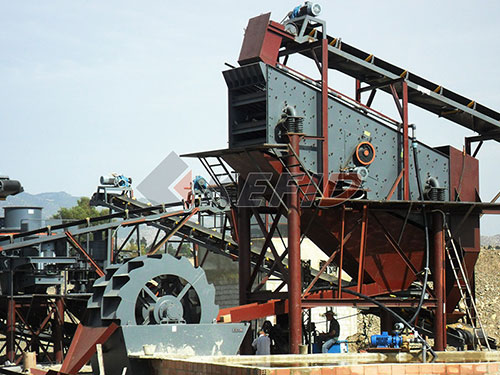
- Artificial Intelligence (AI) and Machine Learning: AI-based crusher control systems (e.g., Metso’s VisioRock™) optimize feed rate and crusher settings in real time, reducing energy consumption and wear.
- Electrification and Hybridization: Fully electric plants eliminate diesel emissions. Hybrid plants use diesel generators only for peak loads, reducing fuel consumption by 40-60%.
- Dry Processing: For water-scarce regions, dry screening and air classification (e.g., using air separators or dry washing systems) eliminate water use entirely.
- Advanced Wear Materials: Suppliers use high-chrome alloys, ceramic composites, and polymer liners to extend crusher wear life, reducing waste and replacement frequency.
- IoT and Remote Monitoring: Sensors on crushers, screens, and conveyors provide real-time data on energy use, dust levels, and water consumption, enabling proactive environmental management.
5. Selection Criteria for Eco-Friendly 250-300 TPH Plants
When evaluating suppliers, buyers should consider the following objective factors:
- Certifications: Look for ISO 14001 (environmental management), ISO 50001 (energy management), and CE or UL certifications. Some suppliers also have EPD (Environmental Product Declarations) for their equipment.
- Local Compliance: Ensure the plant meets local emission and noise regulations (e.g., EU Directive 2000/14/EC, US EPA NSPS, Chinese GB standards).
- Lifecycle Cost: Eco-friendly plants may have higher upfront costs but lower operating costs due to energy savings, reduced water bills, and fewer fines.
- After-Sales Support: Suppliers should provide training on eco-friendly operation, spare parts for dust and water systems, and remote monitoring services.
- Customization: The plant should be adaptable to the specific raw material (hardness, abrasiveness) and site conditions (water availability, topography).
- Warranty and Performance Guarantees: Reputable suppliers offer guarantees on dust emission levels (e.g., <50 mg/Nm³), noise levels (<75 dB at 1m), and energy consumption (e.g., <0.8 kWh/ton).
6. Case Studies: Eco-Friendly 250-300 TPH Plants in Operation
- Case 1: Limestone Quarry in Germany (Thyssenkrupp): A stationary 280 TPH plant uses a closed-loop water system with a filter press, reducing freshwater consumption by 90%. Dust emissions are below 20 mg/Nm³, and noise is contained within a 3-meter-high sound barrier. Energy consumption is 0.75 kWh/ton.
- Case 2: Granite Crushing in India (Puzzolana): A mobile 250 TPH plant operates on a hybrid electric system, using grid power during the day and a diesel generator only for night shifts. Water is recycled from a settling pond, and dust is controlled by a mist cannon. The plant achieved a 30% reduction in carbon emissions compared to a conventional diesel-only plant.
- Case 3: River Stone Processing in Vietnam (Metso Outotec): A 300 TPH plant uses Metso’s Lokotrack LT120 and LT330 with electric drives. The plant is equipped with a Metso IC™ system that optimizes crusher settings, reducing energy use by 18%. Dust is collected by a baghouse, and water is reused from a settling tank.
7. Challenges and Future Outlook
Despite progress, eco-friendly stone crushing faces challenges:
- Higher initial investment: Green technologies (e.g., baghouse filters, VFDs, water recycling) can add 10-20% to plant cost.
- Maintenance complexity: Dust collectors, water pumps, and sensors require skilled technicians.
- Regulatory variability: In some regions, environmental enforcement is weak, reducing the incentive for eco-friendly investments.
However, the trend is clear. Stricter global regulations (e.g., EU’s Green Deal, China’s “Blue Sky” campaign), corporate sustainability goals, and rising energy costs are driving demand for eco-friendly plants. Suppliers are responding with modular, scalable, and increasingly digital solutions. By 2030, it is expected that over 70% of new 250-300 TPH stone crushing plants will incorporate at least three major eco-friendly features (dust control, water recycling, and energy optimization).
8. Conclusion
Selecting an eco-friendly 250-300 TPH stone crushing plant supplier requires a thorough evaluation of environmental performance, technological capability, and long-term operational economics. Leading suppliers like Metso Outotec, Sandvik, Thyssenkrupp, and Astec offer proven solutions with advanced dust, noise, water, and energy management. Regional players from China, India, and Turkey are also improving rapidly, offering cost-competitive options. For project owners, investing in an eco-friendly plant is not just a regulatory necessity but a strategic advantage—reducing operational costs, enhancing community relations, and future-proofing against tightening environmental standards. As the industry moves toward net-zero emissions and circular economy principles, the 250-300 TPH stone crushing plant will remain a cornerstone of sustainable infrastructure development.
