
The Role and Landscape of Eco-Friendly Gyratory Crusher Dealers
The global mining and aggregates industries are under unprecedented pressure to decarbonize. As primary crushing assets, gyratory crushers sit at the front end of nearly every large-scale hard-rock mining operation and quarry, processing thousands of tonnes per hour. Their energy consumption, dust generation, and maintenance-related environmental footprint are therefore significant. In response, a new class of equipment suppliers—eco-friendly gyratory crusher dealers—has emerged, acting as intermediaries between manufacturers and operators while championing sustainability across the equipment lifecycle. This article examines what these dealers do, how they differ from conventional suppliers, the technologies they promote, and the practical considerations for operators seeking to procure through them.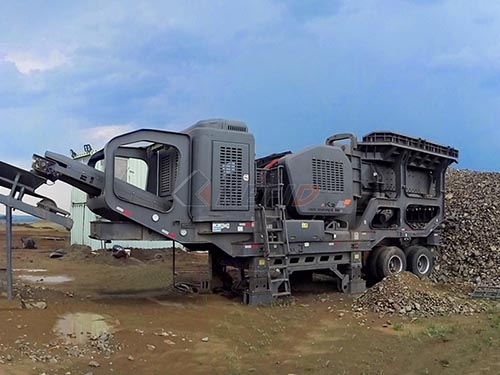
Defining the Eco-Friendly Gyratory Crusher Dealer
A gyratory crusher dealer is traditionally a regional or national distributor responsible for sales, spare parts, and service support of crushing equipment. The “eco-friendly” designation extends this role in several concrete ways. First, such dealers prioritize equipment configurations that reduce energy intensity—typically through optimized eccentric speeds, chamber geometry, and variable-frequency drive (VFD) integration that allows the crusher to match throughput to downstream demand rather than running at fixed maximum load. Second, they supply and support dust-suppression and containment systems, including enclosed feed arrangements, water-mist or dry-fog systems, and negative-pressure dust collection integrated with the crusher’s discharge zone. Third, they offer lifecycle services—wear-part optimization, liner profile management, and predictive maintenance—that extend asset life and reduce the embodied carbon associated with replacement components.
Critically, an eco-friendly dealer does not merely resell a manufacturer’s product line. The credible ones maintain engineering capability to size and configure a crusher for a specific ore body or aggregate deposit, because the single largest determinant of a gyratory crusher’s energy efficiency is correct application: a unit oversized for the duty runs inefficiently, while an undersized unit bottlenecks the circuit and forces excess secondary crushing.
Technology Portfolios Promoted by These Dealers
Dealers operating in this space typically represent manufacturers that have made measurable sustainability commitments. The technological levers most commonly promoted include:
Selection Criteria for Operators
Procuring through an eco-friendly dealer requires diligence beyond price comparison. Operators should verify several dimensions. Technical competence: Does the dealer employ application engineers who can conduct bond-work-index and drop-weight tests, or at least interpret them, to recommend chamber configuration? Service infrastructure: Proximity of parts warehouses and field-service teams directly affects availability, and availability is a sustainability metric—a crusher that is down forces substitute processing with higher emissions per tonne. Verified performance claims: Dealers should provide reference installations with measured specific-energy and dust-emission data, not merely manufacturer specifications. Regulatory fluency: In jurisdictions with tightening particulate-matter and noise regulations, dealers who can support permitting documentation and emissions testing add real value. Total cost of ownership modeling: Credible dealers will model energy, wear-part, and maintenance costs over a ten-to-twenty-year horizon, since the environmental and financial cases for efficiency investments rise with asset life.
Market Dynamics and Regional Variation
The eco-friendly dealer segment is most developed in markets with strong regulatory drivers—the European Union, Australia, Canada, and parts of Latin America—where carbon pricing, mine-site emissions caps, and community acceptance conditions shape purchasing decisions. In these regions, dealers increasingly bundle energy-efficiency guarantees and emissions-performance clauses into supply contracts. In rapidly expanding markets across Africa and Southeast Asia, the emphasis tends toward dust control and workforce safety, with energy efficiency a secondary but growing consideration as grid reliability and power costs bite. Original equipment manufacturers are themselves consolidating dealer networks and imposing sustainability certification requirements, which is gradually standardizing what “eco-friendly” means in practice.
Challenges and Outlook
The segment faces headwinds. Capital budgets for primary crushing are large and infrequent, and operators may resist premium pricing for efficiency features whose payback depends on utilization rates and energy tariffs. Greenwashing is a genuine risk: some distributors apply the label without substantive engineering or service capability, making third-party verification and reference checks essential. Supply-chain constraints on VFDs and advanced alloys can also delay delivery of the very configurations that deliver the environmental benefit.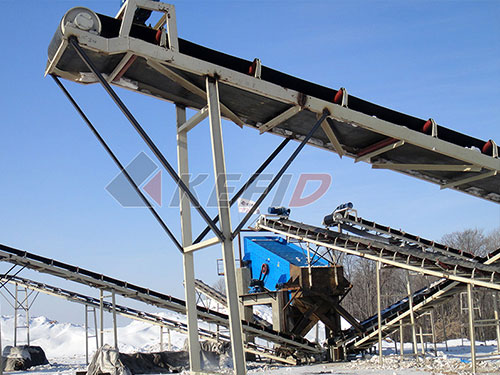
Nevertheless, the trajectory is clear. As mines and quarries face Scope 1 and Scope 2 emissions reporting, rising energy costs, and stricter dust regulation, the gyratory crusher—the single largest power consumer in most primary circuits—becomes an obvious target for improvement. Eco-friendly gyratory crusher dealers are positioning themselves as the channel through which efficiency upgrades, dust-control integration, and lifecycle service reach the market. Operators who engage them with rigorous technical due diligence, demand verified performance data, and negotiate long-term service agreements will capture the dual benefit of lower operating costs and demonstrable environmental performance. Those who treat the label as marketing will find, as with most sustainability claims in heavy industry, that the hardware and the service behind it are what ultimately matter.
If you have any questions about our products, please feel free to contact us. We take all inquiries and suggestions very seriously.