
White Label Gold Ore Crushing Equipment: Best Price and Strategic Sourcing for Modern Mining Operations
Introduction
In the competitive landscape of global mining and mineral processing, the ability to source high-quality, cost-effective crushing equipment is a critical determinant of project viability. For distributors, mining contractors, and project developers, the concept of white label gold ore crushing equipment has emerged as a strategic avenue to secure best pricing without compromising on performance or reliability. This article provides a professional, objective analysis of white label crushing solutions, their technical specifications, procurement strategies, and the factors that influence the best price for gold ore processing equipment.
Defining White Label Gold Ore Crushing Equipment
White label equipment refers to machinery manufactured by a specialized original equipment manufacturer (OEM) but branded and sold under the distributor’s or buyer’s own label. In the context of gold ore crushing, this includes jaw crushers, cone crushers, impact crushers, hammer mills, and roller crushers that are produced to standardized specifications but can be customized for branding, color, and minor design modifications.
Unlike counterfeit or low-quality generic equipment, legitimate white label gold ore crushing equipment is manufactured in certified facilities, often using the same production lines and quality control protocols as premium branded machinery. The primary difference lies in the absence of the manufacturer’s brand premium, which can account for 20% to 40% of the final retail price. This makes white label sourcing particularly attractive for buyers seeking the best price without sacrificing engineering integrity.
Why Gold Ore Crushing Requires Specialized Equipment
Gold ore presents unique challenges in comminution. It varies widely in hardness, abrasiveness, and moisture content, and often contains nuggets or fine disseminated particles that require careful liberation. The crushing circuit must achieve a consistent product size to optimize downstream processes such as grinding, gravity separation, or cyanidation.
Key requirements for gold ore crushing equipment include:
White label manufacturers that specialize in gold ore applications can deliver these features at a lower cost by eliminating brand licensing fees and streamlining distribution.
Types of White Label Gold Ore Crushing Equipment
Jaw Crushers – Primary crushing workhorses. White label jaw crushers typically range from 5 t/h to 1,200 t/h capacity. Best prices are achieved when buyers order standardized models (e.g., PE 600×900 or PE 750×1060) in bulk.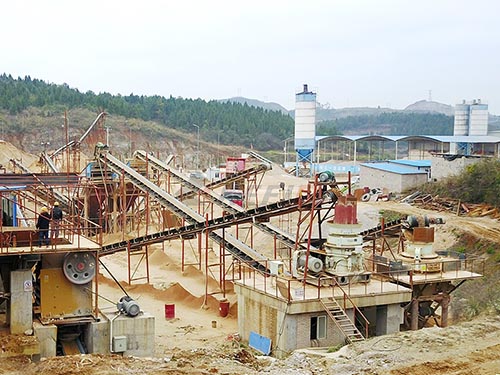
Cone Crushers – For secondary and tertiary crushing. White label cone crushers (spring, hydraulic, or multi-cylinder) offer excellent reduction ratios and product shape. Price varies with automation level and alloy content.
Impact Crushers – Horizontal shaft impactors (HSI) and vertical shaft impactors (VSI) are used for softer gold ores or to produce manufactured sand. White label versions can be 30–50% cheaper than branded equivalents.
Hammer Mills and Roll Crushers – Suitable for small-scale or artisanal mining operations. White label units are often modular and easy to transport, with best pricing for containerized orders.
Factors Influencing the Best Price for White Label Equipment
Achieving the best price for white label gold ore crushing equipment requires an understanding of the cost drivers:
Procurement Strategy for Best Price and Quality
To secure white label gold ore crushing equipment at the best price, follow this structured approach:
Define Technical Requirements: Feed size, product size, capacity, ore hardness (Bond Work Index), and environmental conditions. Provide these to at least three white label manufacturers.
Request for Quotation (RFQ) with Total Cost of Ownership (TCO): Ask for unit price, spare parts kit price, installation cost, and estimated maintenance over 5 years. The lowest initial price may not be the best value.
Audit Manufacturing Capability: Request factory videos, ISO certificates, and references from other gold mining clients. A legitimate white label OEM will welcome third-party inspection.
Negotiate Branding and Packaging: Confirm that the equipment can be delivered with your logo, manual, and nameplate. This is standard for white label arrangements and should not incur large fees.
Pilot Testing: For large orders, insist on a pilot test with your ore sample. Reputable manufacturers will provide test reports from their laboratory crushers.
Contractual Protections: Include clauses on delivery time, performance guarantees (e.g., throughput within ±5%), and penalty for non-compliance. Best price contracts also specify spare parts pricing for 3 years.
Case Study: White Label vs. Branded Equipment Cost Comparison
Consider a 200 t/h gold ore crushing plant requiring a primary jaw crusher and a secondary cone crusher.
| Item | Branded Equipment (USD) | White Label Equipment (USD) |
|---|---|---|
| Jaw Crusher (PE 750×1060) | 85,000 | 52,000 |
| Cone Crusher (HP 200) | 120,000 | 78,000 |
| Spare Parts Kit (1 year) | 18,000 | 11,000 |
| Installation & Commissioning | 15,000 | 12,000 |
| Total | 238,000 | 153,000 |
The white label option delivers a 35.7% cost reduction while maintaining comparable specifications (same motor power, throughput, and wear material grades). Over a 5-year operation, additional savings on spare parts and service can exceed $100,000.
Risks and Mitigation in White Label Sourcing
While white label equipment offers best pricing, buyers must mitigate risks:
The Future of White Label Crushing Equipment
As gold mining expands in Africa, South America, and Central Asia, demand for cost-effective crushing solutions will grow. White label manufacturing hubs in China, India, and Turkey are increasingly adopting Industry 4.0 practices—CNC machining, robotic welding, and IoT-enabled testing—to match branded quality. The best price will increasingly be found through direct partnerships with these advanced white label OEMs, bypassing traditional distributors.
Furthermore, modular and mobile white label crushing plants are gaining traction for small-scale gold mining, where rapid deployment and low capital expenditure are paramount. Prices for containerized jaw-plus-cone circuits now start under $80,000, making them accessible to artisanal and junior mining companies.
Conclusion
White label gold ore crushing equipment represents a pragmatic, economically sound choice for buyers who prioritize the best price without sacrificing technical performance. By understanding the types of crushers available, the factors that drive pricing, and the procurement strategies that ensure quality, mining professionals can achieve substantial savings—often 30–40% compared to branded alternatives. The key is to treat white label sourcing as a strategic partnership: demand transparency, test before you buy, and secure after-sales support. In doing so, you unlock the dual benefits of cost efficiency and operational reliability, positioning your gold project for long-term profitability.
For distributors and project developers, the white label model also offers branding flexibility and margin control. As the global mining equipment market continues to mature, white label gold ore crushing equipment will not be a compromise—it will be the smart default for best-price procurement.
If you have any questions about our products, please feel free to contact us. We take all inquiries and suggestions very seriously.