
Title: Comprehensive Analysis of CE Marked 250–300 TPH Stone Crushing Plant: Engineering, Compliance, and Global Export Standards
Introduction
In the global construction and mining industries, the demand for high-capacity, reliable, and regulatory-compliant stone crushing plants has never been greater. Among the most sought-after configurations is the CE Marked 250–300 TPH (tons per hour) stone crushing plant. This specific capacity range is widely recognized as the “sweet spot” for medium-to-large scale infrastructure projects, including road construction, dam building, and commercial aggregate production. The CE marking, a mandatory conformity indicator for products sold within the European Economic Area (EEA), signifies that the plant meets stringent health, safety, and environmental protection standards. This article provides a detailed, professional, and objective examination of the CE Marked 250–300 TPH stone crushing plant from the perspective of an exporter, covering its design, key components, compliance requirements, operational advantages, and market considerations.
1. Understanding the 250–300 TPH Capacity Range
The 250–300 TPH stone crushing plant is designed to process hard rock, limestone, granite, basalt, and river stone into various sizes of aggregates (e.g., 0–5 mm, 5–10 mm, 10–20 mm, 20–40 mm). This capacity is ideal for projects requiring a steady supply of high-quality material without the extreme capital and operational costs associated with 500+ TPH mega-plants. The plant typically operates in two or three crushing stages: primary, secondary, and sometimes tertiary.
The entire system is synchronized through a central electrical control panel, with belt conveyors, vibrating feeders, and vibrating screens ensuring continuous flow.
2. CE Marking: What It Means for Exporters
CE marking is not a quality mark but a declaration by the manufacturer that the product complies with all applicable European Union (EU) directives. For stone crushing plants, the relevant directives include:
A CE Marked 250–300 TPH stone crushing plant must undergo a conformity assessment procedure, often involving a Notified Body (e.g., TÜV, SGS, or Bureau Veritas) to verify design, manufacturing, and documentation. The exporter must provide a Declaration of Conformity, technical file, and user manual in the language of the destination country.
3. Key Components and Their CE Compliance
3.1 Jaw Crusher (Primary)
3.2 Cone Crusher (Secondary)
3.3 Vibrating Screen (Multi-deck)
3.4 Belt Conveyors
3.5 Electrical Control System
4. Operational Advantages of a CE Marked Plant
4.1 Safety
CE compliance ensures that all rotating parts are guarded, emergency stops are accessible, and electrical systems are grounded. This reduces workplace accidents and liability for the exporter and end-user.
4.2 Environmental Compliance
CE marking often requires adherence to EU noise and dust emission limits. Plants are equipped with dust suppression systems (water spray or bag filters) and soundproofing enclosures, making them suitable for environmentally sensitive regions.
4.3 Interchangeability and Spare Parts
CE Marked plants are designed with standardized components (e.g., ISO metric bolts, standardized bearings, and hydraulic fittings). This simplifies global spare parts sourcing and reduces downtime.
4.4 Energy Efficiency
Modern 250–300 TPH plants incorporate variable frequency drives (VFDs) on conveyors and crushers, optimizing power consumption. A well-designed plant can achieve 0.5–0.8 kWh per ton of crushed material.
5. Export Logistics and Documentation
Exporting a CE Marked 250–300 TPH stone crushing plant involves several critical steps:
5.1 Packaging and Shipping
5.2 Required Documentation
5.3 Customs and Tariffs
Import duties vary by country. For example, the EU may impose 0–3% duty on crushing machinery, while some African nations charge 10–20%. CE marking can sometimes expedite customs clearance as it demonstrates compliance with recognized standards.
6. Market Demand and Target Regions
6.1 Europe
Despite being a mature market, Europe requires CE Marked plants for domestic use. Exporters from Asia (e.g., China, India) can compete by offering cost-effective CE-compliant solutions.
6.2 Middle East and Africa
Countries like Saudi Arabia, UAE, Nigeria, and Kenya are investing heavily in infrastructure (e.g., NEOM, Lagos-Ibadan railway). CE marking is often a prerequisite for government tenders.
6.3 Southeast Asia
Indonesia, Vietnam, and the Philippines have growing aggregate demands. CE certification is increasingly valued as a mark of quality and safety.
6.4 South America
Brazil and Chile require compliance with local standards (e.g., NR-12 in Brazil), but CE marking is often accepted as equivalent.
7. Challenges and Solutions for Exporters
7.1 High Initial Cost
CE certification and testing can add 5–10% to the plant cost. Solution: Partner with accredited testing labs in the manufacturing country to reduce costs.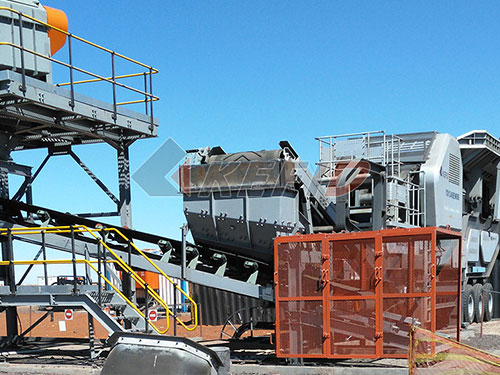
7.2 Technical Adaptation
EU standards may differ from local norms (e.g., voltage, frequency). Solution: Offer transformers (e.g., 380V/50Hz to 480V/60Hz) and multilingual control panels.
7.3 After-Sales Service
Remote troubleshooting is essential. Solution: Provide PLC remote access, video manuals, and a network of local service agents.
8. Case Study: A Typical CE Marked 250–300 TPH Plant Configuration
Project: Aggregate supply for a highway project in Germany.
Material: Granite (compressive strength 250 MPa).
Plant Layout:
9. Conclusion
The CE Marked 250–300 TPH stone crushing plant represents a critical intersection of engineering excellence, regulatory compliance, and commercial viability. For exporters, offering such a plant is not merely about delivering machinery; it is about providing a turnkey solution that meets the highest safety and environmental standards in the global market. The CE marking serves as a passport to European and many other high-value markets, while the 250–300 TPH capacity ensures optimal productivity for medium-to-large projects. By investing in robust design, thorough documentation, and reliable after-sales support, exporters can establish a strong reputation in this competitive sector. As infrastructure demands continue to rise worldwide, the CE Marked 250–300 TPH stone crushing plant will remain a cornerstone of modern aggregate production.
If you have any questions about our products, please feel free to contact us. We take all inquiries and suggestions very seriously.