Wholesale 250–300 TPH Stone Crushing Plant: Best Price, Engineering Considerations, and Market Dynamics
The demand for high-capacity stone crushing plants has grown exponentially over the past decade, driven by rapid urbanization, infrastructure megaprojects, and the expansion of the construction aggregates sector. Among the various capacity tiers, the 250–300 tons per hour (TPH) range occupies a strategic sweet spot. It is large enough to serve commercial quarries, road base producers, and ready-mix concrete suppliers, yet flexible enough to be configured for hard rock, river gravel, or recycled concrete. For buyers seeking a wholesale 250–300 TPH stone crushing plant at the best price, the decision is not merely about the lowest quote. It involves a complex trade-off between capital expenditure (CAPEX), operational efficiency, spare parts availability, energy consumption, and long-term reliability. This article provides a professional, objective, and detailed analysis of the 250–300 TPH crushing plant market, focusing on price determinants, equipment configuration, quality benchmarks, and procurement strategies.
1. Understanding the 250–300 TPH Crushing Plant: Core Configuration
A typical 250–300 TPH plant is not a single machine but a fully integrated system. The standard configuration includes: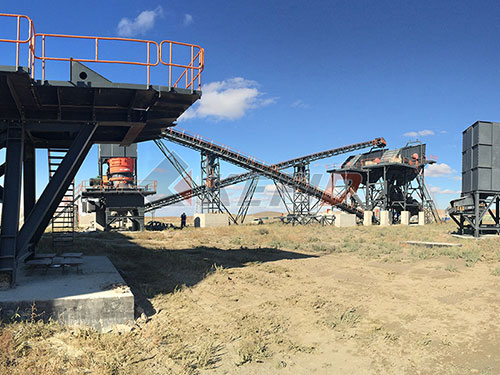
- Primary Jaw Crusher (e.g., PE-900×1200 or equivalent) – reduces run-of-mine (ROM) feed of up to 750 mm to a 150–200 mm product.
- Secondary Cone Crusher (e.g., CS160, HP300, or Symons 4¼ ft) – further reduces material to 40–60 mm.
- Tertiary VSI (Vertical Shaft Impactor) or High-Efficiency Cone Crusher – produces final aggregates (0–5 mm, 5–10 mm, 10–20 mm, 20–30 mm) with proper cubical shape.
- Vibrating Screens (2–3 decks, typically 2YK2460 or 3YK2470) – for classification.
- Feeders, Conveyors, and Hopper – with a vibrating grizzly feeder for removing fines.
- Control Panel and Electrical System – either manual or PLC-based automation.
The exact configuration depends on the feed material’s hardness (e.g., granite, basalt, limestone) and the required product gradation. For hard abrasive rock, a cone crusher is mandatory; for softer limestone, an impact crusher may suffice, reducing CAPEX. A 250–300 TPH plant typically occupies 1,500–2,500 square meters and requires a total installed power of 400–600 kW.
2. What Does “Best Price” Actually Mean in the Wholesale Market?
The term “best price” is often misinterpreted as the lowest initial invoice. In the wholesale crushing equipment market, the true cost of ownership (TCO) over a 5–10 year period is the only objective metric. The TCO includes: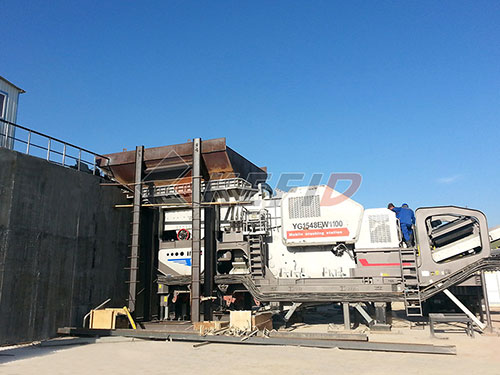
- Initial purchase price (ex-works, FOB, or CIF).
- Freight, customs, and installation (often 15–30% of equipment cost for international buyers).
- Consumables – jaw plates, cone liners, blow bars, and screen meshes. These can cost $0.05–$0.15 per ton of crushed material.
- Energy consumption – at 0.6–0.8 kWh per ton, a 300 TPH plant operating 10 hours/day consumes 1,800–2,400 kWh daily. At $0.10/kWh, this is $180–$240/day.
- Maintenance labor and downtime – a poorly built plant can have 20% unscheduled downtime, effectively reducing output to 240 TPH.
Therefore, a wholesale price of $350,000 for a low-quality plant may result in a TCO of $1.2 million over 5 years, while a $500,000 premium plant with better steel thickness, higher-grade bearings, and superior welding could have a TCO of $900,000. The “best price” is the one that minimizes TCO per ton of finished aggregate.
3. Price Ranges and Determinants for 250–300 TPH Plants
As of 2025, the global wholesale price for a complete 250–300 TPH stationary crushing plant varies significantly by region and brand:
- Chinese manufacturers (e.g., SBM, Zenith, Liming Heavy Industry, or smaller OEMs): $280,000 – $450,000 (ex-works). These plants are widely exported to Africa, Southeast Asia, the Middle East, and South America. The price includes standard jaw + cone + VSI configuration, but excludes civil works and installation.
- European brands (e.g., Metso Outotec, Sandvik, Kleemann): $800,000 – $1.5 million. These offer higher automation, better after-sales support, and longer service life, but the premium is 2–3 times.
- Indian and Turkish manufacturers: $350,000 – $550,000. These are increasingly competitive, offering a balance between cost and quality.
- Semi-mobile or skid-mounted versions: add 10–20% to the base price due to structural steel and hydraulic legs.
Key price determinants include:
- Brand reputation and warranty (typically 12–24 months).
- Steel plate thickness (e.g., 20 mm vs. 30 mm for the main frame).
- Bearing quality (SKF/FAG vs. domestic Chinese bearings).
- Motor brand (Siemens, ABB, or WEG vs. local motors).
- Automation level (manual vs. PLC with remote monitoring).
- Spare parts availability – a plant with non-standard parts will have higher downtime.
4. Hidden Costs and Procurement Pitfalls
Buyers seeking the “best price” often fall into several traps:
- Under-specified motors: A 250 TPH plant requires a 250 kW jaw crusher motor, not a 200 kW one. Underpowered motors lead to frequent stalls and higher energy losses.
- Inadequate screen area: A 2YK2460 screen (2.4m × 6m) is the minimum for 300 TPH. Using a smaller screen creates bottlenecks, reducing actual throughput to 200 TPH.
- Cheap conveyor belts: Low-grade belts (e.g., NN-100 instead of EP-200) stretch, causing misalignment and material spillage. This adds labor costs and safety hazards.
- Ignoring the electrical panel: A poorly designed control panel with substandard contactors and overload relays can cause random shutdowns. The electrical system should be 15–20% of the total plant cost, not 5%.
- Freight and installation underestimation: For a 250–300 TPH plant, the total shipping weight is 180–250 tons. Ocean freight from China to West Africa or South America can cost $15,000–$30,000. Installation with a local crane and welding crew can add another $40,000–$80,000.
A professional buyer should request a detailed bill of materials (BOM) and a power consumption calculation from the supplier. If the supplier cannot provide these, the price is likely not transparent.
5. Operational Efficiency: The Real Price Driver
A 250–300 TPH plant’s actual output depends on feed size, moisture, and crusher settings. For example, a jaw crusher with a closed side setting (CSS) of 100 mm will produce 250 TPH, but if the CSS is reduced to 75 mm to get finer product, throughput drops to 180 TPH. Therefore, the plant must be designed with a buffer capacity – i.e., the secondary and tertiary crushers should be rated at 110–120% of the primary output.
Energy efficiency is another critical factor. Modern cone crushers with hydraulic adjustment and automatic overload protection can reduce energy consumption by 15–20% compared to older Symons-type crushers. VSI crushers, while excellent for cubical shape, consume 0.8–1.2 kWh per ton – significantly higher than a cone crusher (0.4–0.6 kWh). For a 300 TPH plant operating 6,000 hours per year, a 0.2 kWh/ton difference translates to 360,000 kWh annually – at $0.10/kWh, that’s $36,000 per year. Over 5 years, this is $180,000, which can exceed the initial price difference between a cheap and a premium plant.
6. Wholesale Buying Strategies: How to Secure the Best Price
To obtain a genuinely competitive wholesale price for a 250–300 TPH plant, follow these professional steps:
- Request multiple quotations from at least 5 suppliers – 2 from China, 1 from India, 1 from Turkey, and 1 from Europe. Use a standardized technical specification sheet to ensure apples-to-apples comparison.
- Negotiate on ex-works basis first, then compare freight quotes. Many suppliers inflate the FOB price but offer “free installation” – which is often subcontracted to unqualified local workers.
- Ask for a performance guarantee – e.g., “guaranteed 280 TPH at 80% passing 20 mm for granite with 200 MPa compressive strength.” If the supplier refuses, that is a red flag.
- Consider a used or refurbished plant – a well-maintained 2018 Metso plant at $500,000 may outperform a new Chinese plant at $350,000. However, verify the wear parts’ remaining life and the availability of OEM parts.
- Bundle spare parts – negotiate a 2-year consumables package (jaw plates, cone liners, screen meshes) at a fixed price. This protects you from future price inflation.
- Inspect the factory – if possible, visit the manufacturing facility. Check welding quality, paint thickness, and whether the assembly is done with torque wrenches. A factory that uses air impact wrenches on critical bolts is not a quality producer.
- Use a third-party inspection service – for $2,000–$5,000, an independent inspector (e.g., SGS, Bureau Veritas) can verify the equipment against the contract before shipment.
7. Case Study: Cost Comparison for a 300 TPH Granite Plant
Let us model a realistic scenario for a quarry in Nigeria (granite, 180 MPa compressive strength, feed size 600 mm, product: 0–5, 5–12, 12–20, 20–30 mm).
- Option A (Low-cost Chinese plant): Ex-works price $320,000. Freight to Lagos $22,000. Installation $45,000. Total CAPEX = $387,000. Expected service life: 8 years. Annual maintenance cost: $35,000. Energy cost: $85,000/year. Total 5-year TCO = $387,000 + (5 × $35,000) + (5 × $85,000) = $987,000.
- Option B (Premium Chinese/Indian plant): Ex-works price $480,000. Freight $25,000. Installation $60,000. Total CAPEX = $565,000. Service life: 12 years. Annual maintenance: $22,000. Energy cost: $70,000/year (better motors and automation). Total 5-year TCO = $565,000 + (5 × $22,000) + (5 × $70,000) = $1,025,000.
- Option C (European brand, used): Purchase price $550,000 (2019 model, 4,000 hours). Freight $30,000. Installation $50,000. Total CAPEX = $630,000. Annual maintenance: $18,000. Energy cost: $65,000/year. Total 5-year TCO = $630,000 + (5 × $18,000) + (5 × $65,000) = $1,045,000.
At first glance, Option A appears cheapest. However, if we factor in downtime – Option A has 15% unscheduled downtime (18 days/year), Option B has 5% (6 days/year), Option C has 3% (4 days/year) – the lost production at $10/ton profit is significant. For a 300 TPH plant operating 10 hours/day, 300 days/year, the annual production is 900,000 tons. Option A loses 135,000 tons/year (worth $1.35 million in profit), Option B loses 45,000 tons ($450,000), Option C loses 27,000 tons ($270,000). Over 5 years, Option A’s true cost is $987,000 + $6.75 million lost profit = $7.74 million. Option B: $1.025M + $2.25M = $3.275M. Option C: $1.045M + $1.35M = $2.395M.
Conclusion: The “best price” is Option C (used European) if you have the capital, but Option B (premium new) is the most rational for most buyers. Option A is only viable if you have a dedicated maintenance team and can tolerate downtime.
8. Future Trends and Price Outlook
The global market for 250–300 TPH crushing plants is becoming more competitive. Chinese manufacturers are improving quality to capture higher-end markets, while European brands are introducing “plug-and-play” modular plants that reduce installation costs. Electric and hybrid drives are emerging, reducing diesel consumption for remote sites. Prices are expected to remain stable in 2025–2026, with a slight 3–5% increase due to steel and bearing costs. However, buyers can still secure favorable wholesale prices by ordering during off-peak seasons (Q1 and Q4) and by leveraging bulk purchase agreements for multiple plants.
9. Final Recommendations
To secure the wholesale 250–300 TPH stone crushing plant at the best price, do not focus solely on the invoice. Instead:
- Define your rock type, required output, and operating hours.
- Request a TCO analysis from each supplier.
- Insist on a performance test at the factory (with your material sample).
- Negotiate a comprehensive warranty covering wear parts for at least 1,000 hours.
- Plan for a 10% budget contingency for unforeseen civil works.
A well-selected 250–300 TPH plant, priced correctly, will pay for itself within 18–24 months in a high-demand aggregate market. The cheapest plant is rarely the most profitable. The best price is the one that delivers the lowest cost per ton over the plant’s economic life – and that requires engineering judgment, not just arithmetic.
