Custom Slag Crusher Plant Exporter: Engineering Sustainable Value from Industrial By-Products
In the global landscape of heavy industry, mining, and metallurgy, the efficient handling and processing of by-products are no longer an afterthought but a critical component of operational profitability and environmental stewardship. At the intersection of this demand stands the Custom Slag Crusher Plant Exporter, a specialized entity that provides tailored engineering solutions to transform slag—a challenging industrial residue—into valuable, marketable products. This article delves into the multifaceted role of these exporters, exploring the technological sophistication, economic rationale, and strategic importance of custom-designed slag crushing plants in modern circular economies.
Understanding Slag: From Waste to Resource
Slag is a non-metallic by-product generated during the smelting and refining of ores (blast furnace slag) or scrap metal (steelmaking slag). Historically viewed as waste requiring disposal, it is now recognized as a versatile material with applications in cement production (as a supplementary cementitious material), road construction (aggregate), rail ballast, and even agricultural soil conditioning. However, raw slag is heterogeneous in size, composition, and hardness, often containing metallic remnants (“tramp metal”). To convert it into consistent, specification-grade material, precise crushing, screening, separation, and sometimes grinding are required. A one-size-fits-all crusher is invariably inadequate for such a complex task.
The Imperative for Customization
This is where the Custom Slag Crusher Plant Exporter distinguishes itself from standard machinery suppliers. Customization is not a luxury; it is an operational necessity driven by several key variables: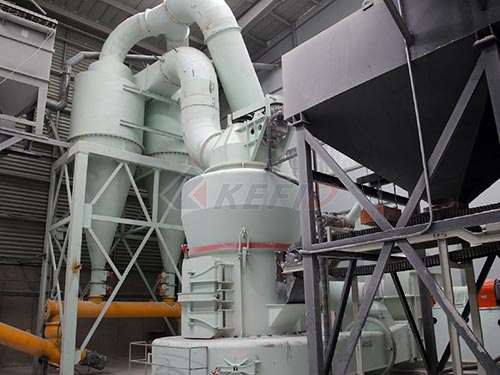
- Slag Characteristics: The plant design hinges on specific parameters: type (air-cooled/ granulated), abrasiveness, density, initial feed size (from large lumps to smaller fragments), and moisture content. A plant designed for dense, hard steel slag will differ fundamentally from one processing lighter blast furnace slag.
- Desired End Product: The configuration is dictated by output specifications—required sizes (e.g., 0-5mm for cement blend, 20-40mm for aggregate), shape (cubical vs. flaky), and purity (level of metal removal). Producing railway ballast demands different crushing stages than manufacturing fine sand substitutes.
- Capacity Requirements: Throughput needs range from modest 50-ton-per-hour setups for smaller mills to massive 500+ TPH systems for integrated steel plants.
- Site Constraints & Mobility: Solutions may need to be stationary (fixed foundation), semi-mobile (modular skid-mounted), or fully mobile (track-mounted), depending on space availability and whether processing occurs at a single legacy dump site or continuously at an active furnace outlet.
- Automation & Environmental Controls: Modern plants integrate dust suppression systems (like fog cannons or bag filters), noise enclosures, magnetic separators for metal recovery, and advanced PLC controls for efficiency and compliance with stringent environmental regulations.
The exporter’s core expertise lies in analyzing these variables holistically to engineer a cohesive system where primary crushing (often using robust jaw crushers), secondary/tertiary crushing (with cone or impact crushers), screening decks, conveyors, and separation units work in optimal synergy.
The Exporters’ Value Proposition: Beyond Machinery Shipment
A premier custom exporter functions as a total solution provider through a comprehensive service portfolio:
- Consultation & Feasibility Analysis: They begin with thorough site audits and material testing to establish technical viability and economic models.
- Process Engineering & Design: Using CAD and simulation software, engineers create detailed flow sheets and plant layouts to maximize yield and minimize bottlenecks.
- Manufacturing of Key Components: While some components may be sourced from specialized OEMs (like premium crushers from brands like Metso or Sandvik), the exporter typically manufactures structural frames, hoppers, chutes, conveyor galleries,and control cabins to exact specifications.
- System Integration & Procurement: They act as the single point of responsibility—integrating crushers,screens,magnets,dust collectors,and power systems into a turnkey package.
- Commissioning & Training: Expert technicians supervise on-site assembly,direct commissioning,and provide extensive operationaland maintenance training to local crews.
- After-Sales Support & Spare Parts Logistics: They establish reliable supply chains for critical wear parts (liners,bars,bearings) and offer remote diagnostic support,a crucial factor for clients in remote mining regions.
For international clients,the exporter also navigates complex logistics—overseeing containerization,RORO shipping,and customs clearance—ensuring the plant arrives completeand compliant with destination country regulations(e.g.,CE markingfor Europe).
Driving Forces in Global Demand
The marketfor customslag crusher plantsis expanding globally,due to converging trends:
- Circular Economy Regulations: Worldwide,policies are penalizing landfill disposalof industrial waste while incentivizing material recovery.Europe’s Green Dealand similar initiativesin Asiaand North America compel metallurgical producersto investin recycling infrastructure.
- Economic Incentives: Processed slag has direct commercial value.Selling high-quality aggregateor cement clinker replacementcreates anew revenue stream while eliminating disposal costs.The recovered ferrous metalcan be returnedto the furnace,yielding further savings.Custom plantsare capital investmentswith clearly demonstrable ROIs.
- Infrastructure Development Booms: Massive infrastructure projectsin emerging economies(SE Asia,Middle East,Africa) require huge volumesof construction aggregates.Slag aggregatesoffer a high-performance,sustainable alternative to quarried natural stone,pushing steelmakersto monetize their by-products.
- Corporate Sustainability Goals: Major corporations are publicly committingto reduced carbon footprintsand zero-waste targets.Utilizing slag in cement productiondramatically lowers CO2 emissionscomparedto traditional clinker manufacturing.This alignscorporate operationswith ESG(EnvironmentalSocial Governance)principles,a key factorfor investors.
Challenges & Strategic Considerations
The pathfor an exporteris not without hurdles:
- High Competition & Need for Differentiation: The marketincludes global crushing giantsand regional fabricators.Differentiators are deep process knowledgeproven performance datafrom reference installations,and lifecycle cost supportrather than just equipment price.
- Project Complexity & Risk Management: Large turnkey projects involve significant technical financialand execution risks.Robust project managementand clear contractual termsare essential.
- Navigating International Trade Dynamics: Tariffs currency fluctuationsand geopolitical tensionscan impact project viability.Agile exportersdiversify marketsand establish local partnershipsin key regions.
Conclusion: Partners in Industrial Sustainability
The roleof aCustom Slag Crusher Plant Exportertranscends thatof a simple equipment vendor.They are strategic engineering partnersenabling heavy industriesto close the material loop.What was oncea liability—pilesof slag—is transformedthrough their tailored technologyinto an assetthat drives profitabilityandsustainability simultaneously.As global resource pressures intensifyand environmental regulations tighten,the demandfor these sophisticatedmaterial recovery solutionswill only accelerate.The most successful exporterswill be those who combine mechanical engineering excellencewitha profound understandingof material science process economics anda commitmentto building long-term collaborative partnershipsacross the globe.They do not merely export machinery;they export engineered capabilitytoconvert industrial metabolism’s waste productsinto foundational materialsforthe future’s built environment
