
Title: The Chinese Coke Vibration Screen Assembly Plant: Engineering, Operations, and Industrial Significance
Introduction
In the global metallurgical industry, coke serves as a critical reducing agent and fuel in blast furnace ironmaking and foundry operations. The quality of coke—its size consistency, mechanical strength, and ash content—directly influences the efficiency of steel production and the environmental footprint of the process. Central to achieving these quality parameters is the equipment used for sizing and classification: the coke vibration screen. In China, which produces over half of the world’s coke, the design, assembly, and deployment of these screens have evolved into a specialized industrial sector. This article provides a detailed, professional, and objective examination of a Chinese coke vibration screen assembly plant, covering its operational structure, engineering principles, manufacturing processes, quality control, and its role within the broader coke-making supply chain.
1. The Role of Vibration Screens in Coke Processing
Before delving into the assembly plant itself, it is essential to understand the function of vibration screens in a coke plant. After coke is produced in a coke oven battery and quenched (either wet or dry), it undergoes crushing and screening. The objective is to separate the coke into distinct size fractions: blast furnace coke (typically 25–80 mm), nut coke (10–25 mm), coke breeze (0–10 mm), and other specialized grades. Vibration screens achieve this by imparting a controlled oscillatory motion to a deck of woven wire mesh or perforated plate. The material moves along the screen surface, with undersized particles passing through the apertures and oversized particles traveling to the discharge end.
In the harsh environment of a coke plant, screens must withstand high temperatures (especially if handling dry-quenched coke), abrasive coke particles, heavy impact loads, and continuous operation. Chinese assembly plants have therefore developed robust designs that emphasize durability, ease of maintenance, and high screening efficiency.
2. Plant Layout and Core Departments
A typical Chinese coke vibration screen assembly plant is a medium-to-large-scale industrial facility, often located in industrial clusters such as Henan, Hebei, Shandong, or Shanxi provinces—regions with a high concentration of coke and steel production. The plant is organized into several key departments:
Engineering and Design Office: This is the intellectual core of the plant. Engineers use CAD (Computer-Aided Design) and FEA (Finite Element Analysis) software to model screen dynamics, structural stress, and fatigue life. They customize designs based on client specifications, including screen deck area, number of decks (single, double, or triple), vibration amplitude, frequency, and material of construction (e.g., Q235 carbon steel, 16Mn wear-resistant steel, or stainless steel for corrosive environments).
Steel Fabrication Workshop: Here, raw steel plates, beams, and channels are cut, bent, welded, and assembled into the main screen body. Advanced techniques such as plasma cutting, robotic welding, and stress-relief heat treatment are employed to ensure structural integrity. The screen side plates, cross beams, and support frames are fabricated to tight tolerances, as any distortion can lead to uneven vibration and premature failure.
Vibration Mechanism Assembly Area: The heart of any vibration screen is its exciter system. Chinese plants typically manufacture two types: eccentric shaft exciters and vibrator motors. Eccentric shaft systems use a rotating shaft with adjustable counterweights to generate a linear or circular motion. Vibrator motors are simpler, with built-in eccentric weights on the motor shaft. The assembly area focuses on precision balancing, bearing installation (often using SKF, FAG, or domestic high-quality bearings), and lubrication system integration.
Screen Deck and Mesh Production: This department produces the actual screening surfaces. For heavy-duty coke applications, woven wire mesh with high-tensile steel wire (e.g., 65Mn or 72A) is common, often with a protective rubber or polyurethane coating to reduce wear. Alternatively, perforated polyurethane panels are used for their abrasion resistance and noise reduction. The assembly plant must ensure that mesh apertures are consistent and that tensioning systems (e.g., wedge bolts or spring-loaded tensioners) are correctly installed to prevent sagging.
Electrical and Control Systems Workshop: Modern vibration screens are equipped with variable frequency drives (VFDs) to adjust vibration frequency, as well as sensors for monitoring bearing temperature, vibration amplitude, and motor current. This workshop assembles control panels, wiring harnesses, and integrates PLC (Programmable Logic Controller) systems for automated start-up, shutdown, and fault detection.
Assembly and Testing Bay: This is where all components are brought together. The screen body is mounted on isolation springs (typically coil springs or air springs), the exciter is installed, and the screen decks are fitted. After assembly, each unit undergoes a rigorous test run. Vibration amplitude and direction are measured using accelerometers; noise levels are checked; and the screen is run for several hours to verify bearing temperature stability and structural resonance avoidance.
Quality Control (QC) and Inspection: QC is a continuous process throughout manufacturing. Incoming raw materials (steel, bearings, motors) are inspected for certifications. During fabrication, weld quality is checked via ultrasonic or magnetic particle testing. Final inspection includes dimensional verification, surface finish, and a functional performance test using simulated coke material (often crushed stone or gravel) to measure screening efficiency and throughput.
3. Engineering Considerations for Coke Applications
Chinese assembly plants have accumulated decades of experience in optimizing vibration screens for coke. Key engineering parameters include:
Vibration Pattern: For coke, a linear motion screen is most common because it provides a positive conveying action and efficient stratification. Circular motion screens are sometimes used for smaller fractions. The stroke (amplitude) is typically 6–10 mm, and the frequency ranges from 800 to 1200 RPM, depending on the material size and moisture content.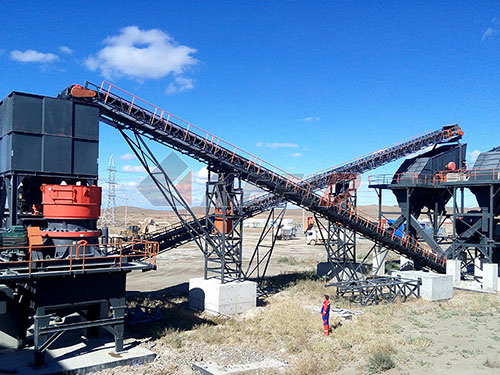
Deck Angle: The screen deck is usually inclined at 15–25 degrees. A steeper angle increases throughput but reduces efficiency; a shallower angle improves accuracy but may cause blinding (clogging of apertures) with fine, wet coke.
Material Handling: The feed box and discharge chutes are designed to minimize impact damage and wear. Rubber liners or ceramic tiles are often applied to high-wear zones. The plant also integrates dust collection ports to comply with Chinese environmental regulations, which have become increasingly stringent.
Modularity: Many Chinese plants offer modular screen designs that allow for quick replacement of worn decks or exciter units. This is critical in coke plants where downtime is extremely costly.
4. Quality Control and Standards
Chinese vibration screen assembly plants operate under a framework of national and international standards. Key references include:
In addition, plants serving export markets often comply with CE marking (European safety standards) or GOST (Russian standards). The QC department maintains records of every component, from bearing serial numbers to weld inspection reports, enabling full traceability.
5. Supply Chain and Customer Base
A Chinese coke vibration screen assembly plant sources raw materials from domestic steel mills (e.g., Baowu, HBIS) and specialized bearing manufacturers (e.g., Luoyang Bearing, C&U). Motors are often procured from established brands like Siemens, WEG, or domestic equivalents such as Dongfang Motor. The plant’s customers include:
After-sales service is a critical differentiator. Chinese plants typically offer on-site installation supervision, commissioning, and training. They also maintain a stock of spare parts (screen meshes, springs, bearings) for rapid dispatch.
6. Environmental and Safety Considerations
Modern Chinese assembly plants are increasingly focused on sustainability. During manufacturing, they implement waste recycling (steel scrap, used oils) and energy-efficient welding processes. The screens themselves are designed to reduce noise (through rubber-lined decks and vibration-damping mounts) and to minimize dust emissions (via enclosed designs and integrated dust extraction flanges). Safety features include emergency stop buttons, guarding on moving parts, and lockout/tagout procedures during maintenance.
7. Market Trends and Future Outlook
The Chinese coke vibration screen assembly industry is undergoing several transformations:
Intelligentization: Plants are incorporating IoT (Internet of Things) sensors and cloud-based monitoring systems. Screens can now transmit real-time data on vibration patterns, bearing health, and throughput to a central control room, enabling predictive maintenance.
Larger Capacities: As coke plants scale up (e.g., 6-meter and 7-meter tall ovens), screens with widths of 3–4 meters and lengths of 8–10 meters are becoming standard, handling up to 500 tons per hour.
Export Growth: Chinese manufacturers are aggressively expanding into Southeast Asia, Africa, and the Middle East, where new steel and coke projects are underway. Competitive pricing, combined with improved quality and after-sales support, has made Chinese screens a preferred choice.
Material Innovation: The use of high-chromium cast iron, ceramic composites, and advanced polymers for wear parts is extending screen life and reducing operating costs for end users.
Conclusion
A Chinese coke vibration screen assembly plant is far more than a simple fabrication workshop. It is a sophisticated engineering and manufacturing hub that integrates mechanical design, precision fabrication, electrical automation, and rigorous quality control. These plants play an indispensable role in the global coke and steel supply chain by ensuring that coke is accurately sized for optimal blast furnace performance. As China continues to lead in coke production and equipment manufacturing, these assembly plants will remain at the forefront of innovation, driven by the dual imperatives of operational efficiency and environmental responsibility. For any entity involved in coke production—whether in China or abroad—understanding the capabilities and standards of these assembly plants is essential for making informed procurement and operational decisions.
If you have any questions about our products, please feel free to contact us. We take all inquiries and suggestions very seriously.