
Title: White Label Slag Crusher Plant Bulk Order: Comprehensive Analysis for Industrial Procurement
Introduction
In the heavy industrial and metallurgical sectors, the efficient processing of by-products such as slag is critical for both environmental compliance and economic value recovery. Slag, a non-metallic by-product generated during steelmaking, smelting, or refining processes, contains valuable metallic components that can be reclaimed through crushing and screening. For companies seeking to establish or expand their slag processing capabilities without investing in proprietary brand development, the concept of a “White Label Slag Crusher Plant” has emerged as a strategic procurement model. This article provides a detailed, objective examination of white label slag crusher plants, with a specific focus on bulk order considerations, technical specifications, quality assurance, supply chain logistics, and cost-benefit analysis.
1. Understanding White Label Slag Crusher Plants
A white label slag crusher plant refers to a complete crushing and screening system manufactured by an Original Equipment Manufacturer (OEM) but sold under the buyer’s brand name. The buyer (often a steel mill, recycling company, or construction material supplier) specifies the technical requirements, while the OEM handles design, fabrication, assembly, and testing. The final product is delivered with the buyer’s branding, manuals, and warranty documentation.
This model is particularly advantageous for companies that wish to offer slag processing solutions as part of their service portfolio but lack in-house engineering expertise or manufacturing capacity. By placing a bulk order, buyers can achieve economies of scale, standardized equipment across multiple sites, and consistent after-sales support.
2. Technical Specifications of a Standard Slag Crusher Plant
A typical slag crusher plant is designed to handle abrasive, high-hardness materials such as blast furnace slag, steel slag, or ferroalloy slag. The core components include:
For white label orders, the buyer can specify modifications such as customized feed hopper dimensions, control panel interfaces (PLC or manual), or mobile versus stationary configurations.
3. Bulk Order Considerations
3.1 Minimum Order Quantities (MOQs)
Bulk orders typically start at 5 to 10 units for stationary plants, or 20 to 50 units for smaller mobile or semi-mobile configurations. MOQs depend on the complexity of the design and the OEM’s production capacity. Buyers should negotiate MOQs that align with their deployment timeline and storage capabilities.
3.2 Standardization vs. Customization
One of the key advantages of a bulk order is the ability to standardize components across multiple plants. This reduces spare parts inventory, simplifies maintenance training, and lowers per-unit cost. However, buyers must ensure that the standardized design is flexible enough to handle variations in slag feed characteristics (e.g., moisture content, metal content, particle size distribution). A thorough site survey and material analysis should precede the final design freeze.
3.3 Quality Control and Testing
For white label orders, the buyer assumes responsibility for the end-user’s satisfaction, even though the OEM manufactures the equipment. Therefore, rigorous quality control is essential. Key steps include:
3.4 Lead Time and Production Scheduling
Bulk orders for slag crusher plants typically require 12 to 20 weeks from order confirmation to delivery, depending on the OEM’s workload and component sourcing. Buyers should request a detailed production schedule with milestones (e.g., steel cutting, welding, assembly, painting, testing). Late delivery penalties should be clearly stated in the contract.
4. Cost Analysis and Pricing Structure
4.1 Unit Cost Reduction
Bulk orders can reduce per-unit costs by 15% to 30% compared to single-unit purchases. This is due to volume discounts on raw materials (steel plates, motors, bearings), optimized manufacturing runs, and reduced administrative overhead.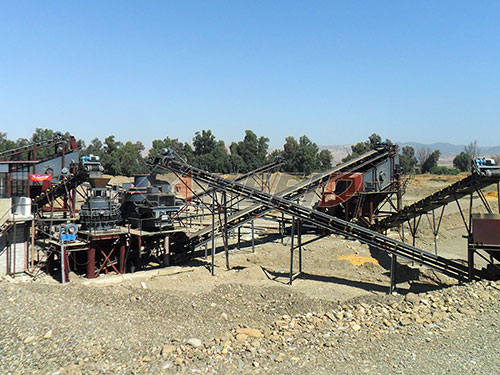
4.2 Hidden Costs
Buyers must account for:
4.3 Payment Terms
Standard terms for bulk orders are 30% advance payment, 40% upon completion of FAT, and 30% before shipment. Letters of credit (L/C) are common for international transactions.
5. Supply Chain and Logistics Management
5.1 Packaging and Marking
Each plant component must be properly packaged for ocean or overland transport. Rust-proofing, wooden crating for electronic panels, and waterproof wrapping for motors are mandatory. White label branding should be applied to all visible surfaces, including control cabinets and nameplates.
5.2 Documentation
A complete documentation package includes:
5.3 Risk Mitigation
Buyers should consider purchasing marine or transit insurance covering 110% of the invoice value. Additionally, a pre-shipment inspection at the port of loading can prevent disputes over damaged goods.
6. After-Sales Support and Warranty
White label agreements often include a 12- to 24-month warranty on manufacturing defects. However, wear parts (jaws, liners, screens) are typically excluded. Buyers should negotiate:
7. Environmental and Regulatory Compliance
Slag processing plants must comply with local environmental regulations regarding noise, dust, and water discharge. White label buyers should ensure that the OEM’s design includes:
8. Case Study: Successful Bulk Order Implementation
A hypothetical but realistic scenario: A Middle Eastern steel group ordered 12 white label slag crusher plants for deployment across three countries. The OEM, based in India, standardized the design with a 200 TPH capacity, magnetic separators, and PLC control. The bulk order reduced per-unit cost by 22%. The buyer conducted FAT on two units, then accepted the remaining 10 based on batch sampling. Delivery was completed in 18 weeks, with on-site commissioning taking an additional 4 weeks per plant. The buyer reported 95% uptime in the first year, with spare parts consumption within budget.
9. Conclusion
White label slag crusher plant bulk orders offer a viable path for companies to rapidly scale their slag processing operations without the capital expenditure of developing proprietary manufacturing. Success hinges on meticulous technical specification, rigorous quality control, transparent cost negotiation, and robust logistics planning. Buyers should prioritize OEMs with proven experience in slag crushing, a global supply chain network, and a willingness to customize within the constraints of standardization. By following the guidelines outlined in this article, procurement professionals can mitigate risks and maximize the return on investment for bulk white label orders.
10. Recommendations for Buyers
By approaching the procurement process with diligence and a clear understanding of technical and commercial parameters, buyers can successfully leverage white label slag crusher plants to enhance their industrial recycling capabilities and profitability.
If you have any questions about our products, please feel free to contact us. We take all inquiries and suggestions very seriously.