Stone Crusher Plant Exporters Brochure: A Comprehensive Guide to Global Supply, Technology, and Operational Excellence
Introduction
The global demand for crushed stone, aggregates, and sand has witnessed an unprecedented surge over the past two decades, driven by rapid urbanization, infrastructure development, and industrialization across emerging economies. At the heart of this supply chain lies the stone crusher plant—a complex assembly of machinery designed to reduce large rocks into smaller, usable aggregates. For exporters of stone crusher plants, the challenge is not merely to deliver equipment but to provide complete, turnkey solutions that meet stringent international standards for efficiency, safety, environmental compliance, and durability. This article serves as a detailed, professional, and objective exposition on stone crusher plant exporters, covering market dynamics, technical specifications, quality benchmarks, logistical considerations, and the critical factors that define a successful export operation.
1. The Global Market for Stone Crusher Plants
The stone crushing equipment market is projected to grow at a compound annual growth rate (CAGR) of approximately 6–8% through 2030, according to industry analyses. Key drivers include:
- Infrastructure Megaprojects: Countries such as India, China, Indonesia, Nigeria, and Brazil are investing heavily in highways, railways, bridges, and airports. Each kilometer of highway construction requires thousands of tons of aggregates.
- Urbanization: The United Nations estimates that 68% of the world’s population will live in urban areas by 2050, necessitating massive housing and commercial construction.
- Mining and Quarrying Expansion: The extraction of minerals and metals often requires primary and secondary crushing stages.
- Recycling and Sustainability: Increasingly, crusher plants are being adapted for recycling construction and demolition waste, a trend that exporters must accommodate.
Exporters targeting these markets must understand regional preferences. For example, African markets often prioritize robust, low-maintenance machines due to limited technical support, while European buyers demand high automation, low emissions, and compliance with CE or ISO 14001 standards.
2. Core Components of a Stone Crusher Plant
A typical stone crusher plant consists of several integrated units. Exporters must ensure each component meets the specific requirements of the destination country.
2.1 Primary Crusher
- Jaw Crushers: Most common for primary crushing. They offer high reduction ratios (up to 6:1) and can handle hard, abrasive rocks like granite and basalt. Exporters should specify feed opening dimensions (e.g., 600×900 mm to 1200×1500 mm), motor power (75–250 kW), and eccentric shaft material (e.g., 40Cr alloy steel).
- Gyratory Crushers: Used for very high capacity operations (over 5000 tph). Less common in mobile plants but essential for large fixed installations.
2.2 Secondary and Tertiary Crushers
- Cone Crushers: Ideal for producing cubical aggregates. Key specifications include chamber type (standard, medium, short head), eccentric throw, and hydraulic adjustment systems.
- Impact Crushers: Horizontal Shaft Impactors (HSI) and Vertical Shaft Impactors (VSI) are used for softer materials or for shaping. VSI crushers are critical for producing manufactured sand (M-sand).
2.3 Screening and Washing Units
- Vibrating Screens: Multi-deck screens (2–4 decks) with adjustable amplitude and angle. Exporters must ensure screens are robust enough to handle high tonnages and are fitted with wear-resistant polyurethane or rubber panels.
- Sand Washers: Screw or bucket wheel type. For regions with high clay content in aggregates, log washers or hydrocyclones may be required.
2.4 Conveyors and Feeders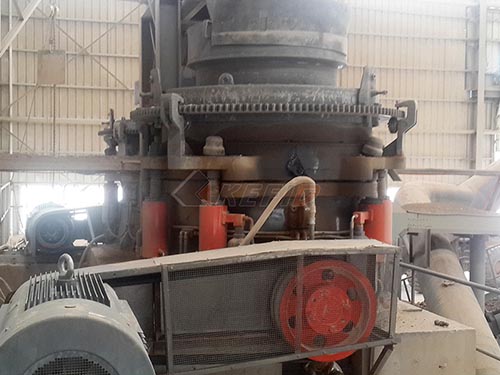
- Belt Conveyors: Must be designed for the specific material density and lump size. Exporters should provide conveyor lengths, belt widths (e.g., 800–1400 mm), and motor power.
- Vibrating Feeders: Ensure uniform material flow to the crusher. Grizzly feeders are preferred for removing fines before primary crushing.
2.5 Control Systems
Modern plants are increasingly automated. Exporters should offer PLC-based control panels with remote monitoring capabilities, overload protection, and real-time data logging. For remote sites, solar-powered or hybrid control systems are gaining traction.
3. Technical Specifications and Customization
Exporters must be prepared to customize plants based on:
- Material Type: Hardness (Mohs scale), abrasiveness (e.g., silica content), moisture content, and feed size distribution.
- Capacity Requirements: From 50 tph (small-scale) to 1000+ tph (large-scale mining).
- End Product Specifications: Gradation curves (e.g., 0–5 mm, 5–20 mm, 20–40 mm), flakiness index, and shape requirements.
- Mobility: Stationary, skid-mounted, or fully mobile (track-mounted) plants. Mobile plants are increasingly popular in developing nations due to ease of relocation.
Example Specification Table (for a 200 tph plant):
| Component |
Specification |
| Primary Jaw Crusher |
PE-750×1060, 110 kW, 150–200 tph |
| Secondary Cone Crusher |
PYB-1750, 160 kW, 50–180 tph |
| Vibrating Screen |
3YK-1860, 3 decks, 18.5 kW |
| Sand Washer |
XL-915, 11 kW, 30–50 tph |
| Conveyors |
800 mm wide, 15–30 m length |
| Control System |
Siemens PLC with HMI touchscreen |
4. Quality Standards and Certifications
To compete globally, exporters must adhere to international quality and safety standards:
- ISO 9001:2015 – Quality management systems.
- CE Marking – Mandatory for European Union markets (requires conformity with Machinery Directive 2006/42/EC).
- GOST-R / EAC – Required for Russia and CIS countries.
- ASME / ANSI – For pressure vessels and structural components (if applicable).
- Environmental Compliance: Dust suppression systems (water spray or baghouse filters), noise reduction enclosures (below 85 dB at 1 meter), and wastewater treatment for washing units.
5. Export Logistics and Packaging
Exporting heavy machinery involves complex logistics. Key considerations include:
- Packaging: Crusher plants are typically shipped in disassembled form (knocked down) in 20-ft or 40-ft open-top containers or flat racks. Critical components like bearings, motors, and control panels must be waterproofed and vacuum-sealed.
- Documentation: Commercial invoice, packing list, bill of lading, certificate of origin, insurance certificate, and customs clearance documents. For certain countries, a pre-shipment inspection (PSI) by SGS or Bureau Veritas may be required.
- Shipping Modes: Sea freight (most common), with inland transport via flatbed trucks or rail. For landlocked countries like Zambia or Afghanistan, multimodal transport is essential.
- Lead Time: Typically 45–90 days from order to shipment, depending on customization level.
6. After-Sales Service and Support
A successful exporter does not stop at delivery. Key after-sales services include:
- Installation and Commissioning: On-site supervision by experienced engineers (often 2–4 weeks).
- Training: Operator training on safety, maintenance, and troubleshooting.
- Spare Parts Supply: Stocking critical wear parts (jaw plates, mantle liners, screen meshes) in regional warehouses or offering consignment stock.
- Remote Diagnostics: IoT-enabled plants allow exporters to monitor performance and predict failures.
7. Challenges Faced by Exporters
- Tariffs and Trade Barriers: Import duties on machinery can exceed 30% in some countries. Exporters may need to explore free trade agreements (e.g., India-MERCOSUR, China-ASEAN).
- Currency Fluctuations: Contracts should include clauses for currency adjustment or payment in stable currencies (USD, EUR).
- Local Competition: Many countries have domestic manufacturers offering lower-cost, albeit less durable, alternatives. Exporters must emphasize total cost of ownership (TCO), including energy efficiency and lifespan.
- Regulatory Hurdles: Environmental impact assessments (EIA) and permits for quarrying may delay plant commissioning.
8. Case Studies: Successful Export Projects
Case 1: 300 tph Plant for a Nigerian Road Project
- Challenge: High silica content (65%) in granite, requiring heavy-duty wear parts.
- Solution: Supplied a jaw-cone-VSI combination with manganese steel liners and ceramic inserts. Installed a water spray system for dust control.
- Outcome: Plant operated at 95% uptime over 18 months, producing aggregates for 200 km of highway.
Case 2: Mobile Plant for a Peruvian Mining Contractor
- Challenge: Remote site at 4,000 meters altitude, requiring low oxygen combustion adjustments.
- Solution: Provided a track-mounted jaw crusher with turbocharged diesel engine and altitude compensation kit.
- Outcome: Reduced transport costs by 40% compared to fixed plant.
9. Future Trends in Stone Crusher Plant Export
- Electrification and Hybrid Power: Battery-electric and solar-hybrid plants are emerging, especially for European and North American markets.
- Artificial Intelligence: AI-based sorting systems to remove deleterious materials (e.g., clay, wood) from aggregates.
- Modular Design: Plug-and-play modules that can be expanded or reconfigured.
- Circular Economy: Plants designed for 100% recycling of concrete and asphalt.
10. Conclusion
Stone crusher plant exporters occupy a critical niche in the global construction and mining supply chain. Success requires not only engineering excellence but also deep understanding of international markets, regulatory landscapes, and logistical complexities. By offering customized, high-quality, and environmentally compliant solutions—backed by robust after-sales support—exporters can build lasting partnerships with clients worldwide. As infrastructure demands continue to grow, the role of reliable, efficient stone crushing technology will only become more indispensable.
For a detailed quotation or technical consultation, please contact our export division. We provide comprehensive brochures, CAD drawings, and performance guarantees for all our plants.
