Title: Optimizing High-Throughput Recovery: A Technical Evaluation of 500 TPH Gold Mining Washing Plants and Factory-Direct Pricing Dynamics
Introduction
In the contemporary landscape of alluvial and hard-rock gold processing, the economic viability of a mining operation is inextricably linked to the throughput capacity and recovery efficiency of its beneficiation equipment. As ore grades decline globally and operational costs escalate, the industry has shifted toward high-capacity, modular, and mobile washing systems. Among these, the 500 TPH (Tons Per Hour) gold mining washing plant represents a benchmark in mid-to-large-scale production, capable of processing approximately 12,000 tons of feed material per 24-hour cycle. This article provides a professional, objective, and technical examination of the 500 TPH gold washing plant, focusing on its core components, operational principles, engineering specifications, and the critical economic factors associated with factory-direct pricing. The analysis aims to equip project managers, mining engineers, and procurement specialists with the necessary data to evaluate capital expenditure (CAPEX) against long-term operational efficiency.
Section 1: The Functional Architecture of a 500 TPH Washing Plant
A 500 TPH gold washing plant is not a singular machine but an integrated system comprising several heavy-duty units engineered for continuous, high-volume operation. The primary objective is to disaggregate clay-bound ore, screen out oversized waste, and concentrate dense gold particles. The standard configuration typically includes the following subsystems:
-
Feed Hopper and Grizzly Feeder: The process begins with a heavy-duty dump hopper, often equipped with a hydraulic tipping grid or a vibrating grizzly feeder. The grizzly’s aperture is typically set at 100–150 mm to reject boulders that could damage downstream equipment. At 500 TPH, the feeder must possess a robust eccentric drive mechanism capable of withstanding the impact of 50-ton haul trucks discharging directly into the hopper.
-
Rotary Trommel Scrubber (or Log Washer): This is the heart of the washing circuit. For 500 TPH capacity, a trommel scrubber with a diameter of 2.4 to 3.0 meters and a length of 7 to 9 meters is standard. The internal lifter bars and high-pressure water jets (operating at 4–6 bar) work in tandem to achieve complete disintegration of agglomerated clays. The trommel’s rotational speed is critical; it must be optimized to provide sufficient retention time (typically 60–90 seconds) for scrubbing without causing excessive breakage of native gold nuggets. The screening section of the trommel is fitted with polyurethane or woven wire mesh panels, usually in two or three sections (e.g., 10 mm, 30 mm, and 50 mm) to classify feed for subsequent processing.
-
High-Pressure Water Delivery System: A 500 TPH plant consumes substantial water—often between 1,500 and 2,500 cubic meters per hour. The system includes a dedicated diesel or electric-driven high-pressure pump, a water manifold, and strategically positioned spray bars. Water recycling is a key design feature; a thickener or settling pond system is required to reclaim process water, reducing the environmental footprint and operational water costs.
-
Primary and Secondary Concentrators: After screening, the undersize fraction (typically <10 mm) is directed to a series of concentrators. For high throughput, the industry standard is a combination of:
- Jigs (e.g., Kelsey or Pan-American style): Used for primary recovery of coarse gold and heavy minerals.
- Spiral Classifiers or Knelson/Centrifugal Concentrators: Used for fine gold recovery. At 500 TPH, multiple units are arranged in parallel to handle the volumetric flow. A typical setup might include four 30-inch centrifugal concentrators or a bank of 8–12 spirals.
- Shaking Tables: Used for final cleanup of the concentrate, producing a high-grade gold product.
-
Tailings Management System: The waste stream (tailings) is dewatered using hydrocyclones and a dewatering screen before being stacked or pumped to a tailings storage facility. The design must ensure that the slime fraction (clay and silt) is effectively flocculated to allow rapid water recovery.
Section 2: Engineering Specifications and Performance Metrics
To objectively evaluate a 500 TPH plant, one must consider specific technical parameters that dictate performance and longevity.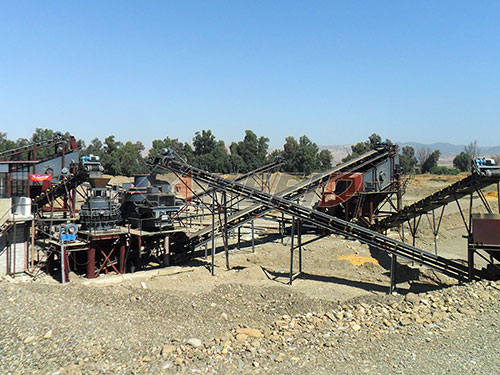
- Material of Construction: The wetted parts—trommel shell, hopper liners, and screen decks—must be fabricated from abrasion-resistant steel (e.g., Hardox 450 or equivalent) or lined with ceramic tiles. The frame should be constructed from heavy-duty structural steel (S355JR) with a robust paint system (epoxy zinc-rich primer) to withstand corrosive environments.
- Drive System: The trommel scrubber typically requires a 90–132 kW motor, while the feeder and conveyor systems add another 75–100 kW. The total installed power for a 500 TPH plant ranges from 300 to 450 kW, depending on whether the system is diesel-hydraulic or electric-driven. Electric systems offer lower operating costs but require grid access or a substantial generator set.
- Recovery Efficiency: A well-engineered 500 TPH plant should achieve a gold recovery rate of 90–95% for free-milling gold above 75 microns. However, this is highly dependent on the ore characteristics. For clay-bound ores with high slime content, the scrubbing efficiency must exceed 98% to liberate the gold particles; otherwise, gold is lost to the tailings.
- Mobility and Footprint: Modern 500 TPH plants are often designed on a skid-mounted or wheeled chassis to facilitate relocation. The total footprint, including conveyors and feed hopper, is typically 30m x 15m, with a maximum transport height of 4.2m to allow road transport without special permits.
Section 3: The Factory-Direct Pricing Model – A Cost-Benefit Analysis
The phrase “factory price” in the context of a 500 TPH gold washing plant signifies a procurement model where the buyer deals directly with the original equipment manufacturer (OEM), bypassing intermediaries, regional distributors, or agents. This model has profound implications for CAPEX and total cost of ownership (TCO).
3.1. Price Determinants
The factory-direct price for a complete 500 TPH plant is not a fixed figure; it is a function of several variables:
- Configuration Complexity: A basic plant (trommel + sluice) will cost significantly less than a fully integrated plant with jigs, centrifugal concentrators, and a water treatment system. The price range for a standard 500 TPH plant is typically between $850,000 and $1.8 million USD, excluding international freight and site installation.
- Automation Level: Plants equipped with PLC (Programmable Logic Controller) systems, remote monitoring, and variable frequency drives (VFDs) for precise speed control command a premium of 15–20% over manual-operation units.
- Customization: Factory-direct pricing allows for bespoke engineering. For example, a plant designed for high-altitude operations (above 3,000 meters) requires derated motors and specialized insulation, increasing costs by 5–8%.
- Component Sourcing: The origin of key components—bearings, motors, pumps, and screen media—significantly affects price. OEMs using European or Japanese components (e.g., Siemens motors, SKF bearings) will price higher than those using domestic Chinese components, though the latter may offer lower initial cost but higher maintenance frequency.
3.2. Advantages of Factory-Direct Procurement
- Elimination of Middleman Margins: Distributors typically add a 10–25% markup. Direct procurement allows the buyer to allocate those funds toward spare parts inventory or advanced recovery systems.
- Direct Technical Support: Purchasing directly from the factory ensures that the engineering team who designed the plant is the same team providing commissioning support and troubleshooting. This reduces downtime during the critical ramp-up phase.
- Customization Control: The buyer has direct input into the design phase, allowing for modifications to the feed box, screen aperture, or water flow rates without the communication lag inherent in a multi-tier distribution chain.
- Spare Parts Availability: Factory-direct relationships guarantee that genuine spare parts are available at source cost, and the OEM can prioritize production of critical wear parts (e.g., trommel screens, pump impellers) for the buyer.
3.3. Hidden Costs and Mitigation Strategies
While factory-direct pricing is attractive, it is not without risks. The buyer must account for:
- Logistics and Import Duties: Shipping a 500 TPH plant (approximately 40–60 tons of steel) from the manufacturing hub (often China, Turkey, or South Africa) to a remote mining site in Africa, South America, or Central Asia can cost $50,000–$120,000. Additionally, import duties and port handling fees can add 10–30% to the FOB (Free On Board) price, depending on the destination country’s tariff structure.
- Installation Supervision: Most factory-direct quotes exclude on-site installation labor. The buyer must budget for the OEM’s engineers to travel to the site for 4–8 weeks for supervision, including per diem, flights, and insurance. This typically costs $25,000–$45,000.
- Performance Guarantees: A reputable factory will offer a performance guarantee (e.g., recovery rate and throughput). However, this guarantee is often contingent on the buyer providing representative ore samples for pilot testing. The cost of pilot testing (using a 5–10 TPH mobile unit) should be negotiated into the contract to de-risk the purchase.
Section 4: Operational Considerations for 500 TPH Throughput
Achieving and sustaining 500 TPH is not solely a function of equipment capacity; it requires meticulous operational planning.
- Feed Consistency: The plant must be fed at a consistent rate. Surge loading can cause screen blinding and overflow, while underfeeding reduces recovery efficiency. A variable-speed belt feeder or a radial stacker with a level sensor is essential.
- Water Management: At 500 TPH, water consumption is the single largest operational constraint. A closed-loop system with a high-rate thickener (e.g., a 20-meter diameter thickener) is mandatory to recover 85–90% of the water. Without this, the plant would require a fresh water source of 2,000 m³/hr, which is rarely available in arid mining regions.
- Maintenance Scheduling: The wear rate on trommel screens and pump liners is directly proportional to the feed abrasiveness. For a 500 TPH plant, a proactive maintenance schedule—including daily inspection of screen panels and weekly replacement of spray nozzles—is non-negotiable. Downtime at this capacity costs approximately $1,500–$3,000 per hour in lost production.
Section 5: Comparative Market Analysis and Supplier Selection
When evaluating factory-direct suppliers for a 500 TPH plant, the buyer should conduct a comparative technical audit. Key suppliers in the global market include:
- Chinese OEMs (e.g., Yantai Xinhai, Shandong Sinolinking, Qingzhou Yongli): These manufacturers offer aggressive factory-direct pricing, often 20–30% lower than Western counterparts. Their plants are robust and heavily built, but the quality of electrical components and automation may require upgrades. Lead time is typically 45–60 days.
- South African OEMs (e.g., Pilot Crushtec, Osborn): Known for their expertise in hard-rock and diamond mining, these suppliers offer superior after-sales support in African markets. Their pricing is higher, but their plants are designed for extreme conditions.
- European/North American OEMs (e.g., MWS Equipment, CDE Global): These offer the highest engineering precision, advanced PLC automation, and superior energy efficiency. However, the factory-direct price is at the premium end, and lead times can extend to 90–120 days.
Conclusion
The procurement of a 500 TPH gold mining washing plant at factory-direct pricing represents a strategic capital investment that demands rigorous technical due diligence. The plant’s ability to deliver consistent throughput and high recovery is contingent upon the integration of robust scrubbing, efficient classification, and precise concentration circuits. While the factory-direct model offers substantial cost savings and direct engineering access, it shifts the burden of logistics, installation management, and performance verification onto the buyer. A prudent approach involves requesting a detailed mass balance, a video walkthrough of the factory’s assembly line, and a reference list of similar-capacity plants operating in analogous geological conditions. Ultimately, the lowest purchase price is not the true measure of value; rather, the cost per ton of gold recovered over the plant’s 10–15 year lifespan is the definitive metric. By prioritizing engineering integrity, water efficiency, and after-sales support, a mining operation can transform a 500 TPH washing plant from a mere piece of machinery into a reliable, high-yield asset.
