Commercial JC5000 Jaw Crusher ODM Manufacturer: A Comprehensive Guide for Aggregate, Mining, and Recycling Professionals
Introduction
In the world of primary crushing, few machine designations carry as much weight as the JC5000 jaw crusher. Engineered for high-capacity, continuous-duty operation, the JC5000 represents the upper tier of single-toggle jaw crusher design—a machine class capable of accepting feed sizes up to approximately 1,200 mm while delivering throughputs that can exceed 1,500 tonnes per hour depending on closed-side settings (CSS) and material characteristics. For quarry operators, hard-rock miners, C&D recycling processors, and large-scale contractors, selecting the right JC5000-class crusher is a capital decision with decade-long consequences. Increasingly, buyers are turning to Original Design Manufacturers (ODMs) to source these machines—not merely as low-cost alternatives to branded equipment, but as fully engineered, customizable, and service-supported solutions.
This article examines the commercial JC5000 jaw crusher from the perspective of ODM manufacturing. It covers the technical fundamentals of the JC5000 class, what distinguishes a true ODM from a simple contract assembler, the customization options available, manufacturing and quality-control standards, procurement and logistics considerations, and the operational and financial factors that determine long-term value. The goal is to provide a professional, objective reference for project engineers, procurement managers, and business owners evaluating their next primary crushing investment.
1. Understanding the JC5000 Jaw Crusher Class
The “JC” designation typically refers to a jaw crusher series, with the number indicating the feed opening dimensions in centimeters or a related size class, depending on the manufacturer’s nomenclature. A JC5000-class machine generally features a feed opening in the range of 1,200 × 900 mm to 1,400 × 1,100 mm, making it suitable for primary crushing of blasted rock, large quarry stone, and bulky demolition debris. Key design characteristics of this class include: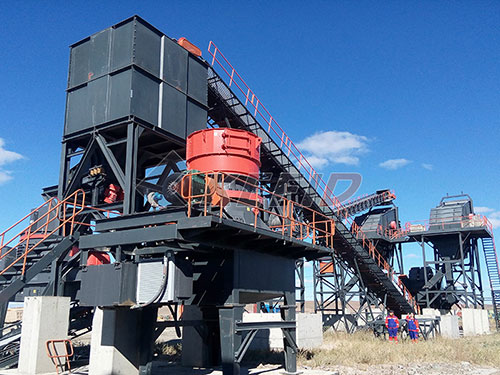
- Single-toggle, overhead eccentric configuration. This geometry produces a compressive crushing action with a favorable stroke at the feed opening, promoting efficient nip and throughput.
- Deep, symmetrical crushing chamber. A well-designed chamber ensures a steady flow of material, reduces bridging, and maximizes the number of crushing cycles per pass.
- Heavy-duty, bolted or welded frame. Frames in this class are typically stress-relieved and machined to tight tolerances to withstand extreme radial and axial loads.
- Large, forged or cast eccentric shaft. Shaft diameter and bearing selection are critical for fatigue life under continuous, high-load operation.
- Hydraulic CSS adjustment. Modern JC5000 machines usually offer hydraulic wedge or shim adjustment, enabling rapid setting changes and reducing downtime.
- Integrated motor and drive. Power ratings for this class commonly range from 200 kW to 400 kW, with V-belt or direct-drive configurations.
Understanding these fundamentals is essential because an ODM’s value proposition rests on its ability to reproduce—or improve upon—these engineering parameters while offering flexibility that large OEMs often cannot.
2. What Defines a True ODM Manufacturer?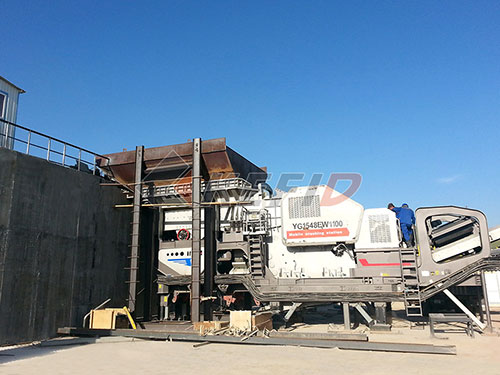
The term “ODM” is frequently misused. A genuine Original Design Manufacturer does far more than fabricate parts from a buyer’s drawings. A true JC5000 ODM manufacturer typically provides:
- In-house design and engineering. The ODM owns the intellectual property for the crusher’s core design, or has the engineering capability to modify it substantially. This includes 3D modeling, finite element analysis (FEA) of the frame and swing jaw, kinematics simulation of the toggle mechanism, and bearing life calculations.
- Full manufacturing control. Foundry or forging partnerships, CNC machining centers, fabrication and welding lines, heat treatment, and assembly are managed under one quality system.
- Customization as standard practice. Because the ODM controls the design, it can adjust feed opening, CSS range, throughput targets, drive configuration, and wear-part metallurgy to match specific applications.
- Private-label and branded supply. ODMs routinely produce machines carrying the buyer’s brand, documentation, and paint scheme—an attractive option for distributors and rental fleets.
- After-sales engineering support. This includes spare-parts catalogs, wear-life analysis, commissioning assistance, and operator training.
For buyers, the practical distinction matters: an ODM can absorb engineering risk and iterate quickly, whereas a pure contract manufacturer can only build to print.
3. Customization Options for Commercial JC5000 Crushers
One of the strongest arguments for sourcing a JC5000 from an ODM is the ability to tailor the machine to the application. Common customization dimensions include:
- Feed opening and chamber profile. For recycling applications with rebar-laden concrete, a wider, shallower chamber may reduce bridging. For hard-rock quarrying, a deeper chamber with a steeper nip angle improves reduction ratio.
- Throughput and CSS targets. The ODM can adjust eccentric throw, speed, and motor power to hit a specified tonnes-per-hour curve.
- Wear-part metallurgy. Manganese grades (e.g., 18% Mn, 22% Mn, or alloyed variants), jaw plate tooth profiles, and cheek plate materials can be selected for abrasive or tough materials.
- Drive configuration. V-belt, hydraulic coupling, or direct drive; fixed or variable speed; diesel-electric or grid-powered.
- Frame and mounting. Skid-mounted, modular, or mobile-track configurations; integrated feed hopper, grizzly feeder, and discharge conveyor.
- Automation and instrumentation. PLC-based control, remote monitoring, bearing temperature sensors, and automatic lubrication systems.
- Compliance and documentation. CE, ISO, or region-specific certification; multilingual manuals; and spare-parts interoperability with existing fleet components.
This flexibility allows an ODM to deliver a machine that fits the site, rather than forcing the site to fit a catalog machine.
4. Manufacturing and Quality Control Standards
A credible JC5000 ODM should be able to document its quality system and manufacturing capabilities. Key checkpoints include:
- Material certification. Mill certificates for steel plate, forgings, and castings; traceability from heat number to finished component.
- Welding quality. Qualified welding procedures (WPS/PQR), certified welders, and non-destructive testing (UT, MT) on critical welds.
- Machining accuracy. CNC boring and milling of frame bores, eccentric shaft journals, and toggle seats to within tight geometric tolerances.
- Assembly and testing. No-load run-in, vibration analysis, bearing temperature monitoring, and hydraulic system pressure testing before shipment.
- Standards compliance. ISO 9001 quality management, ISO 14001 environmental management, and where applicable, CE marking under the Machinery Directive.
- Third-party inspection. Buyers should have the option to appoint an independent inspection agency (e.g., SGS, BV, TÜV) for pre-shipment verification.
The absence of these controls is the single largest risk in sourcing from unfamiliar suppliers. A professional ODM welcomes audits and provides full documentation.
5. Procurement, Logistics, and Commercial Terms
Sourcing a JC5000-class crusher internationally involves more than price negotiation. Buyers should consider:
- Total cost of ownership (TCO). Purchase price is only one component. Installation, foundation works, power supply, wear parts, maintenance labor, and downtime costs dominate over a 10–15 year lifecycle.
- Lead times. Typical ODM lead times range from 60 to 120 days depending on customization, plus shipping. Clear milestone schedules and penalties for delay should be contractually defined.
- Incoterms and shipping. Machines of this size often ship as break-bulk or in multiple containers. FOB, CIF, and DAP terms each carry different risk allocations.
- Payment structure. A common arrangement is 30% deposit, 40% on pre-shipment inspection, and 30% against documents or after commissioning.
- Warranty and spares. A minimum 12-month warranty on major components, with guaranteed spare-parts availability for 10 years, is a reasonable benchmark.
- Intellectual property and exclusivity. If private-labeling, the contract should address design ownership, territorial exclusivity, and confidentiality.
6. Operational and Financial Considerations
For end users, the JC5000 is a production asset. Its value is measured in tonnes produced per dollar of operating cost. Important operational factors include:
- Reduction ratio and product shape. Jaw crushers typically achieve 4:1 to 6:1 reduction; downstream cone or impact crushers handle finer stages.
- Wear cost per tonne. Jaw plate life varies dramatically with feed abrasiveness. An ODM that offers application-specific metallurgy can reduce wear cost by 15–30%.
- Energy efficiency. Modern JC5000 designs with optimized kinematics can lower specific energy consumption (kWh/t), a major cost driver in high-volume operations.
- Availability and maintainability. Quick-change jaw plates, accessible lubrication points, and modular components reduce mean time to repair (MTTR).
- Resale and fleet standardization. Choosing an ODM whose machines share components across models simplifies fleet management and improves resale value.
Financially, the case for an ODM-sourced JC5000 often rests on a 20–40% capital cost advantage versus premium branded equivalents, combined with comparable or better customization. However, this advantage is only realized when quality, documentation, and after-sales support are verified.
7. Selecting the Right ODM Partner
A structured evaluation process is recommended:
- Capability audit. Review engineering staff, CAD/CAE tools, manufacturing equipment, and test facilities.
- Reference checks. Speak with existing customers in similar applications—aggregate, mining, or recycling.
- Sample documentation. Request GA drawings, FEA reports, material certificates, and QC records from a recent project.
- Pilot or site visit. Inspect a machine in production or operation; observe assembly practices firsthand.
- Contract clarity. Define scope, standards, inspection rights, warranty, spares, and dispute resolution.
- Long-term partnership. The best ODM relationships evolve into joint development, where the manufacturer becomes an extension of the buyer’s engineering team.
Conclusion
The commercial JC5000 jaw crusher is a cornerstone asset for high-capacity primary crushing. Sourcing it from a qualified ODM manufacturer offers compelling advantages: design flexibility, cost efficiency, private-label branding, and responsive engineering support. Yet these benefits are contingent on rigorous supplier selection, documented quality systems, and a clear commercial framework. Buyers who invest the time to understand the machine class, define their application requirements, and audit their ODM partner will be positioned to secure a crusher that delivers reliable throughput and low cost per tonne for years to come. In an industry where downtime is measured in lost revenue, the right ODM partnership is not merely a procurement decision—it is a strategic one.
