
ODM Quarry Ballast Crushing Equipment: The Role of OEM Factories in Modern Rail Infrastructure
Introduction
The global railway network is the backbone of modern logistics and passenger transport, demanding a foundation that is both durable and geometrically precise. At the heart of this foundation lies ballast—the crushed stone layer that distributes load, facilitates drainage, and stabilizes sleepers. Producing high-quality ballast is not a simple matter of breaking rocks; it requires specialized crushing equipment engineered for high throughput, consistent particle shape, and strict gradation control. In this context, the term “ODM” (Original Design Manufacturer) has gained significant traction, particularly when paired with “OEM” (Original Equipment Manufacturer) factories. This article provides a professional, objective examination of ODM quarry ballast crushing equipment, focusing on the role of OEM factories, their design capabilities, manufacturing standards, and the critical factors that distinguish superior equipment from conventional machinery.
Defining ODM and OEM in the Crushing Industry
To understand the landscape, one must first delineate the two acronyms. An OEM factory produces equipment based on a buyer’s specifications, often under the buyer’s brand name. The buyer provides the design, or at least the performance parameters, and the factory executes manufacturing. In contrast, an ODM factory takes a more proactive role: it designs, engineers, and manufactures the equipment itself, offering it to buyers who may rebrand it or use it directly. In the context of quarry ballast crushing, an ODM factory is not merely a contract manufacturer; it is a design authority with proprietary engineering knowledge. When a buyer engages an ODM factory, they gain access to a complete solution—from initial CAD modeling and finite element analysis (FEA) to prototype testing and mass production. This distinction is crucial because ballast crushing demands more than generic crushers; it demands equipment optimized for specific rock types (e.g., granite, basalt, limestone) and specific railway standards (e.g., AREMA, EN 13450).
Core Equipment in Ballast Crushing Lines
A typical ballast production line comprises several stages, each requiring specialized machinery. The ODM factory’s expertise is evident in how these stages are integrated.
Primary Crushing (Jaw Crushers): The first stage reduces blasted rock (often up to 1,000 mm) to a manageable size (150–250 mm). ODM-designed jaw crushers feature deep crushing chambers, optimized toggle angles, and high inertia flywheels. OEM factories that specialize in ODM often use high-manganese steel (Mn18Cr2) for jaw plates, ensuring wear resistance under abrasive conditions. The design must also accommodate variable feed sizes without frequent jamming, a common issue in quarry operations.
Secondary Crushing (Cone Crushers or Impact Crushers): For ballast, the secondary stage is critical for achieving cubic shape. Cone crushers, particularly those with hydraulic adjustment systems, are preferred for hard, abrasive rocks. An ODM factory will design the crushing chamber profile (e.g., short head, standard, or medium) based on the desired product size distribution. Alternatively, horizontal shaft impactors (HSI) are used for softer rocks, offering higher reduction ratios but higher wear costs. The choice between these is a design decision that an ODM factory must justify with data, not guesswork.
Tertiary Crushing and Screening: Ballast requires a narrow particle size range (typically 31.5 mm to 50 mm in many standards, though variations exist). This demands a tertiary crusher (often a VSI – Vertical Shaft Impactor) to refine particle shape, followed by a multi-deck vibrating screen. ODM factories design screens with specific stroke angles and amplitude to prevent blinding and ensure accurate separation. They also integrate crusher and screen in a closed-circuit layout, allowing oversize material to be recirculated.
Washing and Dust Suppression: While not always mandatory, many modern ballast plants include washing systems to remove fines and clay. ODM equipment includes high-efficiency sand screws or hydrocyclones, designed to minimize water consumption while maximizing fines removal.
The OEM Factory’s Manufacturing Edge
What separates a generic OEM factory from a true ODM partner in ballast crushing? The answer lies in several manufacturing and engineering pillars.
Metallurgical Control: Ballast crushers operate under extreme impact and abrasion. An OEM factory with ODM capabilities will have in-house metallurgy labs to develop and test wear parts. For example, they may produce blow bars with ceramic inserts for impact crushers, or composite liners for cone crushers. The heat treatment process—quenching and tempering—must be precisely controlled to achieve a balance between hardness (for wear resistance) and toughness (to resist breakage). A reputable ODM factory will publish Brinell hardness numbers and chemical composition certificates for every batch.
Precision Machining: The main frame, eccentric shaft, and bearing housings require tight tolerances (often within 0.05 mm). OEM factories invest in CNC horizontal boring mills and large lathes to achieve this. Poor machining leads to bearing overheating, premature wear, and reduced crushing efficiency. An ODM design will also incorporate finite element analysis to minimize stress concentrations in the frame, reducing the risk of cracking under peak loads.
Hydraulic Systems: Modern ballast crushers rely on hydraulic systems for gap adjustment, overload protection, and tramp iron release. An ODM factory designs these circuits for reliability, using high-grade seals and accumulators. The response time of the hydraulic system is critical: a crusher must release pressure within milliseconds when uncrushable material enters, preventing catastrophic damage.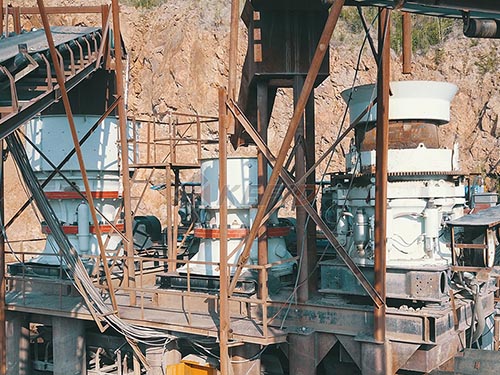
Automation and Control: The best ODM equipment integrates with plant automation systems. This includes sensors for power draw, bearing temperature, and oil pressure. The factory’s software team develops PLC (Programmable Logic Controller) logic that automatically adjusts crusher settings to maintain consistent product gradation, even as feed material hardness varies. This is a key differentiator: a simple OEM factory may bolt components together, but an ODM factory designs the control architecture.
Design Considerations Specific to Ballast
Ballast is not just any aggregate. Its production requires adherence to stringent specifications, which directly influence equipment design.
Particle Shape (Flakiness Index): Railway ballast must have a low flakiness index (typically < 15% per EN 13450). This means the crusher must produce cubical particles, not flat or elongated ones. An ODM factory achieves this through careful chamber design—for example, using a multi-layered crushing zone in a cone crusher that compresses material multiple times. The speed and stroke of the crusher are tuned to promote inter-particle breakage, which naturally yields cubical shapes.
Gradation Consistency: Ballast must have a narrow particle size distribution. Oversize particles cause poor packing, while undersize particles reduce drainage. ODM-designed screens use polyurethane or rubber panels with precise aperture sizes, and the crusher’s closed-side setting (CSS) is monitored via electronic position sensors. The factory’s design must ensure that the CSS remains stable under load, which requires robust hydraulic clamping systems.
Durability (Los Angeles Abrasion Test): Ballast must resist degradation under repeated loading. This is not solely a function of the rock type; the crushing process itself can induce micro-cracks. An ODM factory designs the crushing speed and reduction ratio to minimize internal stress in the aggregate. For example, a slower, higher-pressure crushing action is preferred over a high-speed impact for hard rocks, as it reduces the generation of micro-fractures.
Quality Assurance and Testing in OEM Factories
A professional ODM factory does not ship equipment without rigorous testing. The process typically includes:
Factory Acceptance Test (FAT): The assembled crusher is run under no-load and partial-load conditions. Vibration levels, bearing temperatures, and noise are measured against design thresholds. For large jaw crushers, the eccentric shaft is checked for runout, and the flywheel balance is verified.
Material Testing: The factory will test the wear parts on a pilot-scale crusher using representative rock samples from the client’s quarry. This provides data on wear life (e.g., tons crushed per set of jaw plates) and product gradation. This is a unique advantage of ODM: the factory can adjust the crusher’s stroke, speed, and chamber profile based on actual test results before full production.
Documentation and Traceability: Professional OEM factories provide complete documentation, including material certificates, welding procedures (WPS/PQR), and non-destructive test reports (ultrasonic or magnetic particle inspection) for critical welds. This is essential for clients who require compliance with international standards (e.g., CE marking, ISO 9001).
The Economic and Operational Benefits of ODM Partnerships
Engaging an ODM factory for ballast crushing equipment offers several objective advantages over purchasing off-the-shelf machines.
Customization without Engineering Overhead: The client does not need to maintain a large in-house engineering team. The ODM factory adapts its existing designs to the client’s specific rock type, capacity requirements (e.g., 200 t/h vs. 500 t/h), and site constraints (e.g., mobile vs. stationary). This reduces lead time and development cost.
Lifecycle Cost Optimization: An ODM factory can optimize the entire crushing circuit, not just a single machine. For example, they might recommend a larger primary crusher with a smaller secondary, reducing total energy consumption per ton of ballast. They also design for easy maintenance, with quick-change wear parts and accessible service points, reducing downtime.
After-Sales Support and Spare Parts: Because the ODM factory owns the design, they can supply genuine spare parts with guaranteed fit and metallurgy. They also provide remote diagnostics via IoT sensors, allowing predictive maintenance. This is a significant advantage over buying from a middleman who does not have design drawings.
Challenges and Considerations
Despite the benefits, there are challenges in working with ODM/OEM factories, particularly those located overseas.
Communication and Design Iteration: The client must clearly communicate the target ballast specification (e.g., gradation curve, flakiness index, abrasion value). Miscommunication can lead to a crusher that produces the wrong particle shape. Therefore, a professional ODM factory will request a 50–100 kg rock sample for testing before finalizing the design.
Intellectual Property (IP) Risks: When engaging an ODM factory, the client may inadvertently share proprietary process knowledge. It is essential to sign non-disclosure agreements (NDAs) and clearly define IP ownership for any custom modifications. Conversely, the client must respect the factory’s existing patents.
Logistics and Installation: Large crushers are heavy (e.g., a 150-ton cone crusher). The ODM factory must provide detailed foundation drawings, lifting plans, and on-site commissioning engineers. The client should verify the factory’s experience with international shipping and installation in remote quarry sites.
Case Study: A Hypothetical ODM Ballast Plant
Consider a quarry in Southeast Asia producing ballast for a high-speed rail project. The rock is hard granite with a high silica content. The client engages an ODM factory with a proven track record. The factory proposes a three-stage plant: a 900×1200 jaw crusher (primary), a 2200 cone crusher (secondary), and a VSI (tertiary). The ODM factory runs a simulation using the client’s rock sample, achieving a flakiness index of 12% and a gradation that meets EN 13450. The factory then manufactures the equipment with Mn18Cr2 jaw plates and a hydraulic tramp release system. During FAT, the crusher is tested with 50 tons of the client’s rock, confirming a throughput of 250 t/h with a power draw within 10% of design. The factory provides a 24-month warranty on the main frame and a 6-month warranty on wear parts. The client receives a complete technical file, including drawings and test certificates. The plant is commissioned within 6 weeks, and after 12 months of operation, the wear life of the cone liners is 30% longer than the client’s previous equipment, directly reducing operating costs.
Conclusion
ODM quarry ballast crushing equipment, when produced by a competent OEM factory, represents the pinnacle of engineering for railway infrastructure. The distinction between a mere contract manufacturer and a true ODM partner lies in design ownership, metallurgical expertise, precision manufacturing, and a deep understanding of ballast-specific requirements. For quarry operators and railway contractors, selecting the right ODM factory is a strategic decision that impacts not only initial capital expenditure but also long-term operational efficiency, product quality, and regulatory compliance. By demanding rigorous testing, transparent documentation, and a collaborative design process, clients can leverage the full potential of ODM manufacturing to produce ballast that meets the highest international standards. In an industry where a single substandard batch of ballast can compromise track stability and safety, the role of the ODM factory is not merely commercial—it is fundamentally critical to the integrity of modern rail networks.
If you have any questions about our products, please feel free to contact us. We take all inquiries and suggestions very seriously.