OEM Gyratory Crusher Manufacturer: Engineering Excellence in Primary Crushing Solutions
In the realm of heavy industrial mineral processing and mining operations, the gyratory crusher stands as a cornerstone of primary crushing technology. Unlike jaw crushers, which are often used for smaller-scale applications, gyratory crushers are designed to handle the most demanding, high-capacity reduction tasks, processing thousands of tonnes of ore per hour. For mining companies and aggregate producers, the selection of an Original Equipment Manufacturer (OEM) for these massive machines is a decision that directly impacts operational efficiency, maintenance costs, and long-term profitability. This article provides a comprehensive, professional, and objective examination of what constitutes a world-class OEM gyratory crusher manufacturer, the engineering principles behind these machines, the critical factors in selecting a supplier, and the evolving landscape of the industry.
1. The Engineering Foundation of Gyratory Crushers
To understand the role of an OEM manufacturer, one must first appreciate the mechanical complexity of the gyratory crusher. The machine operates on a principle of compressive crushing. A conical crushing head, or mantle, gyrates eccentrically within a stationary concave bowl. The feed material, typically run-of-mine ore with top sizes exceeding 1.5 meters, enters the top of the chamber. As the mantle rotates, it approaches and recedes from the concave, crushing the rock against the fixed surface. The crushed product exits through a bottom opening, the closed side setting (CSS), which determines the final product size.
Key engineering features that distinguish a high-quality OEM design include: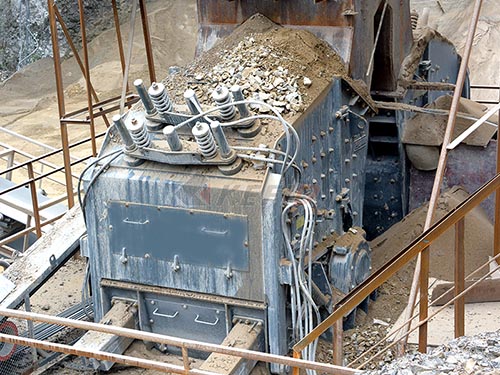
- Robust Mainframe Construction: The mainframe must withstand immense cyclic stresses. Leading OEMs use high-strength cast or fabricated steel designs, often with finite element analysis (FEA) to optimize stress distribution and reduce weight without compromising rigidity.
- Eccentric Assembly and Bearings: The eccentric drive mechanism is the heart of the crusher. High-performance spherical roller bearings or hydrostatic bearing systems are employed to handle radial and axial loads. OEMs invest heavily in bearing selection, lubrication systems, and sealing to prevent contamination from dust and water.
- Hydraulic Adjustment and Tramp Release: Modern gyratory crushers feature hydraulic systems for adjusting the CSS and for releasing uncrushable material (tramp iron). A sophisticated OEM will integrate reliable hydraulic cylinders, accumulators, and control valves that allow for remote monitoring and automated adjustments.
- Mantle and Concave Design: The wear parts are engineered for maximum crushing efficiency and longevity. OEMs use advanced metallurgy, such as manganese steel alloys with controlled work-hardening properties, and design the chamber profile to optimize throughput, reduction ratio, and particle shape.
2. The Role of the OEM: Beyond Manufacturing
An OEM gyratory crusher manufacturer is not merely a fabricator of steel and castings. It is a provider of integrated solutions that encompass design, engineering, testing, installation, and lifecycle support. The term “OEM” implies that the manufacturer holds the original intellectual property, design drawings, and specifications for the crusher. This ownership confers several critical advantages:
- Design Authority and Performance Guarantees: Only the OEM can guarantee that the crusher will meet its stated performance metrics—throughput, power draw, product gradation, and mechanical reliability. They possess the proprietary data from prototype testing, field trials, and decades of operational feedback.
- Quality Control and Traceability: Reputable OEMs maintain stringent quality assurance programs. Every component, from the main shaft to the smallest bolt, is traceable to its material certificate and heat treatment batch. This ensures consistency and safety, especially in high-stress applications.
- Proprietary Technology and Innovation: Leading OEMs invest heavily in research and development. This includes computational fluid dynamics (CFD) for lubrication systems, advanced wear modeling, and digital twin simulations. They are the source of innovations such as intelligent crusher control systems, automated liner wear monitoring, and energy-efficient drive trains.
- Genuine Parts and Aftermarket Support: The OEM is the sole source of genuine replacement parts that are engineered to the original specifications. While aftermarket suppliers may offer lower prices, they cannot replicate the exact metallurgy, tolerances, or heat treatment processes. OEMs also provide comprehensive service networks, field engineers, and training programs.
3. Key Criteria for Selecting an OEM Gyratory Crusher Manufacturer
When evaluating potential OEM partners, mining and aggregate companies must consider several objective factors:
a. Global Reputation and Track Record
A manufacturer’s history is a strong indicator of reliability. Companies like Metso (now Metso Outotec), Sandvik, FLSmidth, ThyssenKrupp (now part of thyssenkrupp Industrial Solutions), and CITIC Heavy Industries have established decades-long track records. Their crushers are installed in some of the world’s largest mines, from copper porphyries in Chile to iron ore operations in Australia. A manufacturer with a proven global installed base offers confidence in design maturity and field-proven performance.
b. Engineering Capabilities and Customization
No two mining operations are identical. A superior OEM will offer customization options, such as:
- Drive configurations: Direct drive, gear-driven, or hydraulic drives.
- Feed arrangements: Chute designs, rock boxes, and dust suppression systems.
- Automation integration: Compatibility with plant-wide distributed control systems (DCS) and advanced process control (APC) algorithms.
- Special materials: For corrosive or abrasive ores, the OEM may offer specialized wear liners, corrosion-resistant coatings, or alternative metallurgy.
c. Manufacturing Capacity and Quality
The ability to produce large, heavy components (often exceeding 100 tonnes) requires substantial manufacturing infrastructure. Look for OEMs with:
- Large-capacity foundries capable of casting mainframes, concaves, and mantles.
- Precision machining centers for boring, turning, and grinding critical surfaces.
- In-house heat treatment facilities for stress relieving and hardening.
- Non-destructive testing (NDT) capabilities, including ultrasonic, magnetic particle, and radiographic inspection.
d. After-Sales Support and Service Network
A crusher is a long-term investment. The OEM’s ability to provide timely spare parts, technical support, and field service is paramount. Key questions include:
- What is the lead time for critical wear parts (mantles, concaves, eccentric assemblies)?
- Does the OEM have regional warehouses or distribution centers?
- Are there certified service technicians available for installation, commissioning, and emergency repairs?
- Does the OEM offer training programs for operators and maintenance personnel?
e. Innovation and Digitalization
The modern mining industry is increasingly digital. Leading OEMs are integrating smart technologies into their crushers:
- Condition monitoring systems that track vibration, temperature, oil quality, and power consumption.
- Predictive maintenance algorithms that alert operators to impending failures.
- Remote diagnostics allowing OEM experts to analyze crusher performance from anywhere in the world.
- Automated liner wear measurement using laser scanning or ultrasonic sensors.
4. The Competitive Landscape: Major OEMs and Their Differentiators
While the market is dominated by a few global players, each has distinct strengths:
- Metso Outotec (Finland/Sweden): Known for the Superior™ MKIII series, which features advanced automation, hydraulic adjustment, and a modular design for easier maintenance. Their digital platform, Metso Metrics, offers comprehensive data analytics.
- Sandvik (Sweden): Offers the CG series, emphasizing high capacity and reliability. Sandvik’s strength lies in its integrated automation and aftermarket network, with a strong focus on sustainability and energy efficiency.
- FLSmidth (Denmark): Provides the Raptor® line of gyratory crushers, known for their robust construction and high reduction ratios. FLSmidth has a strong presence in the cement and minerals industries.
- ThyssenKrupp (Germany): Their KB series is renowned for heavy-duty applications, particularly in hard rock mining. They offer both primary and secondary gyratory crushers with a focus on long service life.
- CITIC Heavy Industries (China): A major player in the Asian market, offering cost-competitive solutions. Their crushers are often used in large-scale Chinese and Southeast Asian mining projects. While their global service network is less extensive than Western OEMs, they have improved significantly in recent years.
5. Challenges and Future Trends
The gyratory crusher OEM market faces several challenges:
- Supply Chain Volatility: Sourcing high-quality steel, castings, and bearings from global suppliers can lead to lead time fluctuations.
- Skilled Labor Shortage: Finding experienced engineers and field service technicians is increasingly difficult.
- Environmental Regulations: OEMs must design crushers that meet stricter noise, dust, and energy consumption standards.
Future trends include:
- Electrification and Hybrid Drives: Replacing diesel-hydraulic systems with electric drives to reduce carbon footprint.
- Autonomous Operation: Fully automated crushers that can adjust settings in real-time based on ore feed characteristics.
- Circular Economy: Designing crushers for easier disassembly and recycling of components at end-of-life.
- Digital Twins: Creating virtual replicas of crushers for simulation, training, and predictive maintenance.
6. Conclusion
Selecting an OEM gyratory crusher manufacturer is a strategic decision that requires careful evaluation of engineering expertise, manufacturing capability, aftermarket support, and innovation. The best OEMs are not just suppliers of machinery; they are long-term partners in optimizing a mine’s primary crushing circuit. They provide the technical depth to solve complex crushing challenges, the reliability to minimize downtime, and the foresight to adapt to an evolving industry. For any mining operation that demands high throughput, low operating costs, and maximum uptime, partnering with a world-class OEM is not an option—it is a necessity. As the industry moves toward greater automation and sustainability, the role of the OEM will only become more critical, driving the next generation of primary crushing technology.
