
Bespoke Quarry Ballast Crushing Equipment Manufacturers: Engineering Precision for Aggregate Production
Introduction
In the extractive and aggregate processing industries, the term “ballast” refers to crushed stone or gravel that is graded and sized for specific load-bearing and drainage applications. While railway ballast is the most widely recognized end use, quarry ballast also serves as a critical material in road construction, foundation bedding, drainage systems, and concrete production. Unlike standard aggregate, ballast must meet strict gradation, shape, and durability specifications. As a result, the equipment used to produce it cannot be a generic, off-the-shelf crusher. Bespoke quarry ballast crushing equipment manufacturers specialize in designing, engineering, and fabricating customized crushing circuits that address the unique geological, logistical, and regulatory conditions of each quarry operation.
This article examines the role, capabilities, design considerations, and operational value of bespoke manufacturers in the quarry ballast sector. It explores why customization has become a competitive necessity, the technical parameters that drive custom engineering, and the future trends shaping this specialized segment of the heavy equipment industry.
The Distinction Between Standard and Bespoke Crushing Equipment
Standard crushing equipment—typically jaw, cone, or impact crushers—is mass-produced to serve a broad range of applications. While these machines are reliable and cost-effective for many aggregate producers, they often require compromises. A standard cone crusher may excel at producing fine aggregates but struggle to maintain a consistent cubical shape for ballast-sized particles. A standard jaw crusher may handle large feed sizes but generate excessive fines that reduce yield.
Bespoke manufacturers begin with the opposite philosophy. They treat each quarry as a unique system defined by rock type, moisture content, feed size distribution, desired product gradation, throughput requirements, site topography, and available power infrastructure. Rather than forcing the quarry to adapt to a machine, the bespoke manufacturer engineers the machine—or an entire crushing train—to adapt to the quarry.
This approach is particularly critical for ballast production because ballast specifications are notoriously unforgiving. Railway operators, for example, often require ballast that is uniformly graded, with a high proportion of fractured faces, minimal elongation, and a narrow particle size distribution. Achieving these characteristics consistently requires precise control over every stage of crushing, screening, and material handling.
Core Capabilities of Bespoke Manufacturers
A true bespoke quarry ballast crushing equipment manufacturer offers a spectrum of services that extend far beyond fabrication. These capabilities typically include:
Geological and Material Characterization – Before any design work begins, the manufacturer conducts or commissions petrographic analysis, Los Angeles abrasion tests, and sieve analyses. The goal is to understand how the specific rock will behave under compression, impact, and attrition. Granite, basalt, limestone, and dolomite each respond differently to crushing forces, and a bespoke design must account for these differences.
Process Flow Simulation and Modeling – Using discrete element modeling (DEM) and proprietary simulation software, manufacturers can predict how material will flow through a proposed crushing circuit. This allows them to optimize chamber geometry, stroke, speed, and closed-side settings before a single piece of steel is cut.
Custom Chamber and Liner Design – For cone and gyratory crushers, the crushing chamber is the heart of the machine. Bespoke manufacturers design chambers with specific feed openings, parallel zones, and eccentric throws to achieve target reduction ratios and product shape. Liner profiles may be customized to extend wear life or to compensate for abrasive rock conditions.
Integrated Screening and Classification – Ballast production is as much about screening as it is about crushing. Bespoke manufacturers often supply vibrating screens with custom deck configurations, aperture sizes, and stroke parameters to ensure that the final product meets exact gradation curves. They may also integrate air classifiers or water-based washing systems to remove fines and clay.
Structural and Drive System Engineering – Quarry sites often present space constraints, extreme weather, or limited power availability. Bespoke manufacturers design modular structures, custom chassis, and hybrid drive systems (diesel-electric or fully electric) to match site conditions. They also ensure that all structural components meet relevant load and fatigue standards.
Automation and Control Integration – Modern bespoke crushing plants increasingly incorporate PLC-based control systems with real-time feedback on throughput, power draw, and product size. This allows operators to adjust crusher settings on the fly to maintain ballast specifications as feed conditions change.
Why Bespoke Solutions Outperform Generic Equipment in Ballast Production
The case for bespoke equipment rests on several operational and economic advantages:
Higher Yield of Specification Material – A custom-designed circuit minimizes the production of oversize and undersize material. In ballast production, where the acceptable size window may be as narrow as 20–40 mm or 30–60 mm, even a few percentage points of improved yield can translate into significant annual revenue gains.
Improved Particle Shape – Ballast requires a high percentage of fractured faces and a low percentage of flat or elongated particles. Bespoke crushers can be configured with the correct combination of compression and impact forces to achieve cubical shape without over-crushing.
Reduced Downtime and Maintenance – Custom wear parts and liners that are matched to the specific abrasiveness of the quarry’s rock can last significantly longer than generic components. Bespoke manufacturers also design for ease of maintenance, with quick-change liners, accessible lubrication points, and modular components that can be swapped out in hours rather than days.
Energy Efficiency – By optimizing the entire crushing circuit rather than individual machines, bespoke manufacturers can reduce energy consumption per ton of ballast produced. This is increasingly important as energy costs rise and quarries face pressure to reduce their carbon footprint.
Regulatory Compliance – Ballast specifications are often set by national or international standards (e.g., EN 13450 for railway ballast, or state DOT specifications for road base). Bespoke manufacturers design equipment with these standards in mind, reducing the risk of non-compliant product and costly rejections.
Design and Engineering Considerations Unique to Ballast
Bespoke manufacturers must address several technical challenges that are specific to ballast production:
Feed Size and Reduction Ratio – Quarry feed may arrive as large as 1,000 mm or more. Ballast product typically ranges from 20 mm to 60 mm. This requires a multi-stage crushing process, often beginning with a primary jaw or gyratory crusher, followed by secondary and tertiary cone or impact crushers. Bespoke manufacturers must balance reduction ratios across stages to avoid bottlenecks.
Moisture and Clay Content – Wet or sticky feed material can blind screens and clog crusher chambers. Bespoke designs may include heated decks, high-frequency screens, or pre-screening scalpers to remove fines before crushing.
Abrasion and Wear – Ballast rock is often hard and abrasive. Bespoke manufacturers select wear materials—such as manganese steel, chrome iron, or ceramic composites—based on the specific abrasion index of the rock. They may also design crushers with replaceable wear plates in high-wear zones.
Dust and Noise Control – Quarry operations are subject to strict environmental regulations. Bespoke manufacturers integrate dust suppression systems, acoustic enclosures, and vibration isolation mounts to minimize environmental impact.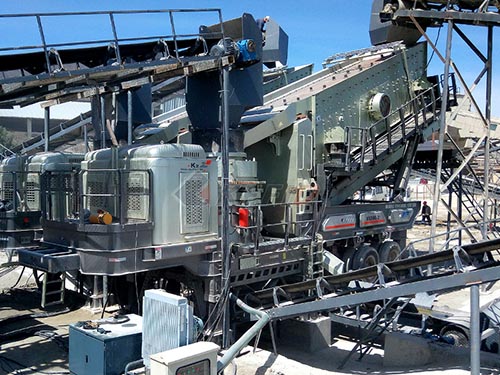
Mobility and Modularity – Some quarries require portable or semi-mobile crushing plants that can be relocated as the pit advances. Bespoke manufacturers design track-mounted or wheel-mounted units with quick-disconnect conveyors and folding screens.
The Manufacturer’s Role in Project Lifecycle
Bespoke equipment manufacturers typically engage with quarry operators across the entire project lifecycle:
Feasibility and Concept Studies – Assessing the quarry’s reserves, market demand, and logistical constraints to determine the optimal plant configuration.
Detailed Engineering and Design – Producing 3D models, structural calculations, and electrical schematics. This phase often involves close collaboration with the quarry’s engineering team.
Fabrication and Quality Control – Manufacturing components in-house or through vetted subcontractors, with rigorous inspection at each stage.
Installation and Commissioning – Supervising erection, aligning drives, and tuning the circuit to achieve guaranteed performance targets.
Training and After-Sales Support – Providing operator training, spare parts inventory planning, and remote diagnostics.
Performance Audits and Upgrades – Periodically reviewing plant performance and recommending modifications as market specifications or feed conditions change.
Leading Regions and Market Trends
Bespoke quarry ballast crushing equipment manufacturing is concentrated in regions with strong mining and infrastructure sectors. Europe, particularly Germany, Sweden, and Finland, has a long tradition of custom crushing solutions. North American manufacturers in the United States and Canada are known for large-scale, high-throughput plants. China and India have emerged as significant players, offering a combination of cost competitiveness and increasing engineering sophistication.
Several trends are shaping the bespoke manufacturing landscape:
Digitalization and IoT – Sensors embedded in crushers and screens transmit real-time data to cloud platforms, enabling predictive maintenance and remote optimization.
Electrification – Growing interest in battery-electric and hybrid drives to reduce diesel consumption and emissions in quarries.
Circular Economy – Increased use of recycled concrete and demolition waste as ballast feedstock, requiring crushers that can handle variable and contaminated materials.
Modular and Containerized Plants – Pre-assembled modules that can be shipped in standard containers and rapidly deployed in remote locations.
Conclusion
Bespoke quarry ballast crushing equipment manufacturers occupy a vital niche in the aggregate industry. By rejecting the one-size-fits-all approach, they deliver engineered solutions that maximize yield, ensure specification compliance, and reduce total cost of ownership. For quarry operators, the decision to invest in custom equipment is not merely a capital expenditure—it is a strategic commitment to product quality and operational resilience. As ballast specifications tighten and environmental pressures intensify, the demand for bespoke crushing solutions is likely to grow. Manufacturers who combine deep material science knowledge, advanced simulation tools, and responsive after-sales service will be best positioned to serve this demanding market. In an industry where margins are measured in millimeters and tons per hour, the precision of bespoke engineering is not a luxury—it is a competitive necessity.
If you have any questions about our products, please feel free to contact us. We take all inquiries and suggestions very seriously.