
Title: Comprehensive Analysis of Luxury Gold Ore Crushing Equipment: Market Pricing, Technology, and Investment Considerations
Introduction
The global mining industry has witnessed a paradigm shift in recent years, driven by the increasing demand for high-grade gold deposits and the depletion of easily accessible surface ores. As a result, the processing of “luxury gold ore”—typically defined as ore with a gold content significantly above the average grade (e.g., >10 g/t or higher, often associated with high-margin, small-to-medium-scale operations)—has become a focal point for investors and mining operators. The crushing stage is the first and most critical step in the gold extraction process, directly influencing downstream milling, leaching, and recovery efficiency. This article provides a professional, objective, and detailed examination of the pricing landscape for luxury gold ore crushing equipment, covering key influencing factors, equipment types, market trends, and cost-benefit analysis.
1. Defining “Luxury Gold Ore” and Its Implications for Crushing
Before delving into equipment pricing, it is essential to clarify what constitutes “luxury gold ore.” In the mining context, luxury ore is not merely a marketing term but a technical classification referring to ore with exceptionally high gold concentration, often accompanied by low impurity levels. Such ore is typically found in narrow-vein deposits, high-grade underground mines, or alluvial/placer deposits with coarse gold particles. The processing of luxury ore demands equipment that can:
Consequently, the crushing equipment for luxury gold ore is not standard off-the-shelf machinery. It often requires specialized design, high-grade materials, and advanced automation, which directly impacts pricing.
2. Types of Crushing Equipment for Luxury Gold Ore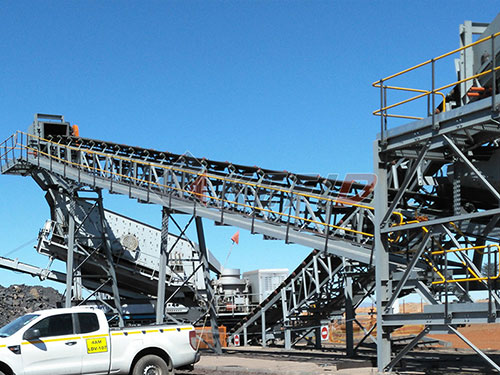
The choice of crusher depends on ore characteristics (hardness, abrasiveness, moisture content) and the desired final product size. The primary categories include:
Jaw Crushers: Used for primary crushing. For luxury ore, heavy-duty jaw crushers with high manganese steel or chrome alloy liners are preferred. Prices range from $30,000 to $500,000 for units with capacities from 1 tph to 200 tph. High-end models feature hydraulic adjustment, automatic lubrication, and wear monitoring.
Cone Crushers: Ideal for secondary and tertiary crushing. Luxury ore often requires fine crushing (6–12 mm) before grinding. Multi-cylinder hydraulic cone crushers with automatic setting regulation are common. Prices: $80,000 to $1.2 million for high-capacity units (50–500 tph). Specialized models for hard, abrasive gold ores may include ceramic composite liners.
Impact Crushers (Vertical Shaft Impact – VSI): Used for shaping and fine crushing. VSI crushers are effective for ore with high silica content but may generate excessive fines. Prices: $60,000 to $400,000. For luxury ore, VSI units with closed rotors and tungsten carbide tips are recommended.
High-Pressure Grinding Rolls (HPGR): Increasingly adopted for gold ore due to their energy efficiency and ability to produce micro-cracks in ore particles, enhancing gold liberation. HPGR units for luxury ore are capital-intensive: $500,000 to $3 million for industrial-scale systems.
Mobile and Modular Crushing Plants: For remote or small-scale luxury gold operations, mobile jaw/cone combinations or modular skid-mounted plants are popular. Prices: $200,000 to $1.5 million depending on capacity and automation level.
3. Key Factors Influencing Equipment Price
The price of luxury gold ore crushing equipment is not a fixed number but a function of several technical and market variables:
Ore Hardness and Abrasiveness: Gold ore often contains quartz, pyrite, or other hard minerals. Crushers designed for high abrasion resistance (e.g., using AR400 steel, ceramic inserts, or hardfacing) cost 20–40% more than standard models.
Capacity and Throughput: Higher capacity (tons per hour) directly increases the size of the crusher, motor power, and structural reinforcement. A 100 tph jaw crusher may cost $150,000, while a 500 tph unit can exceed $800,000.
Automation and Control Systems: Modern luxury ore crushers integrate PLC-based control, remote monitoring, vibration sensors, and automatic gap adjustment. These features add 10–30% to the base price but improve recovery and reduce downtime.
Wear Parts and Maintenance: The cost of replacement liners, mantles, and blow bars is a recurring expense. Premium wear parts (e.g., manganese steel with 18% Mn, or ceramic composites) can double the initial price but extend service life by 50–100%.
Customization and Engineering: For unique ore characteristics (e.g., high clay content, sticky ore, or coarse gold), manufacturers may offer custom feed chutes, dust suppression systems, or anti-clogging designs. Custom engineering adds 15–25% to the base price.
Brand and Origin: Established brands (e.g., Metso Outotec, Sandvik, FLSmidth, ThyssenKrupp) command a premium due to reliability, global service networks, and proven performance. Chinese manufacturers (e.g., SBM, Zenith, Shibang) offer lower prices (30–50% less) but may require more frequent maintenance.
Regulatory Compliance: Equipment destined for environmentally sensitive regions must meet stringent noise, dust, and emission standards. Additional enclosures, baghouse filters, or soundproofing can increase costs by 10–20%.
4. Market Pricing Overview (2024–2025 Estimates)
Based on industry reports, supplier quotations, and project case studies, the following are indicative price ranges for luxury gold ore crushing equipment (excluding installation, freight, and taxes):
| Equipment Type | Capacity Range (tph) | Price Range (USD) | Typical Application |
|---|---|---|---|
| Small Jaw Crusher (PE 400×600) | 10–40 | $30,000 – $60,000 | Pilot plants, small mines |
| Large Jaw Crusher (C160) | 200–500 | $400,000 – $1,000,000 | Primary crushing, high-grade ore |
| Multi-Cylinder Cone Crusher (HP300) | 100–300 | $150,000 – $350,000 | Secondary/tertiary crushing |
| VSI Crusher (Barmac B7150) | 100–200 | $120,000 – $250,000 | Fine crushing, shaping |
| HPGR (HRC 800) | 200–400 | $1,200,000 – $2,500,000 | High-pressure grinding, energy saving |
| Mobile Crushing Plant (Jaw+Cone) | 50–150 | $500,000 – $1,500,000 | Remote sites, modular setup |
Note: Prices are subject to fluctuation due to raw material costs (steel, alloys), global supply chain disruptions, and currency exchange rates.
5. Cost-Benefit Analysis for Luxury Gold Ore Operations
Investing in high-end crushing equipment for luxury gold ore must be justified by the economic benefits:
Improved Gold Recovery: A well-designed crushing circuit reduces over-grinding, minimizing gold loss in slimes. Even a 1–2% increase in recovery can yield significant revenue for high-grade ore (e.g., 10 g/t ore at $2,000/oz: 1% recovery gain = $0.64 per ton, or $64,000 per 100,000 tons).
Reduced Operating Costs: Premium crushers with advanced wear parts and automation lower energy consumption (kWh/t) and maintenance labor. For example, HPGR can reduce energy by 20–30% compared to conventional cone crushers.
Lower Downtime: High-quality crushers from reputable manufacturers have mean time between failures (MTBF) exceeding 2,000 hours, compared to 500–800 hours for budget models. This is critical for luxury ore operations where production stoppages are costly.
Resale Value: Well-maintained premium equipment retains 40–60% of its value after 5–7 years, whereas generic brands may depreciate to 20–30%.
6. Procurement Strategies and Considerations
For mining companies seeking to purchase luxury gold ore crushing equipment, the following steps are recommended:
Conduct Ore Characterization: Perform comprehensive tests (Bond Work Index, abrasion index, moisture content) to match crusher design to ore properties. This avoids over-specification (wasting capital) or under-specification (causing frequent breakdowns).
Request Turnkey Proposals: Engage multiple suppliers for complete crushing circuit designs, including conveyors, screens, and dust control. This ensures compatibility and reduces integration risks.
Evaluate Total Cost of Ownership (TCO): Beyond the purchase price, consider installation, training, spare parts availability, and warranty terms. A $500,000 crusher with a 5-year warranty and local service may be cheaper than a $350,000 unit with no support.
Consider Leasing or Financing: For smaller operations, leasing with a buyout option can preserve capital. Some manufacturers offer performance-based contracts where payment is tied to throughput or uptime.
Monitor Market Trends: The global crushing equipment market is influenced by mining commodity cycles, steel prices, and technological advancements (e.g., AI-driven predictive maintenance). Prices may drop during economic downturns but rise during supply shortages.
7. Conclusion
The price of luxury gold ore crushing equipment is a reflection of its engineering sophistication, material quality, and operational reliability. While entry-level crushers can be acquired for as little as $30,000, a complete, high-performance crushing system for a medium-scale luxury gold operation typically ranges from $500,000 to $3 million. The decision to invest in premium equipment should be based on a rigorous analysis of ore characteristics, recovery gains, and long-term operating costs. In the competitive landscape of gold mining, where even marginal improvements in efficiency translate to substantial profits, the adage “you get what you pay for” holds particularly true. For operators of luxury gold ore, the crushing equipment is not merely a cost center but a strategic asset that directly impacts the bottom line. Therefore, a thorough, objective evaluation of price versus value is essential for sustainable success.
If you have any questions about our products, please feel free to contact us. We take all inquiries and suggestions very seriously.