
Professional Coke Vibration Screen Customization: Engineering Precision for Demanding Bulk Material Processing
Introduction
In the metallurgical, chemical, and energy sectors, the handling and classification of coke—a hard, abrasive, and often hot bulk material—presents unique engineering challenges. Coke vibration screens are critical components in processes ranging from coke oven battery discharge to blast furnace feed preparation and coke breeze recovery. Unlike standard screening equipment, coke screens must withstand severe mechanical wear, high impact loads, elevated temperatures, and corrosive environments while maintaining precise size separation. Consequently, the customization of professional coke vibration screens has emerged as a specialized discipline that integrates material science, dynamic structural analysis, and process engineering. This article examines the technical rationale, design parameters, and engineering considerations that define professional coke vibration screen customization.
The Unique Demands of Coke Screening
Coke is characterized by its high hardness (Mohs scale 6–7), angular particle shape, low bulk density, and tendency to generate fines. These properties impose several operational stresses on screening equipment. First, abrasive wear on screen media and structural components is accelerated, particularly in high-throughput applications. Second, the impact energy of large coke lumps—often exceeding 100 mm in size—can cause fatigue cracking in screen frames and support structures. Third, coke screening frequently occurs at elevated temperatures (up to 200–300°C in dry quenching applications), necessitating thermal compensation in design. Fourth, the generation of coke breeze (fine particles below 5 mm) requires effective dust containment and screen aperture control to avoid product contamination.
Standard, off-the-shelf vibrating screens are generally designed for moderate-duty applications and rarely address these combined stressors optimally. Professional customization therefore becomes essential to achieve reliable performance, extended service life, and minimized downtime.
Key Customization Parameters
Professional coke vibration screen customization begins with a thorough analysis of the client’s process requirements. The following parameters form the basis of any tailored design:
Throughput and Particle Size Distribution: The screen must be sized to handle the specified tonnage per hour (typically 50–500 t/h for coke applications) while accounting for the feed’s particle size distribution. Customization involves selecting the appropriate screen width and length, as well as the optimal aperture shape (square, rectangular, or slotted) to maximize screening efficiency.
Screen Media Selection: For coke, high-carbon steel woven wire, polyurethane modular panels, or perforated stainless steel plates are common choices. Customization determines the wire diameter, aperture tolerance, and tensioning method. Polyurethane media, for instance, offer superior wear resistance and noise reduction but may require modified support structures compared to woven wire.
Vibration Mechanism and Motion Profile: Coke screens typically employ either circular motion (for general scalping) or linear motion (for precise classification). Customization of the vibrator—whether eccentric shaft, gear-driven, or electromagnetic—includes setting the amplitude (usually 4–10 mm) and frequency (800–1,500 rpm) to achieve optimal material conveyance and stratification without causing excessive degradation of fragile coke particles.
Structural Reinforcement: The screen frame, cross beams, and side plates must be designed to withstand dynamic loads. Customization may involve finite element analysis (FEA) to optimize rib placement, use of high-strength low-alloy (HSLA) steel, and incorporation of wear liners at high-impact zones. For hot coke applications, expansion joints and heat-resistant coatings are specified.
Drive and Isolation Systems: The motor and drive arrangement (direct drive, belt drive, or cardan shaft) is customized for the available space and maintenance access. Isolation springs—coil, rubber, or air—are selected to minimize transmitted vibrations to the supporting structure, a critical factor in retrofitting existing plants.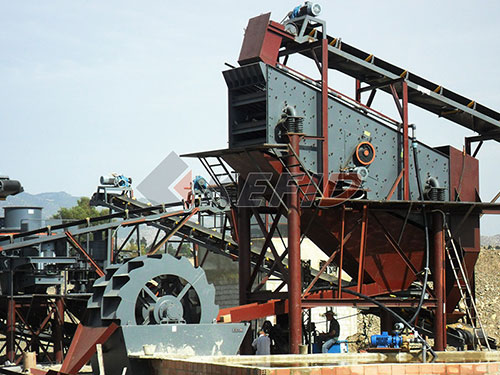
Dust and Noise Control: Professional customization includes optional enclosures, dust seals, and acoustic insulation to meet environmental and occupational health regulations. For coke breeze, a negative-pressure dust collection interface is often integrated.
Engineering Process for Customization
A professional customization project follows a structured engineering workflow:
Case-Specific Customization Examples
Consider a coke oven battery requiring scalping of hot coke (>200°C) at 300 t/h. A customized linear-motion screen with heat-resistant polyurethane media, water-cooled vibrator bearings, and reinforced side plates with expansion slots would be specified. Alternatively, a coke breeze recovery circuit might require a high-frequency, low-amplitude screen with anti-blinding slotted apertures and a stainless steel contact surface to prevent corrosion.
Conclusion
Professional coke vibration screen customization is not merely a matter of selecting options from a catalog; it is a rigorous engineering exercise that balances process requirements, material characteristics, and mechanical reliability. By tailoring screen media, motion parameters, structural design, and auxiliary systems to the specific demands of coke handling, operators achieve higher screening efficiency, longer equipment life, and reduced maintenance costs. As coke quality and environmental standards continue to evolve, customized vibration screen solutions will remain indispensable for professional bulk material processing.
If you have any questions about our products, please feel free to contact us. We take all inquiries and suggestions very seriously.