Here is a professional, objective English article about a gold ore crushing equipment company sample, exceeding 1000 words.
Gold Ore Crushing Equipment Company: A Sample Profile and Industry Analysis
The gold mining industry relies on a complex chain of processes to transform raw ore into a refined product. At the very front end of this chain lies crushing—a critical stage that determines the efficiency, cost-effectiveness, and overall viability of downstream operations. This article provides a detailed, objective sample profile of a hypothetical gold ore crushing equipment company, examining its operational framework, product portfolio, technological capabilities, market positioning, and the broader industry context in which such enterprises operate.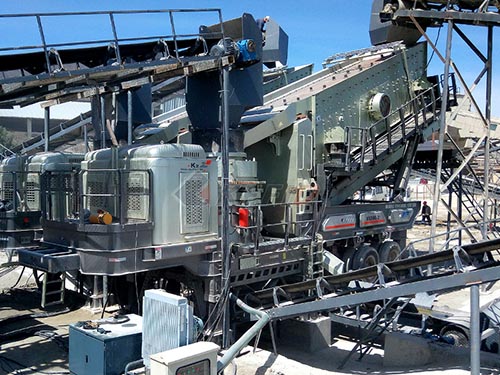
Company Overview: Aurum Crush Systems (Sample)
For the purposes of this analysis, the sample company is designated as Aurum Crush Systems (ACS), a mid-tier original equipment manufacturer (OEM) specializing in comminution solutions for the gold mining sector. Headquartered in a major mining services hub, ACS operates with a workforce of approximately 450 employees, including 120 engineers and technical specialists. The company’s annual revenue is estimated at $180 million, with a customer base spanning West Africa, Australia, South America, and Central Asia.
ACS positions itself as a full-service provider, offering not only equipment but also process consultation, installation, commissioning, and lifecycle maintenance. Its strategic focus is on delivering high-reduction-ratio crushing circuits that minimize energy consumption and maximize throughput—key performance indicators for modern gold operations.
Product Portfolio: Equipment and Systems
A gold ore crushing company’s product line must address the specific characteristics of gold-bearing ores, which can vary widely in hardness, abrasiveness, and moisture content. ACS’s portfolio is structured around three core categories: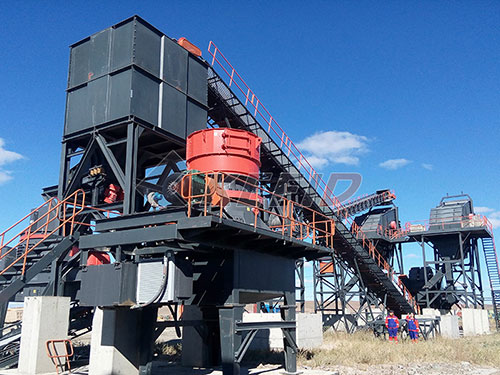
1. Primary Crushing Equipment
- Jaw Crushers: Heavy-duty, single-toggle jaw crushers designed for high-capacity primary reduction. These units feature hydraulic gap adjustment and wear-resistant jaw plates, suitable for run-of-mine ore with feed sizes up to 1,200 mm.
- Gyratory Crushers: For larger-scale operations (typically >1,000 t/h), ACS offers hydraulically supported gyratory crushers with integrated tramp release systems. These are engineered for continuous operation and high availability.
2. Secondary and Tertiary Crushing Equipment
- Cone Crushers: High-performance, multi-cylinder hydraulic cone crushers that provide excellent product shape and size reduction. ACS’s cone crushers are equipped with automated setting regulation (ASR) and overload protection, enabling consistent performance in closed-circuit configurations.
- Impact Crushers: Horizontal shaft impactors (HSI) for less abrasive ores, offering high reduction ratios and cubic product shape. These are particularly relevant for heap-leach operations where particle size distribution affects permeability.
3. Auxiliary and Integrated Systems
- Vibrating Screens and Feeders: Scalping and sizing screens with polyurethane or rubber decks, designed for high-wear environments.
- Crushing Stations: Semi-mobile and modular crushing stations that integrate primary crushers, feeders, and discharge conveyors. These stations reduce truck haulage costs and are increasingly favored in deep-pit operations.
- Automation and Control Systems: PLC-based control panels with remote monitoring capabilities, enabling real-time adjustment of crusher settings and predictive maintenance alerts.
Technological Capabilities and Innovation
A credible gold ore crushing equipment company must demonstrate continuous investment in research and development. ACS’s technical differentiators include:
- Wear Part Metallurgy: Development of custom alloy compositions (e.g., high-chromium white iron and manganese steel) tailored to specific ore abrasiveness indices. This extends liner life by up to 30% compared to standard offerings.
- Discrete Element Method (DEM) Modeling: ACS employs DEM simulation to optimize chamber geometry and liner profiles, reducing power draw while maintaining throughput. This virtual prototyping approach shortens design cycles and improves customer-specific customization.
- Energy Recovery and Efficiency: Integration of variable frequency drives (VFDs) on feeder and crusher motors to match power input to real-time load, reducing specific energy consumption (kWh/t).
- Dust Suppression and Environmental Controls: Enclosed crushing chambers, water spray systems, and baghouse filters to comply with increasingly stringent occupational health and environmental regulations.
Market Positioning and Competitive Landscape
The global market for gold ore crushing equipment is characterized by moderate consolidation, with a handful of multinational corporations (e.g., Metso Outotec, Sandvik, FLSmidth, thyssenkrupp) dominating the high-capacity segment. ACS competes in the mid-market, targeting:
- Junior and Mid-Tier Mining Companies: Clients who require reliable, cost-effective equipment without the premium pricing of tier-one OEMs.
- Brownfield Expansions: Operations seeking to debottleneck existing crushing circuits through equipment upgrades or added secondary/tertiary stages.
- Remote and Emerging Mining Regions: Where logistical support and modular equipment design are critical success factors.
ACS’s competitive strategy emphasizes total cost of ownership (TCO) rather than lowest initial capital cost. By offering performance guarantees (e.g., throughput and product size compliance) and long-term service agreements, the company differentiates itself from low-cost suppliers who often lack local support infrastructure.
Operational and Service Framework
A crushing equipment company’s value proposition extends beyond the factory gate. ACS’s operational model includes:
- Application Engineering: Site-specific ore characterization (bond work index, abrasion index, moisture content) to inform equipment selection and circuit design.
- Global Spare Parts Network: Regional warehouses stocking critical wear parts and components, with a target of 48-hour delivery to major mining hubs.
- Field Service and Training: On-site commissioning, operator training, and preventive maintenance programs. ACS employs 60 field service technicians deployed globally.
- Digital Services: Remote monitoring of crusher vibration, temperature, and power draw, with cloud-based dashboards providing actionable insights for maintenance planning.
Industry Challenges and Company Responses
The gold ore crushing equipment sector faces several structural challenges:
- Ore Variability: As high-grade deposits deplete, mines process lower-grade, harder, and more abrasive ores. ACS responds with flexible circuit designs and wear-part customization.
- Energy Costs and Carbon Footprint: Crushing accounts for a significant portion of a mine’s energy consumption. ACS invests in high-efficiency motors and optimized chamber designs to reduce kWh/t.
- Skilled Labor Shortages: Remote mining locations struggle to attract and retain trained operators. ACS addresses this through simulator-based training and simplified control interfaces.
- Capital Cyclicality: Mining capex is cyclical, impacting equipment orders. ACS mitigates this through a balanced portfolio of new equipment sales, rebuilds, and service contracts.
Financial and Strategic Sample Metrics
For illustrative purposes, ACS’s sample financial and operational metrics are as follows:
- Revenue Mix: 55% new equipment sales, 25% spare parts and wear components, 20% service and maintenance contracts.
- R&D Spend: 6% of annual revenue, focused on wear materials, automation, and modular design.
- Customer Retention Rate: 82% for service contract clients.
- Equipment Lead Time: 16–24 weeks for standard crushers; 30–40 weeks for custom crushing stations.
- Safety Record: Lost-time injury frequency rate (LTIFR) of 1.2 per million hours worked, below industry average.
Conclusion
A gold ore crushing equipment company such as Aurum Crush Systems occupies a vital niche in the mining value chain. Success in this sector requires a combination of robust equipment engineering, deep application knowledge, and a service infrastructure that supports equipment throughout its lifecycle. While multinational OEMs dominate the largest projects, mid-tier companies can thrive by focusing on customization, total cost of ownership, and responsive local support. As the gold mining industry confronts harder ores, rising energy costs, and remote operations, the demand for efficient, reliable, and intelligent crushing solutions will only grow. Companies that invest in wear technology, automation, and service excellence will be well-positioned to meet these challenges.
This sample profile is intended for illustrative and analytical purposes, demonstrating the structure, capabilities, and strategic considerations typical of a gold ore crushing equipment company operating in the global mining market.
