Title: Optimizing the 250–300 TPH Stone Crushing Plant Wholesaler Supply Chain: Structure, Challenges, and Strategic Solutions
Introduction
In the global aggregate and construction materials industry, the 250–300 tons per hour (TPH) stone crushing plant represents a critical mid-to-high capacity production unit. It is the workhorse for large-scale infrastructure projects, commercial quarry operations, and road construction contractors. While the engineering of the crushing machinery itself is often the focus of technical discourse, the commercial viability of such plants hinges on a less visible but equally critical factor: the wholesaler supply chain. A wholesaler specializing in 250–300 TPH plants does not merely sell machines; they orchestrate a complex network of procurement, logistics, inventory management, after-sales support, and financial risk mitigation. This article provides a professional, objective analysis of the 250–300 TPH stone crushing plant wholesaler supply chain, examining its structural components, operational bottlenecks, and best-practice strategies for resilience and profitability.
1. Defining the Product Ecosystem: Beyond the Primary Crusher
A 250–300 TPH plant is not a single machine but an integrated system. The supply chain must account for a standardized yet customizable bill of materials (BOM). Core components include:
- Primary Crushing Unit: Typically a jaw crusher (e.g., PE-900×1200 or equivalent) with a feed opening of 900–1200 mm.
- Secondary Crushing Unit: Cone crushers (e.g., CS, HPT series) or impact crushers (PFW series) for finer reduction.
- Screening Deck: Vibrating screens (2–3 decks) with capacities matching 250–300 TPH throughput.
- Conveying System: Belt conveyors of varying lengths and widths (800–1200 mm) to link all units.
- Auxiliary Equipment: Vibrating feeders, hoppers, dust suppression systems, and electrical control panels.
For a wholesaler, the supply chain is not linear. It is a multi-tiered network involving raw material suppliers (steel plates, castings), component manufacturers (bearings, motors, hydraulic systems), sub-assemblers (chassis, frames), and final integrators. The wholesaler acts as the central node, aggregating demand from downstream contractors and translating it into precise procurement orders upstream.
2. Upstream Procurement: The Sourcing Matrix
The first critical link is the sourcing of heavy machinery and wear parts. Unlike consumer goods, crushing equipment has long lead times—often 8 to 16 weeks for a complete plant. A wholesaler must maintain strategic relationships with:
- OEMs (Original Equipment Manufacturers): For core crushers, the wholesaler may either be an authorized distributor or a parallel importer. Authorized distribution ensures genuine parts and warranty support but often comes with higher unit costs and territorial restrictions. Parallel sourcing offers price flexibility but introduces quality and after-sales risk.
- Tier-2 Component Suppliers: Hydraulic cylinders, eccentric shafts, and manganese steel liners (jaw plates, cone mantles) are high-wear items. The supply chain for these must be dual-sourced to avoid single-point failure. For example, manganese content (12–18%) and heat treatment processes directly affect wear life; a wholesaler must audit foundries for metallurgical consistency.
- Steel Fabricators: The main frames and chassis are fabricated from heavy steel plates (Q235B, Q345B). Wholesalers often pre-order these in bulk to hedge against steel price volatility, which can fluctuate by 10–15% within a quarter.
Key Challenge: Component Standardization vs. Customization. While a 250–300 TPH plant is “standard,” site-specific conditions (hard rock vs. river gravel, humidity, altitude) require adjustments in crusher settings, conveyor angles, and motor power. The supply chain must support a “configured-to-order” model, where 70% of components are standardized and 30% are engineered per project. This requires the wholesaler to maintain a flexible procurement framework rather than a rigid bulk-buying model.
3. Inventory Management: The Balancing Act of Capital and Availability
Inventory is the heaviest financial burden in this supply chain. A wholesaler must decide between:
- Finished Goods Inventory: Holding complete 250–300 TPH plants in stock. This is rare due to high capital lockup (often $500,000–$1.2 million per unit). However, for high-demand regions (e.g., Middle East, Southeast Asia), holding 1–2 units can secure immediate sales.
- Semi-Knocked-Down (SKD) Inventory: Storing major sub-assemblies (crusher bodies, screens) separately. This allows faster assembly (2–3 weeks) while reducing storage space.
- Critical Spare Parts Inventory: This is non-negotiable. For a 250–300 TPH plant, the top 20 critical spares (e.g., jaw plates, toggle plates, main shafts, bearings, hydraulic pumps) must be available locally or within a 48-hour shipping window. Downtime costs a contractor $5,000–$10,000 per hour; hence, the wholesaler’s spare parts supply chain is a direct revenue driver.
Strategic Approach: Implement an ABC-XYZ analysis. Classify parts by value (A, B, C) and demand volatility (X, Y, Z). For high-value, low-volatility items (e.g., main frames), use vendor-managed inventory (VMI) with the OEM. For low-value, high-volatility items (e.g., conveyor rollers), maintain a safety stock at regional distribution centers.
4. Logistics and Distribution: The Heavy-Lift Problem
Transporting a 250–300 TPH plant is a specialized logistics operation. The supply chain must manage:
- Sea Freight: For international wholesalers, components are shipped in 40-foot open-top containers or on flat racks. The challenge is weight distribution—a single jaw crusher can weigh 40–60 tons, exceeding standard container limits. This necessitates break-bulk shipping or using specialized heavy-lift vessels.
- Inland Transportation: From the port to the quarry site, the plant must be moved via low-bed trailers with hydraulic ramps. Route surveys are required to assess bridge weight limits, road widths, and overhead power lines. The wholesaler must coordinate with local transport authorities, often requiring permits that take 2–4 weeks.
- Site Assembly: The supply chain does not end at delivery. The wholesaler often provides a site erection team. This requires a separate logistics stream for cranes (50–100 ton capacity), welding equipment, and temporary power generators.
Key Challenge: Last-Mile Fragility. The final 50 kilometers to a remote quarry can be the most expensive and risky. A single axle failure or road collapse can delay the project by weeks. Professional wholesalers pre-position mobile cranes and recovery vehicles, and they use GPS-tracked convoy systems to monitor the fleet in real-time.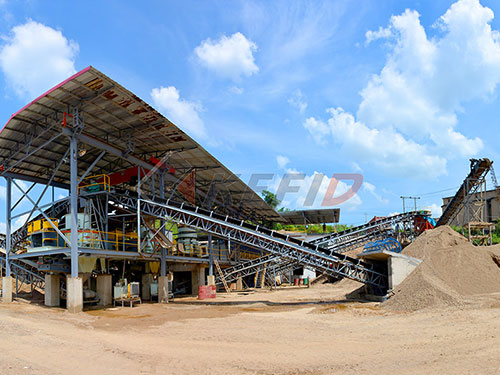
5. After-Sales Service and Reverse Logistics
In the crushing industry, the “sale” is the beginning of a long-term relationship. The supply chain must support:
- Wear Parts Replacement Cycle: A 250–300 TPH plant consumes manganese liners every 3–6 months (depending on abrasiveness). The wholesaler must have a closed-loop replenishment system. This involves tracking the wear rate of each crusher remotely (via sensors or manual inspection reports) and automatically triggering a reorder before failure occurs.
- Reverse Logistics: When a crusher is upgraded or replaced, the wholesaler must handle the return of old equipment. This includes decommissioning, inspection, and either refurbishment for resale or scrap recovery. Efficient reverse logistics reduces the total cost of ownership for the contractor and provides the wholesaler with a secondary revenue stream (refurbished units).
- Technical Documentation: The supply chain must deliver accurate manuals, hydraulic schematics, and electrical diagrams. In a global context, this requires multilingual documentation and compliance with local safety standards (e.g., CE, ISO, or local quarry regulations).
6. Financial and Risk Management in the Supply Chain
The 250–300 TPH market is capital-intensive and cyclical. A wholesaler’s supply chain must be financially engineered to withstand shocks:
- Currency Hedging: Since many components are sourced globally (e.g., bearings from Sweden, motors from Germany), the wholesaler faces currency risk. Forward contracts and multi-currency accounts are essential.
- Payment Terms: Upstream suppliers often demand 30% advance payment, while downstream contractors may negotiate 10% advance and 90% on delivery. This creates a working capital gap. Wholesalers use trade finance instruments (letters of credit, supply chain finance platforms) to bridge this gap.
- Demand Forecasting: The supply chain must be aligned with infrastructure cycles. For example, a surge in government-funded highway projects in a region will spike demand for 250–300 TPH plants. Wholesalers use leading indicators (cement consumption, asphalt prices, mining permits) to adjust procurement volumes 6–9 months ahead.
7. Digitalization and the Future of the Supply Chain
The traditional, paper-based supply chain is rapidly evolving. Leading wholesalers are adopting:
- Digital Twin Technology: Creating a virtual replica of the 250–300 TPH plant. This allows the wholesaler to simulate wear patterns, predict spare part failures, and optimize inventory levels without physical inspection.
- Blockchain for Traceability: For high-value components, blockchain-based ledgers verify the origin of steel and castings, ensuring compliance with anti-dumping tariffs and quality standards.
- IoT-Enabled Telematics: Installing sensors on crushers to transmit real-time data (vibration, temperature, throughput) to the wholesaler’s central system. This data is used for predictive maintenance and to automatically trigger spare part dispatch.
8. Case Study: A Resilient Supply Chain in Action
Consider a hypothetical wholesaler, “GlobalAgg Supply,” operating in Southeast Asia. They supply a 250–300 TPH plant to a contractor in Indonesia. The supply chain steps are:
- Procurement: GlobalAgg orders the cone crusher from a Chinese OEM with a 12-week lead time. Simultaneously, they source manganese liners from a local foundry in Indonesia (to avoid import duties) and bearings from a Japanese distributor (stocked in Singapore).
- Logistics: The main crusher is shipped via break-bulk from Shanghai to Jakarta. The conveyor frames are shipped in containers. GlobalAgg pre-arranges a low-bed trailer and obtains a special permit for the 45-ton crusher to travel 80 km to the quarry.
- Assembly: A 10-person erection team is dispatched. They use a 100-ton crane rented from a local partner. The plant is operational in 21 days.
- After-Sales: GlobalAgg installs IoT sensors on the jaw crusher. After 4 months, the sensor detects increased power draw, indicating worn liners. The system automatically triggers a reorder from the Indonesian foundry, and the new liners arrive within 5 days, minimizing downtime.
This example illustrates that the wholesaler’s supply chain is not a cost center but a competitive weapon. The ability to deliver faster, support longer, and price more flexibly than a direct OEM purchase is what justifies the wholesaler’s margin.
Conclusion
The 250–300 TPH stone crushing plant wholesaler supply chain is a sophisticated, multi-layered system that demands expertise in heavy engineering, logistics, finance, and data analytics. It is not merely about moving steel and motors; it is about synchronizing global sourcing with local execution, balancing inventory capital against service levels, and anticipating market cycles before they occur. For any wholesaler aiming to dominate this segment, the strategic imperatives are clear: dual-source critical components, invest in predictive after-sales systems, master heavy-lift logistics, and digitalize the entire flow of information. Only then can a wholesaler transform a complex supply chain into a reliable, profitable, and scalable business model that serves the relentless global demand for crushed stone.
