
Slag Crusher Plant Dealer Cost: A Comprehensive Analysis of Pricing, Value, and Procurement Strategies
Introduction
In the metallurgical and construction waste recycling sectors, the slag crusher plant stands as a critical piece of infrastructure. It transforms blast furnace slag, steel slag, and other industrial by-products into reusable aggregates, cementitious materials, and road base. For any project developer, plant operator, or EPC contractor, one of the most pressing questions is: What does a slag crusher plant actually cost when procured through a dealer? Unlike direct manufacturer purchases, dealer-involved transactions introduce layers of markup, logistics, after-sales service, and regional market dynamics. This article provides a professional, objective, and detailed examination of slag crusher plant dealer costs, breaking down the components, price ranges, influencing factors, hidden charges, and strategic procurement advice.
1. Defining the Scope: What Constitutes a Slag Crusher Plant?
Before discussing cost, it is essential to define the system. A typical slag crusher plant includes:
The dealer cost is not merely the sum of these equipment prices. It includes engineering, assembly, installation supervision, commissioning, and often a warranty package. Therefore, the “dealer cost” is a turnkey or semi-turnkey figure, which can vary dramatically based on capacity (tons per hour), automation level, and material hardness.
2. The Dealer vs. Manufacturer Price Differential
A dealer is an intermediary authorized by the original equipment manufacturer (OEM) to sell, service, and sometimes assemble the plant. The dealer cost is typically 10% to 30% higher than the ex-factory price. This markup covers:
However, a dealer can also reduce costs for the buyer by bundling multiple OEMs (e.g., crusher from one, screen from another) into a single optimized system. In such cases, the dealer acts as a system integrator, and their engineering fee is part of the cost.
3. Realistic Dealer Cost Ranges (2024–2025 Market Data)
Based on global market intelligence, dealer-quoted costs for slag crusher plants (excluding civil works and raw material handling from the blast furnace) are as follows:
Small-scale plant (50–100 TPH): $250,000 – $600,000
Medium-scale plant (150–300 TPH): $800,000 – $2,500,000
Large-scale integrated plant (400–800 TPH): $3,500,000 – $8,000,000+
These figures are indicative. In emerging markets (India, Southeast Asia, Africa), dealer costs can be 20–40% lower due to lower labor and fabrication costs. In North America and Europe, stricter environmental compliance and higher automation push costs upward.
4. Key Cost Drivers in Dealer Quotations
Understanding what drives the dealer’s price is crucial for negotiation. The following factors have the most significant impact:
4.1. Slag Type and Abrasiveness
4.2. Magnetic Separation Complexity
A simple cross-belt magnet costs $10,000–$30,000. A heavy-duty drum separator with variable speed and multiple stages can cost $80,000–$200,000. Dealers often quote these as optional add-ons, but they are essential for recovering metallic iron, which can be sold as scrap to offset operating costs.
4.3. Automation and Control Systems
4.4. Civil Works and Foundation
Dealers typically exclude civil engineering. However, some dealers offer a “foundation package” including soil testing, reinforced concrete design, and anchor bolts. This can add $100,000–$400,000 depending on soil conditions. A dealer who includes this in the quote is effectively bundling a subcontractor, which may be convenient but not always cost-optimal.
4.5. Transportation and Installation
4.6. Spare Parts Inventory
A dealer will often require the buyer to purchase an initial spare parts kit (liners, belts, bearings, hydraulic hoses). This kit costs 5–10% of the total plant cost. Some dealers include it in the base price; others list it as a separate line item. Always clarify this.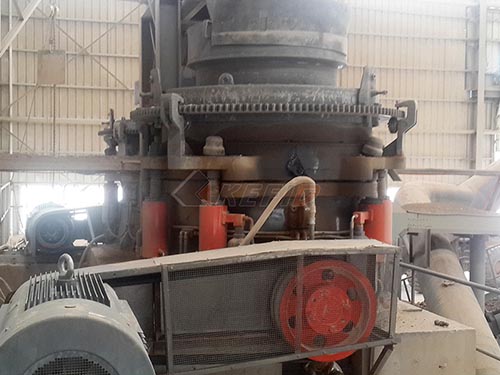
5. Hidden Costs and Common Dealer Markup Traps
Professional buyers must be vigilant about the following:
6. Regional Dealer Cost Variations
The same plant model can have vastly different dealer costs depending on geography:
7. How to Evaluate a Dealer Quote: A Cost-Benefit Framework
To avoid overpaying, use the following total cost of ownership (TCO) model:
TCO = Dealer Purchase Price + Installation Cost + (Annual Operating Cost × Plant Life) + Spare Parts Cost – Residual Value
A dealer quoting a lower initial price but with higher energy consumption (e.g., less efficient motors) will cost more over 10 years. Therefore, do not compare only the headline price. Ask for the specific power rating (kW) of each motor, the crusher’s throughput at a given closed-side setting, and the wear liner material.
8. Negotiation Strategies with Dealers
9. Case Study: Dealer Cost Breakdown for a 200 TPH Steel Slag Plant
To illustrate, consider a mid-sized steel slag crushing plant in the Middle East (UAE) procured through a regional dealer.
Total dealer cost: ~$1,795,000 (approximately $8,975 per TPH). This is within the medium-scale range but on the higher side due to freight and dealer margin. A direct OEM purchase would have been ~$1.4 million, but the buyer accepted the dealer cost for the benefit of local warranty service and rapid spare parts availability.
10. Long-Term Cost Implications and ROI
A slag crusher plant is not a cost center; it is a revenue generator. The recovered metallic iron (typically 1–3% of slag weight) can be sold at $300–$500 per ton. The crushed slag aggregate sells for $10–$25 per ton depending on local market. For a 200 TPH plant operating 6,000 hours per year, annual output is 1.2 million tons. Even at a conservative net profit of $3 per ton, the annual return is $3.6 million. Thus, the dealer cost is recovered within 6–12 months of operation. This ROI perspective is essential: a slightly higher dealer cost is justified if it ensures higher uptime (e.g., 95% vs. 85%) and faster service response.
11. Conclusion: Is Dealer Cost Worth It?
The dealer cost for a slag crusher plant is not a single number but a spectrum influenced by capacity, slag type, automation, geography, and service scope. A professional buyer should treat the dealer as a partner, not just a vendor. The premium paid over the OEM price buys local accountability, reduced project risk, and operational support. However, that premium must be transparent and justified. By using the cost breakdown framework, TCO analysis, and negotiation tactics outlined in this article, you can ensure that the dealer cost you pay is fair, competitive, and aligned with the long-term profitability of your slag processing operation.
Final recommendation: Always request a detailed, line-item quotation, benchmark against at least two other dealers, and include a performance guarantee clause in the contract. The dealer cost is an investment—manage it with the same rigor as you would any capital expenditure.
If you have any questions about our products, please feel free to contact us. We take all inquiries and suggestions very seriously.