
250-300 TPH Stone Crushing Plant: Assembly Plant Samples and Technical Overview
Introduction
In the realm of medium-to-large scale aggregate production, the 250-300 tons per hour (TPH) stone crushing plant represents a critical threshold. This capacity range is widely adopted in infrastructure projects, commercial quarries, and large-scale construction sites where consistent, high-quality crushed stone is required. The design, assembly, and operational efficiency of such a plant are paramount to meeting production targets while maintaining cost-effectiveness and compliance with environmental standards. This article provides a detailed, professional examination of the 250-300 TPH stone crushing plant, focusing on assembly plant samples, equipment configuration, layout considerations, and operational parameters.
1. Core Equipment Configuration
A 250-300 TPH crushing plant typically comprises a multi-stage crushing and screening system. The standard configuration includes primary, secondary, and tertiary crushing stages, along with intermediate and final screening units. The following is a representative equipment list for a typical plant in this capacity range:
2. Assembly Plant Samples: Layout and Modular Design
Assembly plant samples for 250-300 TPH capacity often follow a modular or semi-mobile design to facilitate transportation, installation, and future relocation. Below are three representative assembly configurations:
Sample A: Fixed Stationary Plant (Quarry-Based)
This is the most common configuration for permanent quarries. The plant is erected on reinforced concrete foundations. The primary jaw crusher is placed at the lowest elevation to receive dump truck feed. Material is conveyed to a surge pile, then to secondary and tertiary crushers located on elevated platforms. Screens are mounted above bins for direct loading into trucks or stockpiles. This layout minimizes conveyor lengths and power consumption but requires significant civil works.
Sample B: Semi-Mobile Plant (Project-Based)
Designed for large infrastructure projects (e.g., highways, dams), this assembly uses skid-mounted modules. Each major component—primary crusher, secondary cone, screen house—is mounted on a steel frame with integrated walkways and guards. Modules are transported on low-bed trailers and assembled on-site with bolted connections. This reduces installation time by up to 40% compared to fixed plants. A typical semi-mobile 250 TPH plant can be operational within 10-14 days.
Sample C: Portable Plant (Contract Crushing)
For contractors requiring frequent relocation, a portable configuration is used. The primary jaw crusher is mounted on a tracked or wheeled chassis, while secondary and tertiary units are on separate portable chassis. All units are equipped with onboard conveyors and power packs. This assembly is ideal for crushing recycled concrete or aggregate at multiple sites. However, the capacity may be slightly lower (closer to 250 TPH) due to space constraints on chassis.
3. Process Flow and Material Handling
The process flow for a 250-300 TPH plant is designed to maximize throughput while minimizing recirculation loads. A typical flow is as follows:
4. Key Design Parameters
To achieve 250-300 TPH consistently, the following parameters must be carefully calculated:
5. Operational Considerations
Wear Parts Management: In a 250-300 TPH plant, jaw plates may last 3-6 months, cone liners 2-4 months, and screen panels 1-3 months, depending on abrasiveness. Regular inspection and replacement schedules are critical.
Automation and Monitoring: Modern plants are equipped with variable frequency drives (VFDs) on feeders and conveyors, load cells on crushers, and vibration sensors on screens. A centralized control room allows operators to adjust settings in real-time.
Safety and Environmental Compliance: Dust collection systems (bag filters or wet scrubbers) are mandatory in many jurisdictions. Noise enclosures around crushers and screens reduce sound levels to below 85 dB. Emergency stop systems and interlocking guards are standard.
6. Case Study: Assembly of a 280 TPH Plant in Southeast Asia
A recent project in Indonesia involved the assembly of a 280 TPH plant for a limestone quarry. The plant used a PE-900×1200 jaw crusher, a PYB-1750 secondary cone, and a PYD-1750 tertiary cone. The assembly was semi-mobile, with all modules mounted on steel skids. The plant was erected in 12 days by a team of 15 workers and a 50-ton crane. After commissioning, the plant achieved 285 TPH average throughput with 95% availability. The final product was used for road base and concrete aggregate.
7. Economic and Performance Metrics
8. Conclusion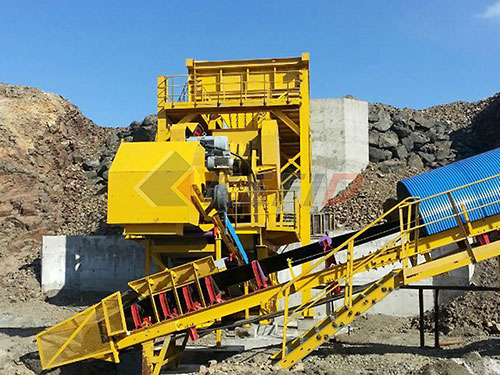
The 250-300 TPH stone crushing plant is a versatile and efficient solution for medium-to-large scale aggregate production. Whether configured as a fixed, semi-mobile, or portable assembly, the key to success lies in proper equipment selection, optimized process flow, and rigorous maintenance. Assembly plant samples from real-world projects demonstrate that with careful planning, such plants can deliver high throughput, consistent product quality, and long-term reliability. As global demand for construction materials continues to rise, the 250-300 TPH plant remains a cornerstone of modern aggregate production.
If you have any questions about our products, please feel free to contact us. We take all inquiries and suggestions very seriously.