
In the demanding world of aggregates production, mining, and large-scale construction, efficiency and reliability are not merely advantages—they are imperatives. For projects requiring consistent, high-volume output of high-quality crushed stone, sand, and gravel, the 250-300 Tons Per Hour (TPH) stone crushing plant stands as the industry’s benchmark for mid-to-large scale operations. This comprehensive analysis delves into the engineering excellence, operational benefits, and strategic value offered by a professionally engineered 250-300 TPH plant from a specialized trading company.
A 250-300 TPH stationary or semi-mobile crushing and screening plant represents a significant capital investment designed to deliver a substantial return through relentless productivity. This capacity range is strategically positioned to serve:
Unlike smaller setups or makeshift equipment combinations, a turnkey plant from an experienced trading company is a synchronized system where every component—from primary jaw crusher to final screening tower—is meticulously selected and integrated for optimal performance.
The robustness of a 250-300 TPH plant lies in its carefully engineered configuration. While designs can be customized based on feed material (hard granite, abrasive basalt, limestone, or recycled concrete) and final product specifications (road base, aggregates for concrete, railway ballast), a typical high-performance layout includes:
1. Primary Crushing Station: The Foundation of Throughput
2. Secondary & Tertiary Crushing Stages: Precision in Reduction
3. Tertiary/Quaternary Stage: Product Shaping & Sand Manufacturing
4. Screening & Material Handling: The Circulatory System
Investing in a complete 250-300 TPH system through an established trading company yields distinct competitive advantages:
1. Optimized System Synergy
A professional supplier doesn’t just sell individual machines; they provide a system. Each component is matched for capacity and performance characteristics. The feeder capacity aligns with the jaw crusher’s appetite, which in turn supplies an optimal load to the cone crushers, preventing bottlenecks or underutilization—a common pitfall in piecemeal equipment assembly.
2. Enhanced Energy Efficiency
Modern plants incorporate high-efficiency motors,VFDs (Variable Frequency Drives) on conveyors,and advanced crushing chambers designed for optimal nip angles and throw.This holistic approach minimizes specific energy consumption per ton of output,a critical factor given continuous operation.
3.Unparalleled Reliability & Uptime
Trading companies partner with top-tier OEMs(Original Equipment Manufacturers).Components like bearings,motors,and hydraulic systems are globally sourced from reputable brands.This translates into longer Mean Time Between Failures(MTBF),easier global part sourcing,and reduced unplanned downtime.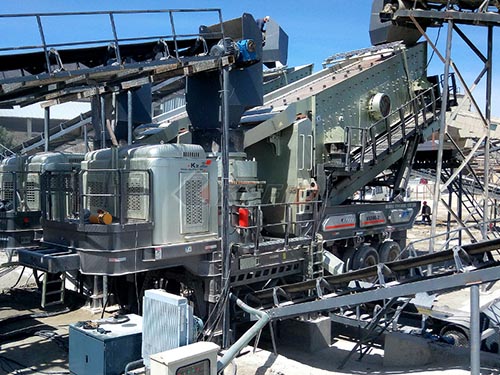
4.Superior Product Quality Control
With multiple screening stagesand recirculation loops,the plant operator has precise control over final product gradation.Consistent,cubical aggregates improve compaction density,increase concrete strength,and reduce binder content in asphalt—delivering superior value to end-customers.
5.Scalability & Future-Proofing
A well-designed plant allows for modular expansion.Capacity can often be increased by adding pre-wired modules(e.g.,an additional tertiary circuit).This flexibility protects the investment against future market demands.
Procuring such a complex system involves more than a transaction; it’s forming a strategic partnership.A reputable trading company adds immense value beyond equipment supply:
1.Single-Point Responsibility & Project Management
They act as the sole point of contact,taking full responsibility for system design,cross-brand component compatibility,supply chain logistics,timely delivery,and technical documentation.This eliminates coordination headaches for the buyer.
2.Technical Expertise & Customization
Experienced engineers conduct thorough site analyses,material testing,and production requirement reviews.They tailor layouts(fixed,semi-mobile,track-mounted),choose wear part metallurgy,and design foundations/dust suppression systems specific to client needs.
3.Comprehensive After-Sales Support Ecosystem
This is arguably their most critical offering.The package includes:
Commissioning & On-Site Training: Ensuring smooth start-upand operator proficiency.
Wear & Spare Parts Supply: Guaranteeing availabilityof critical spares through strategic stocking.
Preventive Maintenance Contracts: Scheduled inspectionsand servicingto maximize equipment life.
Remote Monitoring Support: Leveraging IoT(Internet of Things)technologyfor predictive maintenanceand operational data analysis.
4.Financial Flexibility
Trading companies often provide various procurement models—direct purchase,fleet financing,build-operate-transfer(BOT),or leasing options—enabling clients to optimize cash flowand align costs with project revenue streams.
The capital expenditure(CAPEX)fora 250-300 TPH plantis substantial,butthe operational expenditure(OPEX)efficiency drives compelling ROI.A well-runplant operatingat80% utilizationcan produceover500,000tonsofhigh-valueaggregatesannually.Keyfinancialbenefitsinclude:
EconomiesofScale:Lowercostpertoncomparedtosmaller,fragmentedsetups.
ReducedLaborCosts:Highautomationrequiresminimalmanpowerforoperation.
MinimizedDowntimeCosts:Reliabilitydirectlyprotectsrevenue streams.
ProductPremium:Superiorcubicalshapescancommandhighermarketprices.
Byreducingwaste,optimizingenergyuse,andmaximizingyieldofinspecproducts,theplanttypicallyachievespaybackwithin2–4yearsdependingonlocalmarketconditions。
A250–300TPHstonecrushingplantismorethanacollectionofmachinery;itisaproductionpowerhouseandasignificantstrategicasset。Inanindustrymarginsareoftenwonontheslightestimprovementsinefficiencyandreliability,partneringwithaprofessionaltradingcompanytoacquireacohesivelyengineeredsystemisthemostprudentdecision。
Itprovidesthefoundationalcapacitytosecuremajorlong-termcontracts,meetstringentmodernmaterialspecifications,andbuildareputationasareliable,high-volumesupplier。Ultimately,thisinvestmentrepresentsacommitmenttooperationalexcellence,sustainablegrowth,anddominanceinthemarketplacefortheforeseeablefuture。
Foranyenterpriseaimingtocompeteattheforefrontoftheaggregatesindustry,theintegrationofa robustlydesigned , professionallysupported250–300TPHcrushingplantisnotjustanoption — itisanessentialsteptowardsecuredprofitabilityandenduringsuccess。
If you have any questions about our products, please feel free to contact us. We take all inquiries and suggestions very seriously.