Gold Mining Equipment Catalog: A Comprehensive Guide to Modern Extraction and Processing Technologies
The gold mining industry has evolved dramatically over the past century, transitioning from rudimentary panning and sluicing to highly engineered, capital-intensive operations that process millions of tons of ore annually. At the heart of this transformation lies a vast and specialized array of equipment, each piece designed to address specific stages of the mining value chain—from exploration and extraction to crushing, grinding, concentration, and final recovery. This catalog serves as a professional, objective reference for industry professionals, investors, and engineering teams, detailing the core categories of gold mining equipment, their operational principles, and selection criteria.
1. Exploration and Sampling Equipment
Before any commercial mining begins, geological assessment is paramount. Modern exploration relies on reverse circulation (RC) and diamond core drilling rigs. RC rigs, typically truck-mounted, use compressed air to return rock chips to the surface, providing rapid, cost-effective assays for shallow deposits. Diamond core drills, on the other hand, extract intact cylindrical rock cores, allowing geologists to analyze structural integrity, alteration zones, and precise gold grades at depth. Supporting this stage are portable X-ray fluorescence (XRF) analyzers, which offer real-time, non-destructive elemental analysis of drill cuttings and core samples. Additionally, down-hole survey tools—such as gyroscopic and magnetic deviation probes—ensure drill holes remain on trajectory, a critical factor for accurate resource modeling.
2. Primary Crushing and Grinding Equipment
Once ore is extracted via open-pit or underground methods, it must be reduced in size to liberate gold particles from the surrounding gangue. The primary crusher, often a jaw crusher or gyratory crusher, handles run-of-mine (ROM) material, reducing boulders of up to 1.5 meters in diameter to a manageable 150–200 mm. Jaw crushers are favored for their simplicity and high throughput in medium-hard ores, while gyratory crushers excel in very hard, abrasive deposits due to their continuous crushing action and higher capacity.
Secondary and tertiary crushing stages employ cone crushers and high-pressure grinding rolls (HPGR). Cone crushers provide a controlled, cubical product shape, while HPGRs compress ore between two counter-rotating rollers, inducing micro-cracks that significantly reduce downstream energy consumption in ball mills. The final grinding stage typically utilizes semi-autogenous (SAG) mills or ball mills. SAG mills use a combination of ore and steel balls to achieve coarse grinding (80% passing 1–2 mm), whereas ball mills, operating in closed circuit with hydrocyclones, produce a fine slurry (80% passing 75–150 microns) suitable for leaching or flotation. Advanced mill liners—made of rubber, composite, or magnetic steel—are critical for wear resistance and grinding efficiency.
3. Gravity Concentration Equipment
Gravity separation exploits the high specific gravity of gold (19.3 g/cm³) relative to silicate gangue (2.6–3.0 g/cm³). This method is particularly effective for coarse, free-milling gold and as a pre-concentration step before intensive cyanidation.
- Jigs: These devices use a pulsating water current to stratify material by density. The Kelsey Centrifugal Jig, for example, combines centrifugal force with jigging action, achieving recovery of fine gold down to 10 microns.
- Shaking Tables: Wilfley and Holman tables use a riffled surface with differential motion to separate gold from lighter minerals. They are ideal for small-to-medium operations and for cleaning concentrates.
- Spiral Concentrators: These static devices use helical channels to induce centrifugal flow, creating a density-based separation. They are widely used in alluvial and hard-rock plants due to their low operating cost and high capacity.
- Centrifugal Concentrators: The most prominent are the Knelson and Falcon concentrators. Knelson units operate on a fluidized-bed principle, where a rotating bowl generates up to 200 Gs of centrifugal force, trapping gold in riffles while lighter material is flushed out. Falcon concentrators use a similar principle but with a smooth bowl and enhanced fine-particle recovery. These machines are indispensable for recovering fine and ultrafine gold that escapes conventional gravity methods.
4. Flotation Equipment
For sulfide-hosted gold ores (e.g., pyrite, arsenopyrite), froth flotation is the primary concentration method. The process involves conditioning the ore slurry with reagents (collectors, frothers, activators, and depressants) to render gold-bearing minerals hydrophobic. The slurry is then introduced into mechanical flotation cells or pneumatic columns.
- Mechanical Cells: These consist of a tank with an impeller-stator mechanism that agitates the slurry and disperses air bubbles. The Denver and Outotec (now Metso) cells are industry standards, available in volumes from 1 m³ to 600 m³. They offer robust performance and easy control of froth depth and air flow.
- Column Flotation: Taller and narrower than mechanical cells, columns use a counter-current flow of fine air bubbles generated by a sparger. They produce higher-grade concentrates and are often used as cleaner stages. The Jameson Cell, a high-intensity pneumatic device, is particularly effective for fine particle flotation and reduces residence time dramatically.
Flotation circuits are designed with rougher, scavenger, and cleaner stages to maximize recovery while maintaining concentrate grade. Advanced process control systems, including online particle size analyzers and froth imaging cameras, enable real-time optimization.
5. Leaching and Adsorption Equipment
For oxide ores and finely disseminated gold, cyanide leaching remains the dominant extraction method. The equipment is designed to maximize gold dissolution and subsequent recovery from solution.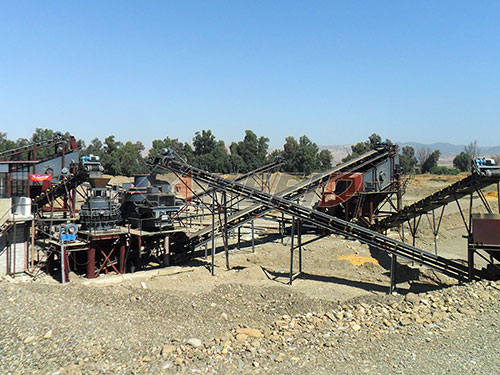
- Agitated Leach Tanks: Large, mechanically agitated vessels (typically 10–20 meters in diameter) operate at 40–50% solids. They are equipped with dual impellers and air spargers to maintain oxygen saturation, which is essential for the cyanidation reaction. Leaching residence time ranges from 24 to 72 hours.
- Carbon-in-Pulp (CIP) and Carbon-in-Leach (CIL) Circuits: In CIP, leaching occurs in dedicated tanks, followed by separate adsorption tanks where activated carbon is added to recover dissolved gold. In CIL, leaching and adsorption occur simultaneously in the same tanks, which is more efficient for high-grade ores. The carbon is moved counter-currently using interstage screens and airlifts. Key equipment includes:
- Interstage Screens: Wedge-wire or basket screens retain carbon while allowing slurry to flow.
- Carbon Transfer Pumps: Centrifugal or eductors move carbon between tanks.
- Elution Columns: Loaded carbon is stripped of gold using a hot caustic-cyanide solution at 90–120°C, typically in a pressurized vessel (AARL or Zadra process).
- Carbon Regeneration Kilns: After elution, carbon is thermally reactivated in rotary kilns at 650–750°C to remove organic foulants and restore adsorption capacity.
- Heap Leach Systems: For low-grade ores (0.3–1.0 g/t), heap leaching is employed. Ore is stacked on lined pads, and a dilute cyanide solution is applied via drip emitters or sprinklers. The pregnant solution is collected in ponds and processed through a series of carbon columns (typically 6–8 in series) for gold adsorption. Key equipment includes agglomeration drums, stacking conveyors, and geomembrane liners.
6. Gold Recovery and Refining Equipment
The final stage involves converting gold from solution or concentrate into a saleable doré bar.
- Electrowinning Cells: Gold is deposited onto steel wool cathodes from the eluate solution using an applied DC current. The cells operate at 2–4 volts and 100–500 amps, depending on capacity. The loaded cathodes are then acid-washed to remove steel, leaving a high-grade gold sludge.
- Merrill-Crowe Process: An alternative to electrowinning, this process involves de-aeration of the pregnant solution, followed by zinc dust addition to precipitate gold. The precipitate is filtered using pressure leaf filters, then dried and fluxed.
- Smelting Furnaces: The gold sludge or precipitate is mixed with fluxes (borax, silica, nitre) and melted in induction or tilting rotary furnaces at 1100–1300°C. The molten material separates into a slag layer and a gold doré layer (typically 85–95% gold). The doré is poured into molds and sent to an external refinery for final purification (99.99% via electrolysis or aqua regia).
7. Alluvial and Placer Mining Equipment
For surface deposits in rivers, beaches, and ancient terraces, specialized mobile equipment is used:
- Wash Plants: These combine a vibrating grizzly feeder, a rotating trommel screen, and a sluice box or centrifugal concentrator. Trommels (e.g., 1.5 m diameter × 6 m length) wash and screen clay-bound gravel, while the underflow is processed by a series of riffles or a Knelson concentrator.
- Dredges: Bucket-line dredges or cutter-suction dredges operate in water bodies. They excavate gravel from the bottom, process it on-board, and discharge tailings behind. Modern dredges are equipped with on-board jigs and centrifugal concentrators for high recovery.
- Dry Washers: For arid regions, dry washers use air fluidization to separate gold from sand. They are less efficient than wet methods but are essential in water-scarce environments.
8. Ancillary and Support Equipment
No gold mine operates without a suite of support systems:
- Pumps: Heavy-duty slurry pumps (e.g., Warman, Metso) handle abrasive mill discharge, while vertical sump pumps manage plant drainage. High-pressure piston pumps are used for tailings disposal.
- Conveyors: Overland and in-plant belt conveyors transport ore and tailings. They are equipped with belt scales, metal detectors, and magnetic separators to protect downstream equipment.
- Sampling Systems: Automated cross-stream samplers and rotary sample dividers ensure representative assays for grade control and metallurgical accounting.
- Dewatering Equipment: Thickeners (high-rate and high-density) and filter presses (plate-and-frame or vacuum belt) reduce moisture in concentrates and tailings, enabling dry stacking and water recovery.
9. Selection Criteria and Economic Considerations
Choosing the right equipment is a multi-variable engineering decision. Key factors include:
- Ore Mineralogy: Free-milling gold favors gravity and direct cyanidation; refractory ores require roasting, pressure oxidation, or ultrafine grinding before leaching.
- Throughput and Scale: A 5,000 t/d plant will use SAG mills and large flotation cells, while a 200 t/d operation may rely on ball mills and jigs.
- Capital vs. Operating Cost: Centrifugal concentrators have high upfront costs but low energy consumption; flotation circuits require reagent and maintenance expenses.
- Environmental Compliance: Cyanide destruction systems, water recycling, and tailings filtration are now mandatory in most jurisdictions, influencing equipment selection.
- Automation and Reliability: Modern plants integrate PLC-based control systems, predictive maintenance sensors, and remote monitoring to reduce downtime and labor costs.
Conclusion
The gold mining equipment catalog is vast, but each component serves a precise function in the complex chain of ore-to-metal transformation. From the rugged jaw crusher that breaks the first rock to the electrowinning cell that produces the final cathode, every machine is engineered for efficiency, safety, and environmental stewardship. As ore grades decline and deposits become more complex, the industry continues to innovate—developing high-pressure grinding rolls, coarse particle flotation, and non-cyanide leachants. For mining professionals, a deep understanding of this equipment is not merely technical knowledge; it is the foundation of economic viability and sustainable resource development. Selecting the right equipment, in the right configuration, with the right operational strategy, remains the single most decisive factor in the success of any gold mining project.
