Stone Quarry Crushing Plant Dealers & Specifications: A Comprehensive Guide for Optimal Investment
The selection and procurement of a stone quarry crushing plant represent a pivotal, capital-intensive decision that directly dictates the productivity, profitability, and long-term viability of any aggregate mining operation. Central to this process are the Crushing Plant Dealers and a deep understanding of Plant Specifications. This article provides a detailed, objective analysis of the dealer landscape and the critical technical specifications that must be evaluated to ensure a successful investment.
Part 1: The Role and Evaluation of Crushing Plant Dealers
Dealers are far more than mere sales intermediaries; they are strategic partners whose expertise and support can make or break an operation.
1.1 Types of Dealers and Their Value Propositions
- OEM-Authorized Dealers: These dealers have direct partnerships with original equipment manufacturers (e.g., Metso, Sandvik, Terex MPS, Kleemann). They offer genuine parts, factory-trained service engineers, and full warranty support. Their strength lies in deep product knowledge and direct access to OEM engineering resources.
- Independent/Full-Line Distributors: They often represent multiple, sometimes complementary, brands. This allows them to provide more “bundled” or “best-of-breed” solutions from different manufacturers (e.g., a primary crusher from one brand and a screen from another). They can offer greater flexibility in pricing and package deals.
- Specialized Regional Dealers: These entities possess intense knowledge of local geology, regulatory environments, and market demands. Their recommendations are often highly pragmatic for regional conditions.
1.2 Critical Evaluation Criteria for Dealers
When selecting a dealer, due diligence must extend beyond the equipment brochure:
- Technical Support & Engineering Capability: Can they provide plant layout simulations (like Bruno or OptiAgg software), flow sheet development, and foundation drawings? Post-sale, is 24/7 technical troubleshooting available?
- Parts & Service Infrastructure: Evaluate the size, location(s), and inventory level of their parts warehouse. What is their guaranteed parts availability rate? Do they operate dedicated service trucks with field mechanics?
- Financial Stability & Longevity: A dealer’s ability to remain in business for the 15-20 year lifespan of your plant is crucial for ongoing support.
- Reference Projects & Industry Reputation: Insist on visiting existing installations similar to your proposed operation. Speak directly to other quarry managers about the dealer’s response times and problem-solving effectiveness.
- After-Sales Service Agreements: The structure of their maintenance contracts (e.g., guaranteed uptime agreements, tonnage-based contracts) is a key indicator of their confidence in the equipment and their service commitment.
Part 2: Decoding Crushing Plant Specifications – A Technical Deep Dive
Specifications are the quantitative blueprint of the plant’s capability. Understanding each parameter is non-negotiable.
2.1 Primary Crushing Stage Specifications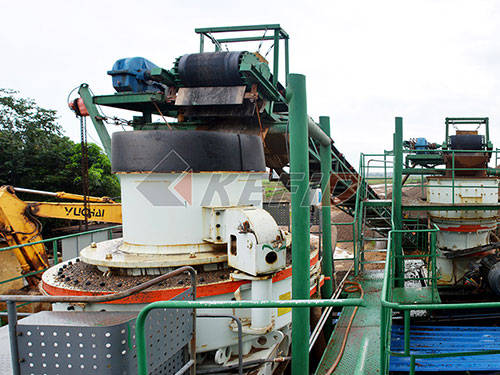
- Crusher Type: Jaw crushers (specify feed opening size like 1200x800mm), Gyratory crushers (mantle diameter in inches), or impact crushers for softer rock.
- Feed Opening & Capacity: Must be matched not just to desired output but to the maximum feed size from your blast pattern. Capacity is stated in metric tons per hour (mtph) at a defined closed-side setting (CSS) and material density (typically 1.6 t/m³).
- Drive Power & Crusher Kinematics: Motor power (kW) indicates potential throughput but efficiency is dictated by eccentric throw, nip angle, and stroke type. Request power draw graphs under load.
2.2 Secondary & Tertiary Crushing Stage Specifications
- Cone Crusher Parameters: Key specs include head diameter, maximum feed size, CSS range (e.g., 8-38mm), power rating, and crushing chamber profile (standard/fine/short-head). The “stroke” specification is critical for product shape control.
- Impact Crusher Parameters: For horizontal shaft impactors (HSI), specify rotor diameter/width, rotor speed (RPM), hammer configuration/mass. For vertical shaft impactors (VSI), consider table/rotor speed for optimal cubical shaping.
2.3 Screening & Material Handling Specifications
- Screen Decks: Number of decks (e.g., 2 or 3), screen media type (wire cloth vs polyurethane), aperture sizes on each deck, screening area (m²), drive mechanism (vibrating mechanism type/weight).
- Conveyors: Belt width/speed/incline angle; idler class (C5 vs C6); motor power; pulley diameters; belt rating in tons per hour.
- Stockpiling & Reclaim Systems: Radial stacker slew angle/radius; tunnel reclaim capacity; scraper design.
2.4 Core System-Wide Specifications
These are often overlooked but vital:
- Electrical System: Total connected power load; PLC/automation system brand and capabilities; degree of integration for remote monitoring/diagnostics; variable frequency drive specifications for key motors.
- Dust Suppression & Control: Water flow rates at spray nozzles; enclosure standards; baghouse filter capacity if required.
- Structural Steel & Foundations: Design loads; steel grade used in fabrication; quality/completeness of foundation drawings provided by OEM/dealer.
- Noise Emission Levels: Guaranteed dB(A) levels at specified distances—critical for permitting.
Part 3: The Synergy Between Dealer Selection & Specification Finalization
The most effective procurement process is iterative between dealer consultation and specification refinement:
- A competent dealer will not simply sell you a standard model but will use your input data—feed material characteristics (Abrasion Index – AI, Los Angeles Value – LAV,Silica Content, moisture) , required final product gradations (% passing specified sieves)—to recommend specifications. They should perform test crushing if material samples are available.
- The chosen specifications then dictate the level of aftermarket support required from the dealer. A complex plant with tertiary shaping circuits demands more sophisticated dealer support than a simple primary-secondary setup.
- The dealer’s local parts inventory must align with your plant’s most wear-prone components specific to your rock type—this should be contractually discussed during specification finalization.
Conclusion: A Partnership Defined by Precision
Investing in a stone quarry crushing plant is an exercise in mitigating risk through precision engineering informed by expert partnership.The ideal outcome is not merely purchasing machinery but establishing a long-term alliance with a dealer who demonstrates an engineering-centric approach. This partner must prove capable of translating your site-specific geological data into an optimized set of mechanical specifications—a plant designed not just to crush stone efficiently but also to maximize yield on premium products while minimizing operational costs per ton over its entire lifecycle.
Ultimately,the most robust specification sheet holds less value without a reliable partner to uphold its performance guarantees.The most personable dealer cannot compensate for fundamentally underspecified or mismatched equipment.A thorough,due-diligence-driven evaluation process that treats both technical specs and commercial partnership as equally critical pillars,is therefore essential.This dual focus forms the bedrock upon which productive,sustainable,and profitable quarry operations are built
