
Customized Stone Crusher Machines: Engineering Tailored Solutions for Modern Aggregate Production
Introduction
In the aggregate, mining, construction, and recycling industries, the stone crusher machine is a foundational asset whose performance directly determines operational profitability, product quality, and regulatory compliance. While off-the-shelf crushing equipment serves many standard applications adequately, a growing number of operators are turning to customized stone crusher machine solutions to address specific geological conditions, production targets, site constraints, and end-product specifications. Customization transforms a general-purpose machine into a purpose-built system engineered around a defined duty cycle, material profile, and business objective. This article examines the rationale, engineering dimensions, and operational implications of customized stone crusher machine design in a professional and objective manner.
Why Customization Matters
Stone crushing is not a uniform process. Feed materials vary widely in compressive strength, abrasiveness, moisture content, and particle size distribution—from hard, abrasive granite and basalt to softer limestone, recycled concrete, and industrial slag. Each material imposes different demands on crushing chambers, wear parts, drive systems, and structural components. A machine optimized for one feedstock may suffer accelerated wear, reduced throughput, or excessive downtime when applied to another.
Customization addresses this variability at the design stage. Rather than forcing the material to conform to a fixed machine configuration, engineers adapt the machine to the material. This material-centric approach yields benefits across several dimensions: higher throughput consistency, improved product shape and gradation, extended wear-part life, reduced energy consumption per ton, and lower total cost of ownership over the equipment lifecycle.
Key Dimensions of Customization
Customized stone crusher machine development typically proceeds along several interrelated engineering axes.
Throughput and Capacity Engineering. Production requirements dictate the sizing of the crushing chamber, the eccentric speed of cone and jaw crushers, the rotor diameter and speed of impact crushers, and the capacity of feeders, conveyors, and screening circuits. Custom builders model expected throughput against target gradation curves, ensuring the machine meets peak demand without systematic over- or under-utilization.
Feed Material Characterization. Laboratory analysis of the customer’s rock—including Los Angeles abrasion values, compressive strength, silica content, and work index—informs the selection of wear-liner metallurgy, chamber geometry, and crushing force parameters. For highly abrasive materials, customized manganese or chrome-alloy liners with optimized profiles can substantially extend service intervals.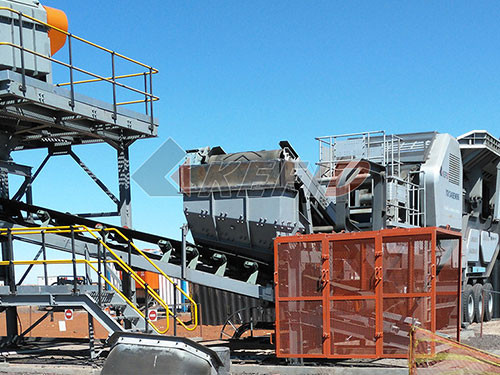
Product Specification Alignment. End-product requirements—whether specification aggregates for concrete and asphalt, railway ballast, manufactured sand, or mineral processing feed—determine the crushing stages and chamber configurations. Customization may involve combining primary jaw crushing with secondary and tertiary cone or VSI stages to achieve cubical particle shape and precise gradation control.
Site and Installation Constraints. Mobile and semi-mobile installations demand compact footprints, integrated power units, and transport-friendly modular designs. Stationary plants may require customized foundation interfaces, dust suppression systems, and noise attenuation. Custom engineering reconciles machine dimensions with available space, access routes, and environmental permits.
Automation and Control Integration. Modern customized machines frequently incorporate variable-frequency drives, hydraulic setting adjustment, load-sensing feed control, and telematics for remote monitoring. These systems can be tailored to the operator’s existing plant control architecture, enabling predictive maintenance and real-time optimization of crusher settings.
The Customization Process
A disciplined customization project follows a structured engineering workflow. It begins with requirements gathering: defining feed material properties, target capacities, product specifications, operating hours, site conditions, and budget parameters. This is followed by flowsheet development and equipment selection, supported by simulation software that models crushing circuits and predicts performance. Detailed engineering then produces chamber designs, structural calculations, and electrical and hydraulic schematics.
Fabrication and assembly proceed under quality-control protocols, with critical components such as bearings, shafts, and liners sourced to specification. Factory acceptance testing verifies no-load and load performance before shipment. Commissioning on site includes performance validation against contractual guarantees, operator training, and documentation of maintenance schedules. Post-installation support—spare-parts management and performance audits—completes the lifecycle engagement.
Operational and Economic Considerations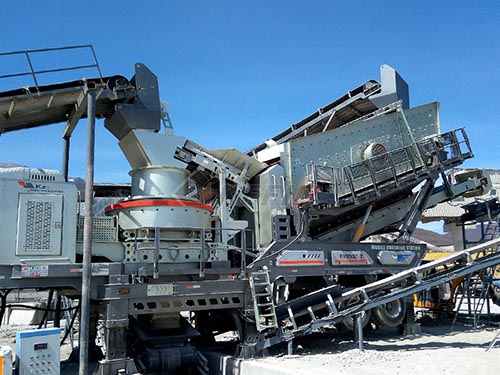
Customization carries a higher initial engineering cost than standard equipment, and lead times may be longer due to design and fabrication cycles. These factors must be weighed against lifecycle benefits. For high-volume operations or challenging materials, the return on investment typically manifests through reduced downtime, lower wear-part consumption, stable product quality, and decreased energy intensity. Operators should also consider standardization of wear parts across a fleet where feasible, and ensure that customized designs comply with relevant safety standards and local regulatory requirements.
Conclusion
Customized stone crusher machine solutions represent a mature engineering discipline that aligns equipment design with material science, production economics, and site realities. By treating the crusher as a system engineered around specific inputs and outputs rather than a fixed catalog item, operators can achieve measurable gains in efficiency, product consistency, and cost control. As aggregate specifications tighten and material variability increases, tailored crushing solutions will remain a strategic lever for competitive advantage in the industry.
If you have any questions about our products, please feel free to contact us. We take all inquiries and suggestions very seriously.