
Bulk 250–300 TPH Stone Crushing Plant Factories: Engineering, Sourcing, and Operational Realities
Introduction
The global demand for construction aggregates, manufactured sand, and mineral processing capacity has driven significant interest in mid-to-large-scale crushing solutions. Among the most widely specified configurations is the 250–300 tonnes per hour (TPH) stone crushing plant. This capacity range represents a strategic sweet spot for quarry operators, contractors, and aggregate producers: large enough to support commercial-scale production and continuous feed operations, yet modular enough to remain transportable, permitting-friendly, and economically viable in regional markets. Factories that manufacture these plants—whether in China, Turkey, India, or Europe—compete on engineering depth, component quality, automation, and after-sales support. This article provides a detailed, objective examination of 250–300 TPH stone crushing plant factories, covering process design, equipment selection, manufacturing capabilities, quality control, and procurement considerations.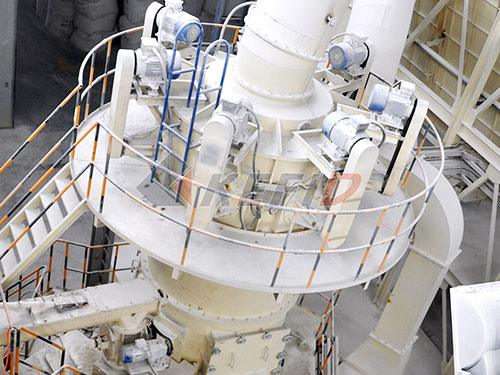
Why 250–300 TPH Is a Critical Capacity Band
Crushing plants are typically classified by throughput: small (under 100 TPH), medium (100–300 TPH), and large (above 300 TPH). The 250–300 TPH band is often selected because it aligns with several practical thresholds. First, it can feed multiple downstream screens and stockpiling systems without excessive bottlenecking. Second, it matches the output of common primary crushers, such as 600 × 900 jaw crushers or 900 × 1200 jaw crushers, when paired with secondary and tertiary stages. Third, it supports business models ranging from supplying local ready-mix concrete plants to producing railway ballast and asphalt aggregates. Finally, this capacity can be achieved with either stationary or mobile configurations, giving factories a broad product portfolio to offer.
Typical Process Flow for a 250–300 TPH Plant
A well-engineered 250–300 TPH stone crushing plant generally follows a multi-stage reduction and screening process. The exact configuration depends on feed size, rock hardness (e.g., limestone, granite, basalt, river stone), and product specifications.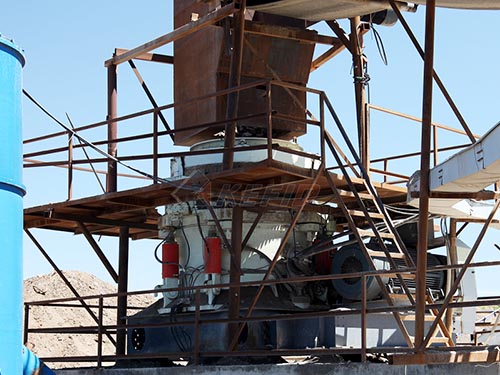
Feeding and Primary Crushing
A vibrating grizzly feeder (e.g., ZSW 490 × 110 or similar) receives raw material from dump trucks or loaders. The grizzly section scalps fines before the primary crusher, reducing load and wear. The primary crusher is usually a jaw crusher (e.g., PE 750 × 1060 or PE 900 × 1200) or, for softer materials, an impact crusher. For 250–300 TPH, the jaw crusher must be selected with a closed-side setting (CSS) and eccentric throw that balance capacity and reduction ratio.
Secondary Crushing
Primary crushed material (typically 0–300 mm) is conveyed to a secondary crusher. For hard rock, a cone crusher (e.g., CS 160, HP 200, or equivalent) is standard. For medium-hard materials, an impact crusher (e.g., PF 1214 or PF 1315) may be used. The secondary stage is critical for shaping and for preparing feed for tertiary reduction.
Tertiary Crushing and Sand Making
To produce fine aggregates (0–5 mm) and shaped coarse aggregates, a tertiary cone crusher or vertical shaft impact (VSI) crusher is often included. VSI crushers are particularly valued for manufactured sand and for improving particle shape in high-value aggregates.
Screening and Classification
Multiple decks of vibrating screens (e.g., 3YK2160, 4YK2160) classify material into sizes such as 0–5, 5–10, 10–20, 20–31.5 mm, and oversize. Efficient screening is essential to avoid recirculating loads that reduce net capacity.
Conveying and Stockpiling
Belt conveyors transfer material between stages and to stockpiles. The conveyor design must account for tonnage, incline, and material characteristics. Stockpile capacities are often matched to truck loading cycles.
Dust Suppression and Automation
Modern factories integrate dust suppression (water sprays, bag filters) and centralized control systems with PLCs, touch screens, and remote monitoring. Automation improves consistency, reduces labor, and supports predictive maintenance.
Factory Manufacturing Capabilities
Factories producing 250–300 TPH crushing plants vary widely in scale and specialization. A credible manufacturer typically has:
Leading factories often hold certifications such as ISO 9001, CE, and sometimes GOST. However, certifications alone do not guarantee performance; buyers should examine factory audits, reference installations, and component traceability.
Key Equipment Suppliers and Component Quality
The quality of a 250–300 TPH plant depends heavily on core components. Factories may manufacture crushers in-house while sourcing motors, bearings, hydraulic units, and electricals from established brands. Common bearing brands include SKF, NSK, and Timken; motors may be Siemens, ABB, or WEG; hydraulic components may come from Rexroth or Parker. A transparent factory will disclose component brands and provide warranty terms. In contrast, low-cost factories may use unbranded bearings and undersized motors, leading to premature failures and downtime.
Stationary vs. Mobile and Modular Designs
Factories increasingly offer modular and mobile versions of 250–300 TPH plants. Modular designs use pre-engineered skids for jaw, cone, screen, and conveyor units, reducing site construction time. Mobile plants, often tracked or wheel-mounted, are suited to contract crushing and quarrying with short mine lives. However, mobile plants in this capacity range require careful weight distribution and may have higher cost per ton. Stationary plants remain the most cost-effective for long-term, high-volume operations.
Procurement and Sourcing Considerations
When evaluating 250–300 TPH stone crushing plant factories, buyers should consider:
Quality Control and Testing Protocols
A reputable factory will perform factory acceptance testing (FAT) on major equipment. For jaw crushers, this includes checking bearing clearances, toggle plate fit, and no-load run. For cone crushers, hydraulic clamping and adjustment systems are tested under pressure. Screens are checked for amplitude, stroke, and structural integrity. Conveyors are tested for belt tracking and idler alignment. Documentation should include test reports, material certificates, and operation manuals.
Logistics, Installation, and Commissioning
Shipping a 250–300 TPH plant typically involves multiple containers or flat racks, plus break-bulk for large crusher frames. Factories with export experience provide packing lists, lifting plans, and installation drawings. Commissioning is a critical phase: engineers should verify feed rate, crusher settings, screen efficiency, and conveyor capacity. Training for local operators and maintenance staff is essential to achieve nameplate capacity.
Market Trends and Technological Advances
Several trends are shaping 250–300 TPH plant factories. First, there is a shift toward higher automation and IoT-enabled monitoring, allowing remote diagnostics and predictive maintenance. Second, energy efficiency is becoming a differentiator, with variable frequency drives (VFDs) on conveyors and crushers. Third, modular and containerized designs are reducing installation time. Fourth, there is growing emphasis on manufactured sand, driving integration of VSI crushers and air classifiers. Finally, environmental compliance is pushing factories to design closed-loop water systems and advanced dust collection.
Conclusion
The 250–300 TPH stone crushing plant represents a versatile and commercially significant capacity band. Factories that manufacture these plants must combine robust engineering, quality components, and strong after-sales support to meet the demands of aggregate producers. For buyers, success lies in clearly defining feed material and product requirements, auditing factory capabilities, and evaluating total cost of ownership rather than purchase price alone. As global infrastructure and construction continue to expand, the demand for reliable, efficient, and environmentally responsible crushing plants in this range will remain strong. Selecting the right factory—one that demonstrates transparency, technical depth, and a proven track record—is the foundation for a profitable and sustainable crushing operation.
If you have any questions about our products, please feel free to contact us. We take all inquiries and suggestions very seriously.