
Stone Quarry Crushing Plant Wholesalers: A Comprehensive Industry Analysis for Procurement and Supply Chain Professionals
Introduction
The global construction and infrastructure sectors are fundamentally reliant on the availability of high-quality aggregates—crushed stone, sand, and gravel—which serve as the foundational materials for concrete, asphalt, road bases, and railway ballast. At the heart of this supply chain lies the stone quarry crushing plant, a complex industrial installation designed to reduce large, extracted rock masses into graded, saleable aggregate products. While many quarry operators manage their own crushing facilities, a significant and vital segment of the market is occupied by wholesalers who specialize in the procurement, distribution, and resale of these plants, components, and complete turnkey systems. This article provides a detailed, professional, and objective examination of the stone quarry crushing plant wholesale market, covering the types of equipment, the wholesale business model, key selection criteria, market dynamics, and critical considerations for buyers and sellers in this capital-intensive industry.
1. The Core Product: Understanding the Crushing Plant Ecosystem
A modern stone quarry crushing plant is not a single machine but an integrated system of interconnected equipment designed to perform specific functions: primary reduction, secondary and tertiary crushing, screening, and material handling. Wholesalers operate across this entire spectrum, offering either complete plants or individual components. The primary categories include: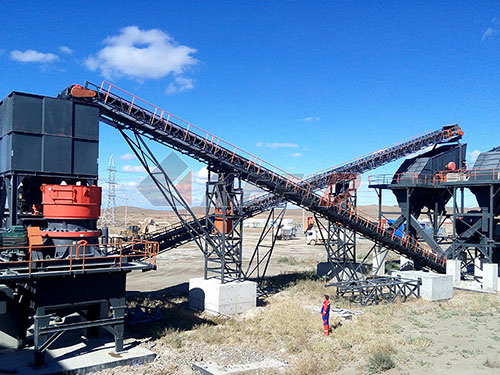
Primary Crushers: These are the heavy-duty machines that handle the largest blasted rock (often up to 1 meter in diameter). The most common types are jaw crushers (ideal for hard, abrasive rock due to their high compressive strength) and gyratory crushers (used for very high-capacity operations, typically above 1,000 tonnes per hour). Impact crushers (horizontal shaft impactors) are also used in primary roles for softer, less abrasive materials like limestone.
Secondary and Tertiary Crushers: These reduce the primary crushed material to finer specifications. Cone crushers are the industry standard for hard rock secondary and tertiary crushing due to their efficiency and cubical product shape. Vertical shaft impactors (VSI) are used for shaping aggregate and manufacturing manufactured sand, while horizontal shaft impactors (HSI) are common in medium-hard rock applications.
Screening Equipment: Vibrating screens separate crushed material by size. Wholesalers supply inclined screens, horizontal screens, and high-frequency dewatering screens, often in multi-deck configurations to produce multiple aggregate grades simultaneously.
Material Handling Systems: This includes belt conveyors, feeders (apron feeders, vibrating grizzly feeders), and stackers. These are often customized to fit the specific layout of a quarry site.
Washing Systems: For applications requiring clean aggregates (e.g., concrete sand), wholesalers supply log washers, hydrocyclones, and sand screws.
2. The Wholesaler’s Business Model: Beyond Simple Resale
The term “wholesaler” in the context of crushing plants implies a distinct operational model that differs from a manufacturer or a dealer. A wholesaler typically operates as a bulk purchaser and distributor, often maintaining a substantial inventory of new, used, or refurbished equipment. Their value proposition is multifaceted:
Inventory Aggregation: Wholesalers consolidate equipment from multiple manufacturers (e.g., Metso, Sandvik, Terex, Kleemann, and Chinese brands like SBM and Zenith) into a single point of purchase. This reduces the buyer’s procurement complexity, allowing them to source a complete plant from one supplier rather than negotiating with multiple OEMs.
Capital Management: Many wholesalers offer financing, leasing, or rental-purchase options. This is critical for mid-sized quarry operators who cannot afford the significant upfront capital expenditure (CAPEX) of a new plant, which can range from $1 million to over $20 million for large-scale installations.
Refurbishment and Reconditioning: A significant portion of the wholesale market involves used equipment. Professional wholesalers invest in mechanical and electrical refurbishment, replacing wear parts (liners, bearings, belts) and ensuring the machinery meets safety and performance standards. This provides a cost-effective alternative to new equipment, often at 40-60% of the original price.
Logistics and Global Sourcing: Wholesalers manage complex international logistics, including containerization, break-bulk shipping, and customs clearance. They often source equipment from regions with lower manufacturing costs (e.g., China, India) and distribute to markets in Africa, the Middle East, Southeast Asia, and South America.
Technical Consultation: Reputable wholesalers employ engineers who can assist with plant layout design, capacity calculations, and equipment selection. They bridge the gap between the manufacturer’s generic specifications and the specific geological and operational requirements of the buyer’s quarry site.
3. Key Selection Criteria for Wholesalers
For a quarry operator or a construction company looking to procure a crushing plant through a wholesaler, several objective technical and commercial criteria must be evaluated:
Geological Compatibility: The crusher type must match the rock’s abrasiveness (measured by the Bond Abrasion Index) and compressive strength (UCS). A jaw crusher suited for granite may be inefficient for softer, sticky clay-bound limestone. The wholesaler must provide documented performance data for the specific rock type.
Throughput Capacity (Tonnes per Hour – TPH): The plant’s rated capacity must align with the quarry’s extraction rate and market demand. Oversizing leads to wasted CAPEX; undersizing creates bottlenecks. Wholesalers should provide detailed capacity curves based on feed size, closed-side setting (CSS), and bulk density.
Product Gradation and Shape: The final aggregate must meet strict specifications (e.g., ASTM, EN, or local standards) for flakiness index, elongation index, and particle size distribution. The wholesaler must guarantee that the proposed crushing circuit (e.g., jaw + cone + VSI) can achieve the required gradation.
Mobility vs. Stationary: Wholesalers offer both stationary plants (for long-term, high-volume operations) and mobile or semi-mobile plants (track-mounted or wheeled). Mobile plants are ideal for short-term projects, multiple sites, or quarries with limited space. The wholesale decision must consider site access, power availability (diesel vs. electric), and permitting requirements.
Spare Parts Availability and After-Sales Support: This is often the most critical factor. A crushing plant is only as good as its parts supply chain. Wholesalers must demonstrate a robust inventory of manganese wear parts, bearings, and hydraulic components. They should also offer service contracts, on-site commissioning, and operator training.
Compliance and Safety: Equipment must comply with local safety regulations (e.g., CE marking in Europe, OSHA standards in the US, or specific local codes). Wholesalers must provide documentation, including load charts, electrical schematics, and safety interlock systems.
4. Market Dynamics and Global Trends
The wholesale market for stone quarry crushing plants is influenced by several macroeconomic and technological factors:
Infrastructure Investment: Government spending on highways, railways, ports, and urban development directly drives aggregate demand. Emerging economies in Asia and Africa are the fastest-growing markets, while developed regions focus on plant upgrades for efficiency and environmental compliance.
Urbanization and Concrete Demand: The shift toward ready-mix concrete and prefabricated construction increases the demand for high-quality, cubical aggregates, favoring plants equipped with cone crushers and VSIs.
Environmental Regulations: Stricter emission standards and noise regulations are pushing the market toward electric-powered plants and dust suppression systems. Wholesalers are increasingly offering hybrid or fully electric mobile plants to meet these requirements.
Automation and Digitalization: Modern plants incorporate PLC-based control systems, remote monitoring, and predictive maintenance using IoT sensors. Wholesalers that can supply and integrate these smart technologies command a premium in the market.
The Rise of Chinese Manufacturers: Over the past decade, Chinese manufacturers have significantly increased their global market share, offering competitive pricing and improved quality. Wholesalers often act as exclusive regional distributors for these brands, providing local service and warranty support.
Circular Economy and Recycling: While not strictly “stone quarry,” many wholesalers now also supply mobile crushers for construction and demolition (C&D) waste recycling. This diversifies their product portfolio and addresses the growing demand for recycled aggregates.
5. Risks and Mitigation Strategies in Wholesale Procurement
Purchasing a crushing plant through a wholesaler carries inherent risks that must be professionally managed:
Counterfeit or Substandard Parts: In the used equipment market, there is a risk of non-genuine wear parts that fail prematurely. Mitigation: Request OEM certification or third-party inspection (e.g., SGS, Bureau Veritas) before purchase.
Hidden Mechanical Defects: Used crushers may have cracked frames, worn eccentric shafts, or damaged bearings. Mitigation: Insist on a full mechanical inspection, including non-destructive testing (NDT) of critical welds and shafts. A performance test with a specified feed material should be part of the contract.
Logistical Damage: International shipping can cause significant damage to heavy machinery. Mitigation: Ensure proper lashing, weatherproofing, and insurance coverage (Incoterms such as CIF or DAP). Use specialized heavy-lift shipping companies.
Regulatory and Customs Delays: Importing used machinery may be subject to age restrictions or environmental clearance in some countries. Mitigation: The wholesaler should provide full documentation, including original invoices, serial numbers, and certificates of origin, to facilitate customs clearance.
Warranty Disputes: Wholesalers often provide limited warranties (e.g., 6-12 months on major components). Mitigation: Clearly define warranty terms in the contract, including response times, replacement procedures, and exclusions for wear items.
6. The Future of the Wholesale Crushing Plant Market
Looking ahead, the wholesale segment is expected to consolidate, with larger players offering integrated solutions—from plant design and financing to operation and maintenance (O&M) contracts. The adoption of “Crushing as a Service” (CaaS) models, where the wholesaler retains ownership of the equipment and charges per tonne of crushed material, is gaining traction. This shifts the risk of equipment downtime and maintenance from the quarry operator to the wholesaler, aligning incentives toward maximum uptime and efficiency.
Furthermore, sustainability is becoming a differentiator. Wholesalers that offer energy-efficient motors, closed-loop water systems for washing, and plants designed for low CO2 emissions will have a competitive advantage. The integration of AI-driven optimization software to adjust crusher settings in real-time based on feed conditions is also a frontier that leading wholesalers are beginning to offer.
Conclusion
The stone quarry crushing plant wholesale market is a sophisticated, capital-intensive sector that serves as the backbone of the global construction industry. Wholesalers are not merely middlemen; they are critical value-added partners providing inventory aggregation, technical expertise, refurbishment capabilities, and flexible financing. For buyers, a successful procurement strategy hinges on rigorous technical evaluation, thorough due diligence on the wholesaler’s reputation and support capabilities, and a clear contractual framework that addresses performance, warranty, and logistics. As global infrastructure demands grow and technology evolves, the role of the professional wholesaler will become even more integral to ensuring that quarries operate efficiently, safely, and sustainably. Selecting the right wholesale partner is, therefore, not just a purchasing decision but a strategic investment in the long-term viability of any aggregate production operation.
If you have any questions about our products, please feel free to contact us. We take all inquiries and suggestions very seriously.