
Title: The CE Marked Gyratory Crusher: Engineering Standards, Operational Principles, and Industrial Significance
Introduction
In the realm of mineral processing and heavy aggregate production, the gyratory crusher stands as a monumental piece of machinery, designed to handle the most demanding primary crushing tasks. Unlike its more common counterpart, the jaw crusher, the gyratory crusher is optimized for continuous, high-capacity reduction of hard and abrasive materials such as copper ore, iron ore, and hard rock. However, in the modern global market, the mere mechanical capability of a crusher is insufficient. The equipment must also comply with stringent regulatory frameworks that govern safety, environmental impact, and operational reliability. The “CE Mark” is the most prominent of these regulatory certifications within the European Economic Area (EEA). A “CE Marked Gyratory Crusher” signifies that the machine meets all essential health, safety, and environmental protection requirements as defined by relevant European Union (EU) directives. This article provides a comprehensive, professional, and objective analysis of the CE marked gyratory crusher, exploring its mechanical design, operational principles, the significance of CE certification, and its role in modern industrial operations.
Part I: The Mechanical and Operational Fundamentals of the Gyratory Crusher
To understand the value of a CE marked gyratory crusher, one must first appreciate the machine’s core engineering. The gyratory crusher is a compression-type crusher consisting of a fixed outer shell (the concave) and a moving inner cone (the mantle) mounted on a main shaft. The shaft is suspended from a spider at the top and is eccentric at its lower end. When the eccentric rotates, the mantle gyrates (oscillates) in a circular path within the concave.
1. Crushing Action and Capacity
The crushing action is continuous. As the mantle approaches the concave, the material is crushed by compression. As the mantle recedes, the crushed material falls downward due to gravity, and new feed enters the crushing chamber from the top. This continuous cycle allows the gyratory crusher to achieve throughput rates that can exceed 10,000 metric tons per hour, far surpassing jaw crushers of comparable size. The reduction ratio typically ranges from 4:1 to 9:1, depending on the chamber design and material characteristics.
2. Key Design Components
3. Comparison with Jaw Crushers
While both are primary crushers, the gyratory crusher is preferred for large-scale operations due to its higher capacity, lower power consumption per ton of material, and more consistent product shape. However, it has a higher initial capital cost and requires a more substantial foundation. The gyratory crusher is also less suitable for handling sticky or clay-rich materials, which can clog the chamber.
Part II: The CE Marking – A Regulatory and Safety Framework
The CE marking is not a quality mark or a performance guarantee. It is a declaration by the manufacturer that the product complies with all applicable EU “New Approach” directives. For a gyratory crusher, the most relevant directives are:
The Process of Achieving CE Marking for a Gyratory Crusher
Part III: The Significance of CE Marking for Gyratory Crushers
1. Legal Market Access
The most immediate reason for CE marking is legal. Without it, a gyratory crusher cannot be placed on the market or put into service in the EEA. This is a non-negotiable requirement for any manufacturer wishing to sell into Europe.
2. Enhanced Operator and Maintenance Safety
A CE marked gyratory crusher is inherently safer than an unmarked one. The rigorous risk assessment process forces manufacturers to address hazards that might otherwise be overlooked. For example, the design of the spider access platform must prevent falls; the hydraulic system must be designed to prevent accidental release of stored energy; and the lubrication system must be isolated to prevent burns from hot oil. These features directly reduce the risk of serious injury or fatality.
3. Environmental Compliance
CE marking also addresses environmental concerns. The Noise Emission Directive ensures that the crusher’s noise output is measured and declared. This allows operators to plan for noise mitigation measures (e.g., acoustic enclosures, hearing protection zones). Additionally, compliance with the Electromagnetic Compatibility Directive ensures that the crusher’s electrical systems do not interfere with sensitive control systems in the plant.
4. Quality Assurance and Reliability
While CE marking is not a quality mark, the process of achieving it often leads to higher quality. The requirement for detailed technical documentation, traceability of components, and rigorous testing means that manufacturers must have robust quality management systems. This translates into more reliable machines with fewer unplanned downtime events.
5. Global Recognition and Export Potential
Although CE marking is a European requirement, it is widely recognized globally as a benchmark for safety and quality. Many countries outside the EEA, including those in the Middle East, Africa, and Asia, accept or even require CE marking for imported heavy machinery. Therefore, a CE marked gyratory crusher has a broader market appeal and can be exported more easily.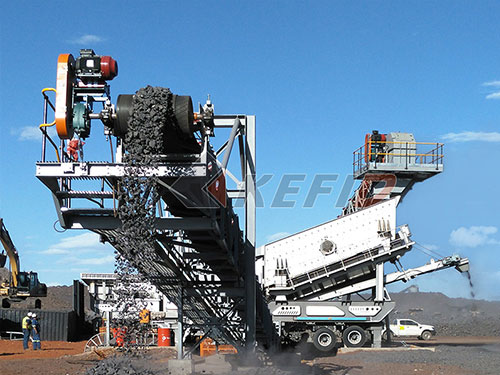
Part IV: Operational Considerations for a CE Marked Gyratory Crusher
1. Installation and Commissioning
The installation of a gyratory crusher is a major civil engineering project. The foundation must be designed to absorb the dynamic loads and vibrations. A CE marked crusher will come with detailed installation instructions, including foundation drawings, torque specifications for bolts, and alignment procedures. The commissioning process must be carried out by qualified personnel, and all safety interlocks must be tested before the crusher is put into operation.
2. Maintenance and Wear Management
Regular maintenance is critical for the longevity of the crusher. Key maintenance tasks include:
3. Safety Protocols for Maintenance
A CE marked crusher will have clear safety protocols integrated into its design. For example, lockout/tagout (LOTO) points must be clearly identified. The crusher must have a means of safely isolating all energy sources (electrical, hydraulic, pneumatic) before any maintenance work begins. The presence of trapped pressure in hydraulic accumulators is a particular hazard; a CE marked machine will have a safe method for depressurizing the system.
4. Performance Monitoring and Optimization
Modern CE marked gyratory crushers are often equipped with advanced monitoring systems. These systems can track:
Part V: Challenges and Future Trends
1. Challenges
2. Future Trends
Conclusion
The CE marked gyratory crusher represents the pinnacle of primary crushing technology, combining immense mechanical power with rigorous safety and environmental standards. It is not merely a machine for breaking rocks; it is a complex, engineered system that must operate reliably under extreme conditions while protecting the health and safety of those who work with it. The CE marking is a testament to the manufacturer’s commitment to these principles. For operators in the mining and aggregate industries, investing in a CE marked gyratory crusher is a strategic decision that ensures legal compliance, enhances operational safety, and provides a foundation for efficient, high-capacity production. As technology advances, these machines will become even more intelligent, efficient, and sustainable, further solidifying their role as the workhorses of the mineral processing industry. The CE mark, therefore, is not just a sticker; it is a symbol of engineering excellence and regulatory responsibility in a demanding industrial world.
If you have any questions about our products, please feel free to contact us. We take all inquiries and suggestions very seriously.