Title: Comprehensive Guide to Quarry Ballast Crushing Equipment: Contract Manufacturing and Wholesale Pricing Strategies
Introduction
In the global construction and railway infrastructure sectors, ballast—typically composed of crushed granite, basalt, or limestone—plays a critical role in providing stability, drainage, and load distribution for railway tracks and road foundations. The production of high-quality ballast requires specialized crushing equipment capable of delivering consistent particle size, shape, and durability. For quarry operators and large-scale contractors, sourcing this equipment through contract manufacturing at wholesale prices offers significant cost advantages, customization flexibility, and supply chain reliability. This article provides a detailed, professional analysis of quarry ballast crushing equipment, focusing on contract manufacturing processes, wholesale pricing dynamics, key machinery types, quality considerations, and strategic procurement recommendations.
1. Understanding Quarry Ballast and Its Crushing Requirements
Ballast is a coarse aggregate, typically with a particle size range of 20 mm to 60 mm, depending on regional railway standards (e.g., AREMA in North America, BS EN 13450 in Europe, or Indian Railway specifications). The material must be angular, durable, and free from deleterious substances. Crushing equipment must therefore be capable of:
- Producing a high percentage of cubical particles (to minimize breakage under load)
- Maintaining tight gradation control
- Handling abrasive, hard rocks like granite, quartzite, or basalt
- Operating continuously under high throughput conditions (often 200–500 tons per hour)
2. Core Crushing Equipment for Ballast Production
A typical ballast crushing plant consists of multiple stages, each employing specific machinery:
a. Primary Crushers
- Jaw Crushers: Ideal for reducing large quarry-run rocks (up to 1 meter) to 150–300 mm. They offer high reliability and low maintenance but produce more elongated particles.
- Gyratory Crushers: Used in very high-capacity operations (1000+ tph). They provide excellent throughput but are capital-intensive.
b. Secondary Crushers
- Cone Crushers: The most common choice for ballast. Modern cone crushers (e.g., Symons, HP series, or CH series) offer hydraulic adjustment, automatic tramp release, and high reduction ratios. They produce well-shaped aggregates when operated in closed circuit.
- Impact Crushers (Horizontal Shaft Impactors – HSI): Suitable for less abrasive materials. They produce excellent cubical shape but have higher wear costs for hard rock.
c. Tertiary and Quaternary Crushers
- Vertical Shaft Impactors (VSI): Used for final shaping and sand production. VSI crushers are essential for achieving the strict flakiness index required for premium ballast.
- High-Pressure Grinding Rolls (HPGR): Emerging technology for hard rock ballast, offering energy efficiency and minimal fines generation.
d. Screening and Washing Equipment
- Vibrating Screens: Multi-deck screens (e.g., 2–3 decks) for separating ballast into required size fractions. Banana screens or elliptical motion screens improve efficiency.
- Washing Systems: Hydrocyclones and log washers remove clay and dust, ensuring ballast meets cleanliness standards.
3. Contract Manufacturing of Ballast Crushing Equipment
Contract manufacturing refers to the outsourcing of equipment design, fabrication, and assembly to a specialized manufacturer. This model is prevalent in the mining and quarrying industry due to the high capital costs and technical expertise required.
a. Advantages of Contract Manufacturing
- Customization: Equipment can be tailored to specific rock types, throughput requirements, and site conditions (e.g., mobile vs. stationary plants).
- Cost Efficiency: Manufacturers achieve economies of scale in raw material procurement (steel, castings, bearings) and production.
- Access to Expertise: Contractors benefit from the manufacturer’s engineering experience, CAD/CAM capabilities, and field testing.
- Reduced Lead Times: Established manufacturers maintain inventory of standard components and can expedite production.
b. Key Contract Manufacturing Processes
- Design and Engineering: 3D modeling, finite element analysis (FEA) for structural integrity, and simulation of crushing chamber performance.
- Fabrication: Heavy steel plate cutting (plasma or laser), welding (robotic or manual), and heat treatment for wear parts.
- Machining: CNC turning and milling for shafts, eccentric bushings, and hydraulic cylinders.
- Assembly and Testing: Full plant assembly at the factory, dry-run testing, and load testing with simulated material.
c. Typical Contract Manufacturers
- Global Leaders: Metso Outotec, Sandvik, Terex, Thyssenkrupp, and FLSmidth offer comprehensive ballast crushing solutions.
- Regional Specialists: Chinese manufacturers (e.g., Shanghai Shibang, Zhengzhou Yifan, Henan Hongxing) and Indian firms (e.g., Puzzolana, Propel) provide cost-competitive options.
- Boutique Fabricators: Smaller shops in Europe and North America focus on custom, low-volume, high-precision equipment.
4. Wholesale Pricing Dynamics
Wholesale pricing for ballast crushing equipment is influenced by multiple factors. Understanding these can help buyers negotiate effectively.
a. Cost Components
- Raw Materials: Steel (carbon and alloy), cast iron, manganese steel (for wear parts), and rubber/polyurethane (for screens). Global steel prices fluctuate with market cycles.
- Manufacturing Overhead: Labor costs, energy, factory depreciation, and quality control.
- Technology Level: Hydraulic systems, automation (PLC, remote monitoring), and wear-resistant linings increase cost.
- Customization: Non-standard sizes, special alloys, or mobile chassis add 15–30% to base price.
- Shipping and Logistics: Heavy equipment (often 20–100 tons per unit) requires specialized transport, port handling, and inland freight.
b. Typical Wholesale Price Ranges (2024 Estimates, FOB Factory)
- Jaw Crusher (Primary, 30×42 inch): $80,000 – $150,000
- Cone Crusher (Secondary, 4.25 ft): $120,000 – $250,000
- VSI Crusher (Tertiary, 200 tph): $100,000 – $200,000
- Complete Ballast Plant (200 tph, stationary): $1.5 million – $4 million
- Mobile Ballast Plant (200 tph, track-mounted): $2.5 million – $6 million
c. Volume Discounts and Contract Terms
- Order Quantity: 5+ units typically qualify for 10–15% discount.
- Long-Term Agreements: 3–5 year contracts for spare parts and service can reduce upfront equipment cost by 5–10%.
- Payment Terms: Common terms include 30% advance, 40% on shipment, 30% on delivery. Letter of Credit (L/C) is standard for international transactions.
- Warranty: Standard 12–24 months on mechanical parts; wear parts excluded.
5. Quality Assurance and Standards
Contract manufacturers must adhere to international quality standards to ensure equipment reliability and safety.
- ISO 9001:2015 for quality management systems.
- CE Marking for European markets (compliance with Machinery Directive 2006/42/EC).
- ASME or GB/T standards for pressure vessels and structural components.
- Material Certifications: Mill certificates for steel plates and castings.
- Performance Guarantees: Manufacturers often guarantee throughput, reduction ratio, and power consumption within ±5%.
6. Strategic Procurement Recommendations
For quarry operators seeking contract manufacturing at wholesale prices, the following steps are recommended:
a. Define Technical Specifications Clearly
- Provide rock type, abrasiveness (e.g., Los Angeles abrasion value), moisture content, and required final product gradation.
- Specify whether the plant is stationary, semi-mobile, or fully mobile.
b. Request Multiple Quotations
- Solicit bids from at least three manufacturers (global, regional, and local).
- Compare not only price but also delivery lead time, warranty, spare parts availability, and after-sales support.
c. Evaluate Total Cost of Ownership (TCO)
- Include energy consumption (kWh/ton), wear parts cost (e.g., manganese liners, blow bars), and maintenance labor.
- A cheaper machine with high wear costs may be more expensive over 5 years.
d. Negotiate Spare Parts Packages
- Wholesale buyers should negotiate a bulk spare parts kit (e.g., liners, bearings, belts) at a fixed price for the first year.
e. Consider Financing and Leasing Options
- Some manufacturers offer equipment financing or leasing, reducing upfront capital outlay.
f. Inspect Factory and Reference Sites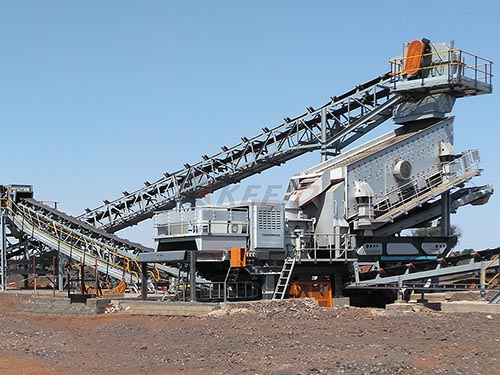
- Visit the manufacturer’s production facility to assess quality control.
- Request references from other ballast producers using similar equipment.
7. Future Trends in Ballast Crushing Equipment
- Automation and IoT: Remote monitoring, predictive maintenance, and automated crusher setting adjustment.
- Electric and Hybrid Drives: Reduced carbon footprint and lower operating costs.
- Modular and Containerized Plants: Faster deployment and easier relocation.
- Advanced Wear Materials: Ceramic composites and nano-coatings extending liner life by 30–50%.
Conclusion
Quarry ballast crushing equipment is a capital-intensive investment that directly impacts product quality and operational profitability. Contract manufacturing offers a viable path to obtaining customized, high-performance machinery at wholesale prices, provided buyers conduct thorough due diligence on technical specifications, manufacturer capabilities, and total cost of ownership. By leveraging global supply chains, negotiating volume discounts, and prioritizing quality assurance, quarry operators can secure reliable equipment that meets stringent ballast standards while optimizing long-term returns. As the construction and railway sectors continue to expand, particularly in developing economies, the demand for efficient, durable ballast crushing solutions will only intensify, making strategic procurement more critical than ever.
