
Optimizing Aggregate Production: A Comprehensive Analysis of Modern Stone Quarry Crushing Plant Operations
Introduction
The global construction and infrastructure sectors are fundamentally dependent on the reliable supply of processed aggregates. From the concrete foundations of high-rise buildings to the asphalt surfaces of highway networks, crushed stone serves as the skeletal framework of modern civilization. At the heart of this supply chain lies the stone quarry crushing plant—a complex, integrated industrial facility designed to reduce large extracted rock into precisely graded materials. For a producer, whether operating a small-scale quarry or a multi-site aggregate corporation, the efficiency, reliability, and output quality of the crushing plant determine the economic viability of the entire operation. This article provides a detailed, professional examination of the stone quarry crushing plant producer sample, covering the technical workflow, equipment configuration, production metrics, and operational best practices that define a successful aggregate production facility.
The Geological and Operational Context
A stone quarry crushing plant does not operate in isolation. Its design and performance are intrinsically linked to the geological characteristics of the deposit. The producer must first characterize the rock mass—whether it is granite, limestone, basalt, sandstone, or a metamorphic rock—to determine its compressive strength, abrasiveness, moisture content, and propensity for fragmentation. These factors dictate the selection of primary crushing equipment, the wear material specifications, and the overall plant layout.
A representative sample of a modern stone quarry crushing plant typically processes between 150 and 500 tonnes per hour (TPH), though larger operations can exceed 1,000 TPH. The plant is generally located adjacent to the quarry face to minimize haulage distances, with a primary crusher often positioned near the pit to reduce the need for long-distance trucking of run-of-mine (ROM) material.
The Crushing Circuit: A Stage-by-Stage Breakdown
A standard stone quarry crushing plant is organized into sequential stages: primary, secondary, and tertiary (and sometimes quaternary) crushing, followed by screening and stockpiling. Each stage serves a specific function in reducing particle size and improving shape.
1. Primary Crushing
The primary crusher receives ROM material, which can range from 500 mm to over 1,500 mm in diameter. The most common primary crushers in quarrying are jaw crushers and gyratory crushers. Jaw crushers are favored for their high reduction ratio and ability to handle sticky or clayey feed, while gyratory crushers offer higher capacity and continuous operation for large-scale plants. The primary crusher typically reduces the material to a nominal 100–300 mm product. A vibrating grizzly feeder is often employed ahead of the primary crusher to scalp fines and reduce the load on the crusher, improving throughput and reducing wear.
2. Secondary Crushing
The secondary stage further reduces the material to a size suitable for screening and tertiary processing. Cone crushers are the predominant choice for secondary crushing in hard rock applications due to their high reduction ratio, excellent product shape, and hydraulic adjustment capabilities. For softer materials such as limestone, impact crushers (horizontal shaft impactors, HSIs) may be used, offering a higher reduction ratio and producing a more cubical product. The secondary crusher typically produces a product of 40–80 mm.
3. Tertiary and Quaternary Crushing
To produce fine aggregates (e.g., 0–5 mm, 5–10 mm, 10–20 mm), tertiary crushing is required. This stage often employs short-head cone crushers or vertical shaft impactors (VSIs). VSIs are particularly effective for producing manufactured sand and improving particle shape, which is critical for concrete and asphalt performance. In some plants, a quaternary stage is added to meet stringent specifications for high-value products such as railway ballast or specialty sands.
Screening and Classification
Screening is the critical link between crushing stages and final product quality. Vibrating screens—either inclined or horizontal—classify material by size. A typical plant includes multiple screening decks: a primary screen after secondary crushing to remove finished sizes and divert oversize to tertiary crushing, and final product screens that separate material into discrete size fractions. Efficient screening is essential to avoid recirculating loads that reduce plant capacity and increase energy consumption.
Conveying and Stockpiling
Belt conveyors transport material between stages and to stockpiles. The design of the conveyor system must account for material characteristics, tonnage, and surge capacity. Stockpiles are typically separated by product size, with radial stackers or telescopic chutes used to minimize segregation. Proper stockpile management ensures consistent product quality and facilitates efficient load-out.
Key Performance Metrics for a Producer
A stone quarry crushing plant producer evaluates performance using several key metrics:
Operational Best Practices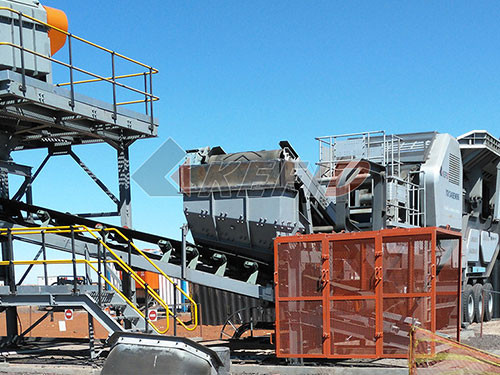
To maximize plant performance, producers should adopt the following best practices:
Environmental and Regulatory Considerations
A stone quarry crushing plant producer must navigate a complex regulatory landscape. Air quality permits limit particulate emissions, requiring dust suppression and collection systems. Noise regulations may restrict operating hours or require acoustic enclosures. Water discharge permits govern the management of process water and stormwater runoff. Additionally, quarry rehabilitation plans are often required to ensure that the site is restored after operations cease. Compliance is not only a legal obligation but also a social license to operate.
Case Study: A Representative 300 TPH Granite Crushing Plant
To illustrate the principles discussed, consider a representative 300 TPH granite crushing plant. The ROM material is blasted granite with a maximum size of 800 mm. The plant configuration is as follows:
This plant achieves a product yield of approximately 85%, with 15% waste fines (0–3 mm) that can be sold as a by-product or used for site rehabilitation. Energy consumption averages 1.8 kWh per tonne. Wear cost is approximately $0.15 per tonne, primarily from cone crusher liners and screen media.
Conclusion
The stone quarry crushing plant is a sophisticated industrial system that transforms raw rock into essential construction materials. For the producer, success depends on a thorough understanding of the geological feed, careful selection and configuration of crushing and screening equipment, and disciplined operational and maintenance practices. By focusing on throughput, product quality, energy efficiency, and regulatory compliance, a producer can achieve a competitive advantage in the aggregates market. As demand for construction materials continues to grow, the optimization of crushing plant operations will remain a critical driver of profitability and sustainability in the quarrying industry.
If you have any questions about our products, please feel free to contact us. We take all inquiries and suggestions very seriously.