
Title: Stone Quarry Crushing Plant Processing Plant: Comprehensive Analysis of Competitive Pricing, Operational Efficiency, and Market Dynamics
Introduction
The global demand for construction aggregates, road base materials, and industrial minerals has driven the proliferation of stone quarry crushing and processing plants. These facilities are the backbone of infrastructure development, transforming raw rock extracted from quarries into graded, usable materials such as crushed stone, sand, and gravel. In an increasingly competitive market, the phrase “competitive price” is not merely a marketing tagline but a critical determinant of a plant’s viability, profitability, and long-term sustainability. This article provides a professional, objective, and detailed examination of stone quarry crushing and processing plants, focusing on the factors that influence competitive pricing, the technological and operational components that define cost efficiency, and the strategic considerations for buyers and operators.
1. Understanding the Stone Quarry Crushing and Processing Plant
A stone quarry crushing plant is an integrated system designed to reduce large rocks (typically from 300–1000 mm in diameter) into smaller, marketable sizes (ranging from 0–5 mm for sand to 20–40 mm for base course). The “processing plant” component encompasses not only crushing but also screening, washing, stockpiling, and sometimes secondary or tertiary crushing stages. The typical flow includes:
The complexity of the plant directly correlates with its capital expenditure (CAPEX) and operational expenditure (OPEX), both of which are central to pricing.
2. The Concept of “Competitive Price” in the Crushing Industry
Competitive pricing in the context of a stone quarry crushing plant is not a fixed number but a function of multiple variables. It reflects the total cost of ownership (TCO) over the plant’s lifecycle, including initial purchase, installation, energy consumption, maintenance, wear parts, and downtime. A truly competitive price balances affordability with performance, reliability, and after-sales support.
Key pricing determinants include:
3. Cost Structure Breakdown: Why Price Varies
To understand competitive pricing, one must dissect the cost components:
3.1 Capital Expenditure (CAPEX)
3.2 Operational Expenditure (OPEX)
A plant with a lower purchase price may have higher OPEX due to inefficient crushers, poor wear part quality, or high energy consumption. Thus, a “competitive price” must be evaluated on a cost-per-ton basis over 5–10 years.
4. Market Segmentation and Price Ranges
The market for stone quarry crushing plants is segmented by capacity, automation, and region. Below is an objective overview of typical price ranges (2024–2025 estimates, FOB or CIF basis):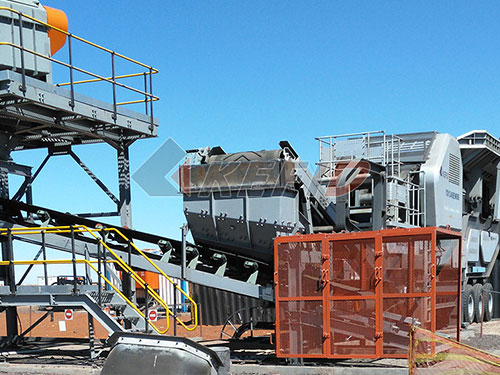
| Plant Type | Capacity (TPH) | Automation Level | Price Range (USD) | Typical Supplier Regions |
|---|---|---|---|---|
| Small Mobile Plant | 30–80 | Manual/Semi-auto | $80,000 – $250,000 | China, India, Turkey |
| Medium Stationary Plant | 100–250 | Semi-auto/Auto | $300,000 – $1,200,000 | China, Europe, USA |
| Large Stationary Plant | 300–600 | Fully automated | $1,500,000 – $4,000,000 | Europe, USA, Japan |
| Ultra-Large Plant | 800+ | Fully automated | $5,000,000 – $15,000,000 | Europe, USA |
Note: Prices exclude civil works, land acquisition, and permits.
5. Factors That Enable Competitive Pricing
5.1 Economies of Scale in Manufacturing
Suppliers with high production volumes (e.g., Chinese manufacturers like Sandvik, Metso, or local brands) can offer lower unit costs. They standardize components, use automated welding, and source raw materials in bulk.
5.2 Modular and Standardized Designs
Modular plants (pre-assembled units on skids) reduce installation time and cost. They allow for faster commissioning and easier relocation, lowering the total project cost.
5.3 Energy-Efficient Technologies
Variable frequency drives (VFDs), high-efficiency motors, and optimized crusher settings reduce energy consumption. A plant that consumes 0.8 kWh/ton instead of 1.5 kWh/ton saves $50,000–$100,000 annually at 200 TPH.
5.4 Local Sourcing and Assembly
Some suppliers establish local assembly plants or partnerships to reduce import duties and shipping costs. For example, a Chinese manufacturer assembling in Africa or South America can offer prices 15–30% lower than fully imported European equipment.
5.5 Used and Refurbished Equipment
A competitive price can also be achieved through high-quality used or refurbished plants. These cost 40–60% of new but require thorough inspection and may have shorter remaining life.
6. Case Study: Competitive Pricing in Practice
Consider a hypothetical 200 TPH granite crushing plant in a developing country. Two quotes are received:
5-Year TCO Analysis (assuming 8 hours/day, 300 days/year, electricity $0.10/kWh):
| Cost Component | Supplier A | Supplier B |
|---|---|---|
| Initial Purchase | $1,200,000 | $750,000 |
| Energy Cost (5 yrs) | $288,000 | $384,000 |
| Wear Parts (5 yrs) | $168,000 | $240,000 |
| Maintenance (5 yrs) | $120,000 | $150,000 |
| Total TCO | $1,776,000 | $1,524,000 |
Despite a higher purchase price, Supplier A’s plant has a lower TCO by $252,000 over 5 years. However, Supplier B offers a lower entry barrier, which may be critical for a startup with limited capital. Thus, “competitive price” is context-dependent.
7. Strategic Recommendations for Buyers
To secure a truly competitive price, buyers should:
8. Future Trends Affecting Pricing
Conclusion
The stone quarry crushing and processing plant market is characterized by a wide spectrum of prices, driven by capacity, technology, material characteristics, and supplier origin. A “competitive price” is not simply the lowest upfront cost but the optimal balance between initial investment, operational efficiency, reliability, and after-sales support. Buyers must conduct thorough due diligence, including TCO analysis, to ensure that the plant they select delivers value over its entire lifecycle. As the industry evolves toward automation, energy efficiency, and sustainability, the definition of competitive pricing will continue to shift, rewarding those who invest in quality and long-term performance. For operators, the goal remains clear: achieve the lowest cost per ton of finished product while maintaining consistent quality and compliance with environmental standards. In this context, competitive pricing is not a destination but a strategic outcome of informed decision-making.
If you have any questions about our products, please feel free to contact us. We take all inquiries and suggestions very seriously.