
Private Label Iron Ore Crushing Plant Producer: Engineering, Capabilities, and Strategic Value in the Global Mining Supply Chain
Introduction
The global iron ore market is the foundational pillar of the steel industry, accounting for over 98% of mined iron ore being used directly in steelmaking. As the demand for high-grade ore surges—driven by infrastructure development, energy transition projects, and urbanization in emerging economies—the efficiency of ore beneficiation begins not at the smelter, but at the crushing plant. Within this critical upstream segment, a specialized category of industrial manufacturer has emerged: the Private Label Iron Ore Crushing Plant Producer. Unlike original equipment manufacturers (OEMs) that market their own branded machinery, private label producers manufacture complete crushing systems, modular plants, or key components that are rebranded and sold under another company’s name. This article provides a professional, objective, and comprehensive examination of this niche yet vital industry—covering technical architecture, production capabilities, quality assurance, commercial models, and the strategic advantages for downstream buyers.
1. Defining the Private Label Producer in the Iron Ore Context
A private label iron ore crushing plant producer is a manufacturing entity that designs, fabricates, assembles, and tests complete crushing circuits—or major sub-systems—without placing its own brand on the final product. Instead, the client (often a mining equipment distributor, an engineering procurement and construction (EPC) contractor, or a mid-tier mining company) applies its own trademark, sells the plant under its own name, and assumes responsibility for after-sales service. The producer operates behind the scenes, functioning as an original design manufacturer (ODM) or a contract manufacturer (CM) with deep metallurgical and mechanical engineering expertise.
This model is distinct from simple component outsourcing. A true private label producer for iron ore crushing must deliver an integrated solution: primary gyratory or jaw crushers, secondary cone crushers, tertiary high-pressure grinding rolls (HPGR) or vertical shaft impactors (VSI), vibrating screens, feeders, conveyors, dust suppression systems, and centralized control automation. The producer must ensure that all these elements work as a cohesive system capable of handling the specific physical properties of iron ore—abrasiveness (measured by the Bond Abrasion Index), compressive strength (typically 100–300 MPa), moisture content, and clay contamination.
2. Core Engineering and Design Capabilities
The technical competence of a private label producer is judged by its ability to customize a plant for a specific ore body. Iron ore varies significantly between hematite (Fe₂O₃), magnetite (Fe₃O₄), and goethite-limonite blends. Each requires a different crushing strategy.
Primary Crushing: For run-of-mine (ROM) ore with top sizes up to 1,500 mm, the producer must engineer a robust jaw crusher or a rotary gyratory crusher. Private label producers often offer heavy-duty, single-toggle jaw crushers with hydraulic wedge adjustment to handle high silica content. The design must account for the ore’s bulk density (typically 2.5–3.5 t/m³) and the required throughput (from 500 tph for small operations to over 10,000 tph for mega-pits in Western Australia or Brazil).
Secondary and Tertiary Crushing: The reduction ratio from 150 mm to 25 mm is achieved using cone crushers. A private label producer must provide either spring-release or hydraulic cone crushers with eccentric throw adjustment. For magnetite ores, where subsequent ball milling is energy-intensive, the producer may integrate HPGR technology to achieve micro-cracking, reducing downstream energy consumption by up to 20%. This requires high-pressure roller bearings, wear-resistant studded tires, and a variable frequency drive system.
Screening and Classification: The plant must include multi-deck banana screens or linear motion screens with polyurethane or rubber panels to prevent blinding when handling wet, sticky ore. The producer’s engineering team must calculate cut points accurately to ensure the crusher is not recirculating oversize material unnecessarily, which would reduce plant efficiency.
Automation and PLC Control: Modern private label plants are not mechanical assemblies alone. The producer must integrate a distributed control system (DCS) or programmable logic controller (PLC) that monitors crusher power draw, mantle wear, oil temperature, and vibration. Advanced producers offer remote diagnostic capabilities, allowing the client’s brand to offer predictive maintenance without having its own R&D department.
3. Manufacturing and Fabrication Standards
A private label producer distinguishes itself through manufacturing rigor. The production facility must be ISO 9001:2015 certified, but more importantly, it must possess heavy fabrication capabilities: CNC machining centers for crusher shafts and eccentric bushings, induction hardening furnaces for wear parts, and automated welding robots for main frames. The producer typically uses high-grade cast steel (ASTM A148 or equivalent) for crusher frames and manganese steel (ASTM A128, Grade C) for liners—a material that work-hardens under impact.
The plant’s structural steelwork—chutes, hoppers, grizzlies, and support towers—must be fabricated to Australian Standard AS 4100 or European EN 1090, depending on the target market. For export-oriented private label producers, compliance with CE marking (Machinery Directive 2006/42/EC) and mining-specific safety standards (e.g., MSHA in the USA, or the Mines Safety and Inspection Act in Western Australia) is non-negotiable. The producer must also conduct factory acceptance tests (FAT) using dummy loads or, where feasible, test runs with representative ore samples to verify throughput and product size distribution (PSD) before shipment.
4. Quality Assurance and Metallurgical Testing
The credibility of a private label producer rests on its internal quality assurance (QA) laboratory. This lab must perform:
A professional producer will not simply sell a “standard” plant. It will provide a detailed process flow diagram (PFD) and a mass balance sheet, demonstrating that the proposed crusher settings (closed side setting, throw, speed) will yield the target product size (e.g., P80 = 12 mm) at the guaranteed throughput. This engineering transparency is what separates a genuine private label partner from a mere assembler of imported parts.
5. Commercial Models and Intellectual Property
The private label relationship is governed by complex commercial agreements. The most common models include:
Intellectual property (IP) protection is critical. The producer must file patents for any novel crushing chamber geometry, hydraulic tramp release systems, or anti-spin cone mechanisms. The client, in turn, must ensure that the producer signs non-disclosure agreements (NDAs) and non-compete clauses to prevent the same plant design from being sold to a direct competitor under a different label.
6. Strategic Advantages for the Buyer (Client Brand)
Why would a mining equipment distributor or an EPC contractor choose a private label producer over buying from a tier-1 OEM like Metso, Sandvik, or FLSmidth? The reasons are both economic and strategic:
Cost Efficiency: Private label producers, often located in lower-cost manufacturing hubs (e.g., China, India, Turkey, or South Africa), can offer a comparable plant at 30–40% lower capital expenditure (CAPEX) than Western OEMs. This cost advantage is passed on to the end-miner, making the client’s brand highly competitive in price-sensitive markets like India or West Africa.
Customization without R&D Overhead: The client can request modifications—such as a higher crushing chamber for a specific ore’s lumpiness—without bearing the cost of a full engineering redesign. The producer’s in-house design team handles the finite element analysis (FEA) and dynamic simulation.
Faster Lead Times: Private label producers typically maintain a buffer stock of long-lead items (main shafts, eccentric assemblies, hydraulic cylinders). This allows for a delivery time of 8–12 months from order, compared to 18–24 months for fully bespoke OEM plants.
Brand Extension: For a mining contractor that already sells drilling rigs or conveyor systems, adding a private label crushing plant allows it to offer a “mine-to-mill” solution. This increases customer lock-in and aftermarket revenue from spare parts (liners, filters, hydraulic oil).
7. Challenges and Risk Mitigation
Engaging a private label producer is not without risks. The primary concerns are:
Quality Consistency: A producer may deliver an excellent first plant but degrade quality on subsequent orders to cut costs. Mitigation: The client must conduct periodic third-party audits of the producer’s welding, heat treatment, and non-destructive testing (NDT) processes (e.g., ultrasonic and magnetic particle inspection).
After-Sales Support: Since the producer is anonymous, the client’s own service team must be trained to maintain the plant. This requires the producer to provide comprehensive technical documentation, 3D models, and a full spare parts catalog. A professional producer will also offer a two-year structural warranty and a one-year mechanical warranty, but the client must enforce this contractually.
Geopolitical and Logistical Risks: If the producer is located in a region with port congestion or export controls, the client’s project schedule may slip. A robust contract should include liquidated damages for late delivery and force majeure clauses that are realistic.
8. Case Example: A Hypothetical but Representative Scenario
Consider a mid-tier mining company in the Pilbara region of Western Australia that needs a 2,000 tph secondary crushing plant to process a hematite-goethite blend. It approaches a global mining services brand (Client X). Client X does not have its own crusher factory. Instead, Client X partners with a private label producer in Gujarat, India, which has previously manufactured cone crushers for a domestic steel giant. The Indian producer conducts a pilot test on 50 tonnes of the Pilbara ore, confirms a Bond Work Index of 14 kWh/t, and designs a plant with two HP800-equivalent cone crushers in closed circuit with triple-deck screens. The plant is manufactured in 10 months, shipped as modular containers, and erected on-site in 6 weeks. Client X brands it as the “X-Terra 2000.” The end-miner achieves a product P80 of 10 mm with 98% availability in the first year. This scenario illustrates the seamless integration of private label manufacturing into a global supply chain.
9. Future Trends and Sustainability
The private label iron ore crushing plant sector is evolving. Three trends are notable:
Electrification and Hybrid Drives: Producers are increasingly offering fully electric plants with regenerative braking on conveyors, reducing diesel consumption. Some are integrating solar-hybrid power systems for remote sites.
Digital Twins and AI: Advanced producers now provide a digital twin of the plant—a real-time simulation model that predicts liner wear and suggests optimal crusher settings. This is delivered as a cloud-based service, branded by the client.
Circular Economy: Producers are redesigning wear parts for remanufacturing. Instead of discarding a worn mantle, the producer can build up the surface with hard-facing alloy and re-machine it to original tolerances, reducing the carbon footprint of the plant.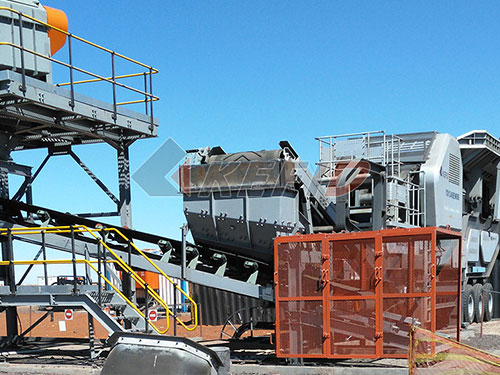
Conclusion
The private label iron ore crushing plant producer is a silent but indispensable engine of the global mining economy. By combining deep metallurgical knowledge, heavy fabrication capability, and flexible commercial models, these producers enable a wide range of brands—from global EPCs to regional distributors—to deliver high-performance crushing solutions without the prohibitive cost of in-house manufacturing. For the end-user, the choice of a private label plant should not be viewed as a compromise on quality, but rather as a strategic procurement decision that leverages global specialization. The key to success lies in rigorous supplier qualification, transparent engineering collaboration, and enforceable quality assurance protocols. As iron ore grades decline and operational costs rise, the role of these specialized producers will only grow in importance, ensuring that the world’s steel supply chain remains robust, efficient, and adaptable.
If you have any questions about our products, please feel free to contact us. We take all inquiries and suggestions very seriously.