
Ball Mill Suppliers Specification: A Comprehensive Technical and Commercial Guide
Introduction
In the realm of mineral processing, cement production, chemical engineering, and advanced materials manufacturing, the ball mill remains one of the most ubiquitous and critical pieces of equipment. Its primary function—to grind materials into fine powders through the impact and attrition of grinding media—is fundamental to downstream processes such as flotation, leaching, sintering, and product formulation. However, the performance, reliability, and operational efficiency of a ball mill are not solely determined by its design; they are profoundly influenced by the specifications provided by the supplier. A specification sheet is more than a list of numbers; it is a contractual guarantee of performance, a blueprint for installation, and a baseline for maintenance.
This article provides a detailed, professional, and objective examination of ball mill supplier specifications. It covers the critical technical parameters, mechanical design features, electrical and control systems, material of construction, and commercial considerations that define a high-quality ball mill. The goal is to equip procurement engineers, project managers, and plant operators with the knowledge to evaluate supplier proposals critically and select the optimal equipment for their specific application.
1. Core Technical Parameters: The Foundation of Specification
Every ball mill specification begins with a set of fundamental parameters that define its grinding capacity and physical size. These are non-negotiable and must be precisely matched to the process requirements.
1.1 Mill Dimensions: Diameter and Length (D x L)
The internal diameter (D) and the effective grinding length (L) are the most basic identifiers. The ratio L/D is a critical design parameter. For coarse grinding (e.g., primary ball mills in mineral processing), a lower L/D ratio (e.g., 1.0 to 1.5) is common, favoring impact over attrition. For fine grinding (e.g., regrind mills or cement mills), a higher L/D ratio (e.g., 2.0 to 3.5 or more) is used to increase residence time and promote fine particle generation. Suppliers must specify whether these dimensions refer to the shell inside diameter (before liners) or the effective grinding diameter (after liners). The latter is more relevant for process calculations.
1.2 Effective Grinding Volume
This is the volume of the mill cylinder available for the charge (balls + material). It is calculated from the effective diameter and length. A supplier must state this volume in cubic meters (m³) or cubic feet (ft³). This parameter directly determines the maximum possible throughput for a given grind size.
1.3 Maximum and Operating Speed (RPM and % Critical Speed)
The rotational speed of the mill is expressed in revolutions per minute (RPM). More importantly, it is expressed as a percentage of the critical speed (Nc). The critical speed is the theoretical speed at which the centrifugal force on a ball at the mill shell’s inner surface equals the gravitational force, causing the ball to stick to the shell. Typical ball mills operate at 65% to 80% of critical speed. A specification must clearly state the design critical speed and the recommended operating range. Operating too low reduces grinding efficiency; operating too high leads to excessive liner wear and inefficient cascading action.
1.4 Motor Power (Installed vs. Operating)
The motor power rating, typically in kilowatts (kW) or horsepower (HP), is the single most important indicator of the mill’s grinding capability. The specification must differentiate between:
1.5 Throughput Capacity (tph)
This is the mass flow rate of feed material that the mill can process, typically expressed in tonnes per hour (tph). Crucially, throughput is not a fixed number; it is a function of the feed size (F80 – 80% passing size), product size (P80), ore hardness (Bond Work Index – Wi), and circulating load (in closed-circuit operation). A professional specification will provide a capacity table or a formula linking throughput to these variables. For example: “Guaranteed throughput of 150 tph at F80 of 12 mm and P80 of 75 microns for a material with a Bond Work Index of 15 kWh/t.”
2. Mechanical Design and Construction Specifications
Beyond the process parameters, the mechanical integrity of the mill determines its lifespan and maintenance requirements.
2.1 Shell Material and Thickness
The mill shell is typically fabricated from high-strength carbon steel plates (e.g., ASTM A36, A516 Gr. 70, or equivalent). The specification must state the plate grade, thickness (mm), and the welding standards (e.g., ASME Section VIII, EN 13445). For large mills, the shell may be fabricated in sections (flanged or welded on-site). The supplier must specify the shell’s design for static and dynamic loads, including stress analysis for the trunnion-to-shell connection.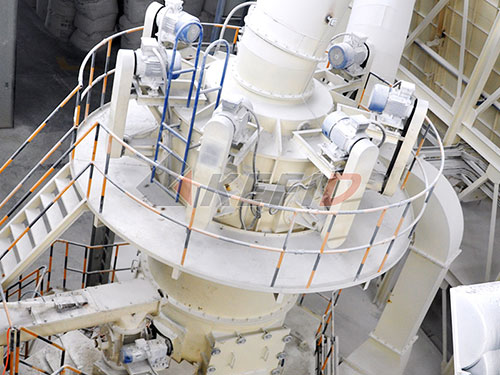
2.2 Head and Trunnion Design
The mill heads (end covers) are critical cast or fabricated components. They house the trunnions, which support the entire mill weight. The specification must detail:
2.3 Liner System
Liners protect the shell and impart motion to the grinding charge. The specification is highly detailed:
2.4 Drive System
The specification must cover the entire drive train:
3. Electrical and Control System Specifications
Modern ball mills are highly automated. The specification must detail the electrical and instrumentation package.
3.1 Motor Type
3.2 Control Philosophy
The supplier should specify the level of automation:
3.3 Safety Systems
A professional specification includes interlocks and safety features: emergency stop, zero-speed switches, brake system (for preventing mill rotation during maintenance), and guarding for rotating parts.
4. Material of Construction and Wear Parts
The specification must clearly define the materials used for all components that contact the process material or grinding media.
5. Ancillary Systems and Auxiliaries
A complete specification includes all supporting equipment:
6. Performance Guarantees and Testing
This is the most legally binding part of the specification. A supplier must provide:
7. Commercial and Documentation Specifications
Finally, the supplier specification must cover commercial and logistical aspects:
Conclusion
A ball mill supplier specification is a multi-faceted document that bridges the gap between a process requirement and a physical machine. It is not merely a technical datasheet; it is a commercial contract, a design blueprint, and a maintenance guide. For the buyer, a thorough understanding of these specifications—from the core process parameters like D x L and motor power to the nuanced details of liner profiles, bearing types, and performance guarantees—is essential for making an informed investment. A poorly specified mill can lead to chronic underperformance, high operating costs, and premature failure. Conversely, a well-specified mill, matched precisely to the ore body and process flow sheet, will deliver decades of reliable, efficient service. Therefore, the evaluation of a ball mill supplier should be as rigorous as the specification itself, demanding clarity, completeness, and a proven track record of delivering on the promises written in the specification sheet.
If you have any questions about our products, please feel free to contact us. We take all inquiries and suggestions very seriously.