
Quality Control in Stone Crusher Plant Production: A Comprehensive Overview
Introduction
Quality control in stone crusher plant production is a critical discipline that determines the commercial viability, structural integrity, and regulatory compliance of aggregate products used across the construction, infrastructure, and industrial sectors. Aggregate materials—crushed stone, gravel, and manufactured sand—constitute the single largest volume of material consumed in civil engineering works worldwide, and their physical and chemical characteristics directly influence the performance of concrete, asphalt, railway ballast, and foundation systems. Consequently, producers operating crushing plants must implement rigorous, systematic quality control regimes that span raw material acceptance, process monitoring, finished product verification, and documentation. This article examines the principal dimensions of quality control in stone crusher plant production, including material characterization, process control parameters, testing methodologies, statistical process control, and the organizational frameworks that underpin consistent product conformity.
1. Raw Material Characterization and Acceptance
Quality control begins at the quarry face. The geological provenance of the deposit—whether limestone, granite, basalt, dolomite, sandstone, or recycled demolition material—determines the fundamental properties of the finished aggregate. Producers must conduct systematic geological assessment and exploratory drilling to establish the spatial variability of the resource, because heterogeneity in the deposit translates directly into variability in product quality. Key parameters evaluated at the raw material stage include petrographic composition, unconfined compressive strength, Los Angeles abrasion resistance, soundness (sodium or magnesium sulfate durability), potential alkali-silica reactivity, clay content, and deleterious material content such as shale, chert, or organic matter.
Acceptance protocols typically involve face sampling at defined intervals and the maintenance of a geological block model that maps quality zones within the pit. Blast design and selective extraction are then used to blend materials and minimize the delivery of out-of-specification feed to the primary crusher. Stockpile management practices—including the use of separated bays, proper stacking methods to avoid segregation, and drainage control—are equally important, as poor stockpile discipline can degrade material quality before processing begins.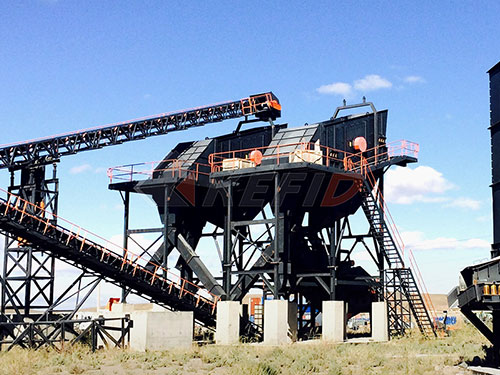
2. Process Control Parameters
The crushing circuit itself is a major determinant of product quality. Producers must control several interlinked process variables. Feed size distribution governs crusher throughput and reduction ratio; excessive fines or oversize in the feed can cause chamber packing, reduced capacity, and inconsistent product grading. Crusher settings—closed-side setting (CSS) on cone and jaw crushers, rotor speed and anvil configuration on impact crushers—must be monitored and adjusted to maintain target gradations. In multi-stage circuits, the interplay between primary, secondary, and tertiary crushing, together with screening efficiency, determines the final particle size distribution.
Screening performance is frequently the weakest link in quality control. Screen media condition, aperture wear, bed depth, and vibration amplitude all affect separation efficiency. Worn or blinded screens allow oversize material into fine products or cause excessive recirculating loads, both of which degrade grading conformity. Producers should therefore implement routine inspection schedules for screen decks and maintain records of media replacement. Additionally, water content in wet or damp feed affects screening and must be managed through appropriate washing or dewatering equipment where specifications require controlled fines content.
3. Testing and Inspection Methodologies
Finished product verification relies on a suite of standardized laboratory tests, typically referenced to national or international standards such as ASTM, EN, IS, or AASHTO specifications. Gradation analysis by sieve testing remains the foundational test, establishing compliance with nominal size designations and tolerance bands. Other routine tests include flakiness and elongation indices, which affect packing density and workability in concrete; Los Angeles abrasion and micro-Deval tests for mechanical durability; sulfate soundness for freeze-thaw resistance; water absorption and specific gravity; and, for specialized applications, polished stone value for road surfacing and alkali-silica reactivity screening for concrete aggregate.
Sampling protocol is as important as the test method itself. Composite samples should be drawn from moving streams or from multiple points within stockpiles using proper sampling devices, and sample masses must be sufficient to satisfy statistical representativeness requirements. Producers should maintain a documented sampling plan specifying frequency—commonly one composite sample per production shift or per defined tonnage—and chain-of-custody procedures for external laboratory verification.
4. Statistical Process Control and Continuous Improvement
Modern quality management in crushing operations extends beyond pass/fail testing to statistical process control (SPC). By plotting gradation results on control charts and calculating process capability indices, producers can distinguish between common-cause variation inherent in the process and special-cause variation indicating equipment malfunction or material change. Trend analysis of crusher setting drift, screen wear, and feed variability enables predictive intervention before nonconforming product reaches the market. Many producers now integrate automated sampling and online particle size analysis systems, particularly in high-capacity plants, to shorten feedback loops.
5. Organizational and Certification Frameworks
Effective quality control requires organizational commitment. Producers should establish a documented quality management system, ideally aligned with ISO 9001 principles, defining responsibilities, inspection frequencies, acceptance criteria, and nonconformance handling procedures. Product certification schemes, such as CE marking under EN 12620 or regional equivalent approvals, impose additional requirements for factory production control, including calibration of test equipment, personnel competence, and audit readiness. Training of plant operators and laboratory technicians, calibration of sieves and balances, and participation in proficiency testing programs are essential supporting activities.
Conclusion
Quality control in stone crusher plant production is an integrated, end-to-end discipline encompassing geological assessment, process engineering, laboratory verification, statistical analysis, and management system governance. Producers who invest in robust control frameworks achieve consistent product conformity, reduce rejection and rework costs, protect structural safety in downstream applications, and sustain customer confidence. As specifications tighten and infrastructure demands grow, the sophistication of quality control systems will remain a decisive competitive differentiator among aggregate producers.
If you have any questions about our products, please feel free to contact us. We take all inquiries and suggestions very seriously.