
Title: The Economics and Engineering of High-Performance Crushing: A Comprehensive Analysis of Luxury Quarry Ballast Crushing Equipment and Market Discount Dynamics
Introduction
In the specialized domain of heavy civil engineering and railway infrastructure, the term “ballast” refers to the coarse aggregate layer that supports railway tracks. This material must meet stringent specifications for hardness, angularity, and durability. The equipment used to produce such high-grade ballast—often termed “luxury quarry ballast crushing equipment”—represents the pinnacle of crushing technology. These machines are not merely functional; they are engineered for precision, longevity, and minimal operational downtime. However, the capital expenditure required for such advanced machinery is substantial. Consequently, the concept of a “discount” on luxury quarry ballast crushing equipment becomes a critical factor in procurement decisions. This article provides a detailed, professional, and objective analysis of this niche market, examining the technology, the factors influencing pricing, the nature of discounts, and the strategic considerations for quarry operators.
1. Defining “Luxury Quarry Ballast Crushing Equipment”
The term “luxury” in this context does not denote opulence but rather a classification of equipment that exceeds standard industrial norms in terms of performance, build quality, and automation. Luxury ballast crushers are typically found in large-scale, high-production quarries that supply premium aggregates for high-speed rail, airport runways, and heavy-haul freight lines. Key characteristics include:
2. The Economic Justification for Luxury Equipment
The initial cost of a luxury ballast crushing line can range from $500,000 for a single high-end cone crusher to several million dollars for a complete plant. Why would a quarry operator invest in such expensive machinery? The answer lies in total cost of ownership (TCO) and revenue generation.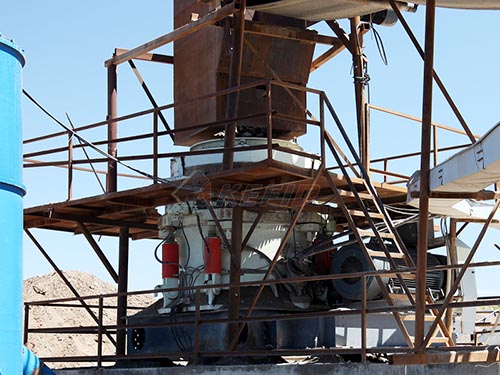
3. The Concept of “Discount” in the Luxury Crushing Equipment Market
Discounts on luxury quarry ballast crushing equipment are not arbitrary price reductions. They are strategic tools used by manufacturers, dealers, and distributors to manage inventory, secure large contracts, or enter new markets. Understanding the types of discounts is crucial for procurement professionals.
3.1. Volume-Based Discounts
Manufacturers often offer tiered pricing based on the number of units purchased. A quarry expanding its fleet might buy two or three cone crushers at once. In such cases, a volume discount of 5–15% is common. This is a straightforward negotiation tactic.
3.2. Seasonal and End-of-Year Discounts
The heavy equipment industry has cyclical demand. At the end of a fiscal year (e.g., December for many Western manufacturers), dealers may offer discounts to clear inventory and meet sales targets. Similarly, during slow construction seasons (e.g., winter in northern climates), discounts of 10–20% may be available.
3.3. Trade-In and Upgrade Discounts
A quarry operator with an older model can trade it in for a new luxury crusher. The manufacturer or dealer assesses the trade-in value (often 30–50% of the new price) and offers a discount on the new purchase. This is a common way to modernize a fleet without full capital outlay.
3.4. Financing and Lease-to-Own Discounts
Some manufacturers partner with financial institutions to offer low-interest financing or lease-to-own options. While not a direct discount on the purchase price, these arrangements effectively reduce the upfront cost. For example, a 0% financing for 24 months can be equivalent to a 5–7% discount in present value terms.
3.5. Demonstration and “Floor Model” Discounts
When a manufacturer introduces a new model, they may place a demonstration unit at a quarry for testing. After the demo period, these units are sold at a discount (typically 15–25%) because they have been used for a few hundred hours. Similarly, floor models at trade shows are discounted.
3.6. Package Deals (System Discounts)
A luxury ballast plant is not just a crusher; it includes feeders, screens, conveyors, and control systems. Manufacturers often offer a “system discount” when all components are purchased together. This can be 10–20% off the sum of individual prices.
4. Factors Influencing the Magnitude of Discounts
Not all discounts are equal. The following factors determine how much a buyer can negotiate:
5. Risks and Considerations When Pursuing Discounts
While a discount reduces upfront capital, it can introduce risks if not managed properly.
6. Strategic Recommendations for Quarry Operators
To maximize value when seeking discounts on luxury ballast crushing equipment, operators should adopt a systematic approach:
7. Case Study: A Hypothetical Discount Scenario
Consider a quarry in Germany that needs to upgrade its ballast production line. The current plant produces 200 tph of standard aggregate but cannot meet the new high-speed rail ballast specification (EN 13450). The operator evaluates two options:
After TCO analysis, Option A yields a lower per-ton cost over 10 years due to higher efficiency and lower wear costs, despite the higher upfront price. The operator negotiates an additional 5% discount by agreeing to a service contract, bringing the effective discount to 15%.
Conclusion
Luxury quarry ballast crushing equipment represents a significant investment, but one that can yield substantial returns through high-quality output and operational efficiency. Discounts on such equipment are a nuanced aspect of the market, influenced by volume, timing, trade-ins, and market conditions. While a discount can reduce the initial financial burden, it must be evaluated within the broader context of total cost of ownership, warranty, and after-sales support. For the discerning quarry operator, the goal is not simply to obtain the lowest price, but to secure the best value—a machine that delivers superior ballast, minimal downtime, and long-term profitability. By understanding the engineering and economic principles behind these machines, and by negotiating strategically, operators can turn a discount into a competitive advantage in the demanding world of railway infrastructure.
If you have any questions about our products, please feel free to contact us. We take all inquiries and suggestions very seriously.