
Private Label 250–300 TPH Stone Crushing Plant: Comprehensive Technical Specification and Operational Framework
Introduction
In the modern aggregate and mining industry, the demand for high-capacity, reliable, and cost-efficient crushing solutions has never been more pronounced. A Private Label 250–300 TPH (Tonnes Per Hour) Stone Crushing Plant represents a turnkey, semi-mobile or stationary system engineered to process hard rock, river gravel, limestone, and recycled concrete into graded aggregates for road construction, concrete batching, and infrastructure projects. The term “private label” in this context refers to a plant that is manufactured by an OEM (Original Equipment Manufacturer) but branded, customized, and configured according to the buyer’s specific operational, regional, and regulatory requirements. This article provides a detailed, professional specification of such a plant, covering design parameters, core equipment, electrical and control systems, structural considerations, safety features, and performance benchmarks.
1. General System Overview and Design Philosophy
A 250–300 TPH crushing plant is classified as a medium-to-high capacity system. It is typically designed for two-stage or three-stage crushing, depending on the feed material’s abrasiveness, the required final product gradation, and the percentage of fines acceptable. The plant’s design philosophy prioritizes:
The plant is typically fed by a wheel loader or dump truck with a feed hopper capacity of 40–60 m³. The nominal feed size is 0–750 mm, with a maximum rock hardness of 250 MPa (granite, basalt, quartzite). The plant’s output is split into multiple fractions, commonly 0–5 mm, 5–10 mm, 10–20 mm, and 20–40 mm, with the ability to adjust to 0–10 mm and 10–25 mm via screen mesh changes.
2. Primary Crushing Unit
The primary stage is the most critical for throughput. For 250–300 TPH, the standard configuration is a heavy-duty jaw crusher with a feed opening of at least 1,100 mm × 850 mm (e.g., equivalent to a C110 or PE-900×1200 class). Key specifications:
The primary crusher is fed via a vibrating grizzly feeder (1,200 mm × 4,500 mm) with a grizzly section of 1,200 mm × 1,500 mm. The grizzly spacing is set at 100–150 mm to bypass fines and reduce crusher wear. The feeder is equipped with a variable-speed drive to match the crusher load, preventing choke-ups.
3. Secondary and Tertiary Crushing Stages
For a 250–300 TPH plant producing high-quality cubical aggregates, the secondary stage is typically a hydraulic cone crusher (e.g., HP300 or equivalent) or a secondary impact crusher (for softer limestone). The choice depends on the abrasion index (AI) of the feed:
The tertiary stage, if required for producing manufactured sand (0–5 mm), is a VSI (Vertical Shaft Impact) crusher with a capacity of 100–150 TPH. The VSI operates in closed circuit with a wet or dry screen. Its rotor speed is variable (40–70 m/s), and it is equipped with a rock-on-rock or rock-on-anvil configuration. The VSI motor power is 2×200 kW (dual drive) for high reduction ratios.
4. Screening and Classification System
The plant uses a combination of inclined circular-motion screens and horizontal linear-motion screens to achieve precise separation. Typical configuration:
All screens are fitted with polyurethane or rubber panels for noise reduction and extended wear life. The screen angle is adjustable between 15° and 20° for the inclined units, while horizontal screens use a variable throw mechanism.
5. Conveying and Material Handling System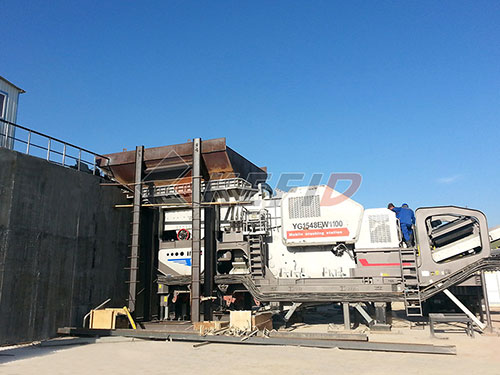
The plant’s material flow is managed by a network of belt conveyors, each designed with a belt width of 1,000–1,200 mm and a speed of 1.5–2.5 m/s. Key conveyors include:
All conveyor pulleys are lagged, and the idlers are CEMA E or F class for heavy-duty service. The system includes belt scales (accuracy ±0.5%) on the main feed and final product conveyors for production monitoring. Magnetic separators (overbelt magnets) and metal detectors are installed before the secondary and tertiary crushers to protect against tramp iron.
6. Electrical, Control, and Automation Specifications
The plant is powered by a main electrical panel with a total installed power of approximately 800–1,000 kW. The power distribution includes:
The plant is designed for single-operator control, with automatic start/stop sequences that follow a predefined interlock logic (e.g., the primary crusher cannot start unless the downstream conveyors and screens are running).
7. Structural and Civil Engineering Specifications
The plant’s structural steelwork is fabricated from S355JR grade steel (yield strength 355 MPa) with hot-dip galvanized finish for corrosion resistance. Key structural components:
The entire plant is designed to withstand wind loads of up to 150 km/h (for stationary installations) and seismic loads per local codes (e.g., UBC Zone 2).
8. Dust Suppression and Environmental Compliance
Given the 250–300 TPH throughput, dust generation is significant. The plant is equipped with a multi-stage dust control system:
Water consumption is estimated at 2–3 m³ per hour for dust suppression, with a closed-loop recycling system using a settling tank and a slurry pump.
9. Wear Parts and Maintenance Schedule
For a private label plant, the OEM provides a wear parts guarantee based on the feed material’s abrasiveness. Typical wear life (for granite with 20% silica content):
The plant is designed for easy maintenance access, with hydraulic tools for liner changes, a maintenance crane (5-ton capacity) over the crushers, and quick-release clamps on screen decks. The recommended maintenance schedule includes:
10. Performance Guarantees and Acceptance Testing
The private label plant is subject to a performance acceptance test conducted at the buyer’s site. The test criteria include:
11. Customization and Private Label Options
As a private label solution, the buyer can specify the following customizations: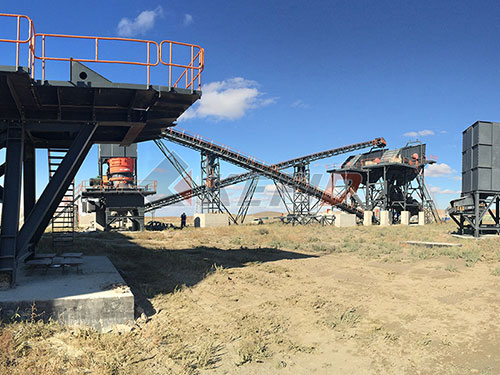
12. Economic and Operational Considerations
The capital cost of a 250–300 TPH private label plant ranges from USD 1.2 million to USD 2.5 million, depending on the level of automation, the inclusion of a VSI, and the mobility option. Operating costs (excluding power and labor) are estimated at USD 0.50–0.80 per tonne, driven primarily by wear parts (40%), fuel for loaders (25%), and maintenance (20%). The payback period for a typical quarry operation is 2–3 years, assuming a selling price of USD 8–12 per tonne for graded aggregates.
Conclusion
A Private Label 250–300 TPH Stone Crushing Plant is a sophisticated, high-throughput system that balances crushing efficiency, product quality, and operational flexibility. Its specification encompasses robust primary and secondary crushers, precise screening, automated controls, and comprehensive environmental safeguards. By opting for a private label arrangement, the buyer gains a tailored solution that aligns with local market demands, regulatory standards, and brand identity, while the OEM ensures engineering excellence and after-sales support. For any mid-scale aggregate producer, this plant represents a strategic investment in productivity and long-term profitability.
If you have any questions about our products, please feel free to contact us. We take all inquiries and suggestions very seriously.