
The Industrial Impact Crushers Assembly Plant: A Cornerstone of Modern Aggregate and Mineral Processing Infrastructure
Introduction
The industrial impact crushers assembly plant represents a specialized node within the broader heavy machinery manufacturing ecosystem, dedicated to the fabrication, integration, and testing of impact-type crushing equipment. Impact crushers are pivotal in the comminution of brittle, medium-hard, and soft materials across industries such as construction aggregates, mining, cement production, recycling, and industrial minerals processing. Unlike jaw or cone crushers that rely primarily on compressive forces, impact crushers utilize rapid rotational energy and controlled impact forces to fracture material along natural fissures, yielding a more cubical product shape and favorable reduction ratios. An assembly plant for such machinery is not merely a fabrication shed; it is a precision-driven facility where metallurgical engineering, mechanical design, hydraulic systems, automation, and quality assurance converge to produce equipment capable of continuous, high-throughput operation under abrasive and demanding conditions.
Facility Layout and Production Workflow
A typical industrial impact crushers assembly plant is organized around a linear or cellular production flow that optimizes material handling and minimizes bottlenecks. The facility generally comprises several distinct zones: raw material and component receiving, sub-assembly fabrication, main frame and rotor assembly, drive train integration, hydraulic and electrical installation, final alignment and balancing, paint and surface treatment, and performance testing before dispatch.
The receiving area accommodates incoming steel plates, castings, forgings, bearings, motors, hydraulic power units, and control cabinets. Heavy overhead cranes with capacities typically ranging from 10 to 50 tons traverse the assembly bays to move rotors, housings, and complete crusher bodies. Sub-assembly stations focus on the fabrication of wear components such as blow bars, impact plates, and liners, often using high-chromium or manganese steel alloys selected for abrasion resistance. Meanwhile, the main frame assembly area handles the welding and machining of the crusher housing, which must withstand substantial dynamic loads and vibration.
Rotor Assembly and Precision Balancing
The rotor is the heart of any impact crusher, and its assembly constitutes the most critical phase within the plant. Rotors are typically constructed from heavy-duty steel shafts fitted with disc or bar-type rotor bodies. The assembly process demands strict tolerances for shaft straightness, bearing seat concentricity, and blow bar mounting geometry. After mechanical assembly, rotors undergo dynamic balancing on specialized balancing machines to minimize vibration during high-speed rotation, which may reach peripheral speeds of 30 to 60 meters per second depending on the model and application.
Precision balancing is essential not only for equipment longevity but also for product quality and operational safety. Unbalanced rotors can induce premature bearing failure, structural fatigue, and excessive noise. Consequently, assembly plants employ laser-assisted alignment tools, vibration analyzers, and computerized balancing systems to verify rotor integrity before integration into the crusher housing.
Hydraulic, Electrical, and Automation Integration
Modern impact crushers increasingly incorporate hydraulic systems for opening the crusher housing, adjusting impact apron settings, and facilitating maintenance access. The assembly plant integrates these hydraulic power units, cylinders, and control valves, followed by pressure testing and leak verification. Electrical integration includes motor mounting, coupling alignment, sensor installation, and wiring of control panels. Variable frequency drives, overload protection devices, and programmable logic controllers are configured to enable automated adjustment of crusher parameters in response to feed material characteristics and production targets.
This integration phase requires close coordination between mechanical, hydraulic, and electrical assembly teams. Modular assembly practices and standardized connection interfaces help reduce assembly time and improve consistency across production batches.
Quality Assurance and Testing Protocols
Quality assurance within an impact crushers assembly plant extends from incoming material inspection to final performance testing. Non-destructive testing methods such as ultrasonic inspection and magnetic particle testing are applied to critical welds and load-bearing components. Dimensional inspection using coordinate measuring machines verifies housing geometry and alignment tolerances.
Final testing typically involves no-load run-in procedures to verify rotational smoothness, bearing temperature stability, and hydraulic response. Some plants also operate test beds with controlled feed material to validate throughput capacity, power consumption, and product gradation. Documentation of test results, traceability of components, and compliance with international standards such as ISO 9001 and CE marking requirements are integral to the plant’s quality management system.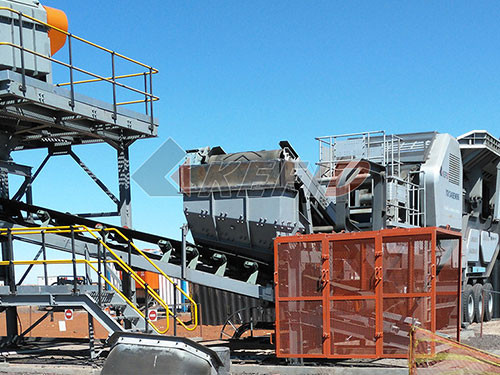
Workforce, Safety, and Environmental Considerations
The assembly plant relies on a skilled workforce including mechanical fitters, welders, machinists, electricians, hydraulic technicians, quality inspectors, and manufacturing engineers. Training programs emphasize precision assembly techniques, safe handling of heavy components, and adherence to lockout-tagout procedures during testing.
Environmental and safety measures include dust extraction during surface preparation and painting, noise control in testing areas, and ergonomic material handling systems. Waste minimization and recycling of metal scrap are standard practices, aligning plant operations with modern industrial sustainability objectives.
Conclusion
The industrial impact crushers assembly plant functions as a convergence point for advanced manufacturing, metallurgical expertise, and systems integration. Its output—reliable, precisely assembled impact crushers—underpins the productivity of aggregate production, mineral processing, and recycling operations worldwide. As demand grows for higher throughput, greater energy efficiency, and reduced downtime, assembly plants continue to evolve through automation, digital monitoring, and improved wear-material technologies, ensuring that impact crushing equipment remains a vital component of global industrial infrastructure.
If you have any questions about our products, please feel free to contact us. We take all inquiries and suggestions very seriously.