White Label Top Ten Stone Crusher Machine Procurement: A Strategic Guide for OEMs, Distributors, and Project Developers
Introduction: The Hidden Complexity of “White Label” Crushing Equipment
The global aggregate, mining, and construction recycling industries are underpinned by a single, unforgiving workhorse: the stone crusher. For original equipment manufacturers (OEMs) lacking in-house production capacity, for regional distributors seeking to expand catalogs without massive R&D investment, and for EPC (Engineering, Procurement, and Construction) contractors bundling turnkey crushing plants, the procurement of white label stone crushers has become a critical, yet often misunderstood, strategic lever.
White label procurement—where a manufacturer produces a machine that is rebranded and sold by another entity—is not a simple “buy and stamp” transaction. In the crushing industry, it involves heavy machinery operating under extreme loads, abrasive materials, and strict safety regulations. A poorly sourced white label crusher can lead to catastrophic downtime, safety liabilities, and reputational damage. This article provides a professional, objective, and comprehensive analysis of the top ten stone crusher machine types available for white label procurement, the technical specifications that matter, the supply chain risks, and the step-by-step procurement framework required to succeed.
Section 1: Understanding the White Label Model in Crushing Equipment
Before diving into the “top ten” list, it is essential to define the procurement context. In the stone crushing sector, white label arrangements typically fall into three distinct tiers:
- Full White Label (OEM-to-Brand): The manufacturer produces a complete machine (e.g., a jaw crusher) with the buyer’s brand name, paint scheme, and serial number. The buyer handles marketing, sales, and after-sales service.
- Semi-Knockdown (SKD) / Component Sourcing: The buyer procures core crushing modules (e.g., crushing chamber, eccentric shaft assembly) and integrates them with locally sourced frames, motors, and control systems.
- Private Label with Custom Engineering: The buyer provides specific performance parameters (e.g., feed size, throughput, discharge setting) and the manufacturer adapts an existing platform to meet those specs, then applies the buyer’s branding.
The procurement of white label crushers is distinct from buying a branded machine because the buyer assumes technical responsibility for the final product’s performance. Therefore, the “top ten” list below is not merely a ranking of popular models, but a ranking of procurement categories that offer the highest value, scalability, and market demand for white label partners.
Section 2: The Top Ten Stone Crusher Machine Types for White Label Procurement
The following ten categories represent the most commercially viable and technically feasible machines for white label sourcing. Each entry includes a technical overview, typical applications, and critical procurement considerations.
1. Primary Jaw Crushers (Heavy-Duty, Single Toggle)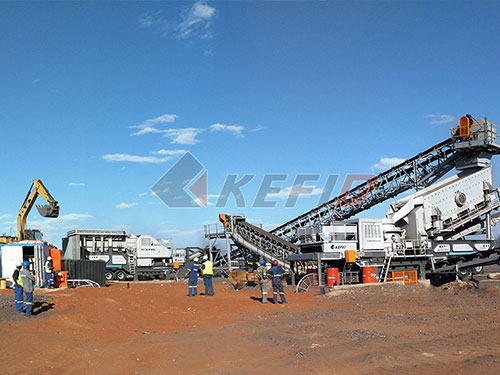
- Technical Profile: Feed size up to 1,200 mm; throughput 150–1,000 t/h; CSS (closed side setting) range 75–250 mm. Single toggle design is preferred for simplicity and lower maintenance.
- Market Demand: The backbone of any hard rock quarry. High demand in infrastructure projects.
- White Label Procurement Focus: The eccentric shaft and bearing assembly are the highest-risk components. Insist on forged, heat-treated shafts (40Cr or 42CrMo steel) and spherical roller bearings from Tier-1 suppliers (SKF, FAG, or equivalent). Verify the toggle plate’s breakage mechanism for overload protection. A common failure in white label units is substandard welding on the main frame—request ultrasonic testing (UT) reports.
2. Secondary Cone Crushers (Spring & Hydraulic)
- Technical Profile: Feed size 100–300 mm; output 30–300 mm; capacity 50–500 t/h. Hydraulic adjustment systems (HST/S series) are now standard.
- Market Demand: Essential for producing cubical aggregates for asphalt and concrete.
- White Label Procurement Focus: The crushing cavity geometry (standard, medium, short head) must be matched to the buyer’s target product. For white label, the hydraulic system’s accumulator and relief valves must be sourced from certified suppliers. Demand a full pressure-test certificate for the main frame and a run-in test report (minimum 8 hours under load) before shipment.
3. Horizontal Shaft Impactors (HSI) for Soft-to-Medium Stone
- Technical Profile: Feed size up to 500 mm; reduction ratio up to 20:1; capacity 100–600 t/h. Used for limestone, gypsum, and recycled concrete.
- Market Demand: High in cement plants and recycling facilities.
- White Label Procurement Focus: The rotor is the heart. Verify the rotor’s dynamic balancing (ISO 1940 G6.3 grade or better). The blow bars (martensitic steel or ceramic composite) are wear parts—ensure the white label manufacturer offers multiple bar profiles. Check the curtain adjustment mechanism for ease of remote operation.
4. Vertical Shaft Impactors (VSI) for Sand Making
- Technical Profile: Feed size up to 50 mm; output 0–5 mm (manufactured sand); capacity 50–400 t/h. Rock-on-rock or rock-on-anvil configurations.
- Market Demand: Surging due to natural sand depletion. Critical for high-spec concrete.
- White Label Procurement Focus: The rotor tip speed (typically 50–80 m/s) and the wear liner material (high-chrome or tungsten carbide) determine product quality. For white label, the lubrication system (oil circulation with flow and temperature sensors) must be fail-safe. Insist on a vibration analysis report for the bearing housing.
5. Mobile Jaw Crushing Plants (Track-Mounted)
- Technical Profile: Integrated jaw crusher, vibrating feeder, and discharge conveyor on a tracked undercarriage. Engine power 200–400 kW.
- Market Demand: High for urban demolition, road construction, and temporary quarrying.
- White Label Procurement Focus: This is the most complex white label category. The hydraulic drive system (pumps, motors, valves) must be from recognized brands (Parker, Rexroth, or Kawasaki). The control system (PLC with remote telemetry) must be compatible with the buyer’s fleet management software. Verify the track drive’s ground pressure and gradeability (typically 20 degrees).
6. Mobile Cone Crushers (Track-Mounted)
- Technical Profile: Secondary/tertiary stage; capacity 150–500 t/h; integrated pre-screen and return conveyor.
- Market Demand: Growing for aggregate producers requiring flexible relocation.
- White Label Procurement Focus: The metal detector and magnetic separator (overbelt magnet) are mandatory safety features. The hopper extension and side discharge conveyor must be hydraulically foldable for transport. For white label, the after-treatment system (diesel particulate filter) must meet the buyer’s regional emission standards (EU Stage V, EPA Tier 4f, or China National IV).
7. Stationary Impact Crusher (Reversible Hammer Mill)
- Technical Profile: Used for coal, coke, and soft limestone. Feed size 200 mm; output 0–20 mm; capacity 100–300 t/h.
- Market Demand: Niche but steady for power plants and cement kilns.
- White Label Procurement Focus: The rotor’s reversible feature doubles wear life. The grinding path (breaker plates) must be adjustable from outside the machine. Ensure the housing is split horizontally for easy maintenance access—a common cost-cutting omission in white label units.
8. Gyratory Crushers (Primary, Large-Scale)
- Technical Profile: Feed size up to 1,500 mm; capacity up to 6,000 t/h. Used in massive open-pit mines.
- Market Demand: Very low volume, extremely high value. Only for major mining groups.
- White Label Procurement Focus: This is not recommended for novice white label buyers. The main shaft and mantle wear patterns require sophisticated metallurgy. If procuring, demand a full FEA (finite element analysis) report on the main frame and a documented history of the casting supplier’s defect rate. Most buyers in this segment opt for licensed manufacturing rather than pure white label.
9. Vibrating Screens (Inclined & Horizontal)
- Technical Profile: Not a crusher per se, but an integral part of the crushing circuit. Sizes from 1.5m x 4m to 3m x 8m; multiple decks.
- Market Demand: Sold as a bundle with crushers or as standalone replacements.
- White Label Procurement Focus: The exciter (vibrator unit) is the critical component. Ensure it is a cartridge-type with oil bath lubrication. The screen mesh (polyurethane, rubber, or steel wire) must be interchangeable with industry-standard frames. For white label, the cross-beam welding must be stress-relieved to prevent fatigue cracking.
10. Sand Washing & Dewatering Units (Bucket Wheel & Hydrocyclone)
- Technical Profile: Output 50–200 t/h of washed sand; water consumption 50–100 m³/h.
- Market Demand: Increasingly mandatory due to environmental regulations on manufactured sand.
- White Label Procurement Focus: The bucket wheel’s wear plates and the hydrocyclone’s polyurethane liners are high-wear items. The dewatering screen (vibrating) must have a high-frequency, low-amplitude motion. For white label, the water recycling system (clarifier or thickener) is often the differentiator—ensure the manufacturer provides a complete water balance diagram.
Section 3: Critical Technical and Commercial Due Diligence for White Label Procurement
Selecting a machine type is only 20% of the work. The remaining 80% is rigorous supplier qualification and contract structuring. The following are non-negotiable elements of a professional white label procurement process.
3.1 Supplier Audit: Beyond the Brochure
- Factory Visit: Do not rely on video calls. Inspect the welding bays, machining centers (CNC for shafts and gears), and assembly lines. Check for the presence of a dedicated test bench with load cells.
- Certifications: ISO 9001 (quality), ISO 14001 (environment), and ISO 45001 (occupational health) are baseline. For CE marking (mandatory for EU sales), request the Declaration of Conformity and the technical file. For North America, request the NRTL (Nationally Recognized Testing Laboratory) certification for electrical panels.
- Reference List: Ask for at least three white label clients who have run the same model for over 2,000 hours. Contact them directly. Ask about mean time between failures (MTBF) and spare parts lead times.
3.2 Technical Specification Lock-Down
- Performance Guarantees: The contract must include liquidated damages for failure to meet throughput (t/h) and product gradation (e.g., >90% passing a specific sieve). Define the test material (e.g., basalt with 180 MPa compressive strength) and the test procedure (e.g., ASME PTC 4.2 for performance test codes).
- Wear Parts Life: Define a minimum wear life for liners, blow bars, and jaws (e.g., 1,500 hours for jaw plates on abrasive granite). If the manufacturer refuses to guarantee wear life, walk away.
- Drawings and Documentation: You must receive full 3D models (STEP/IGES), 2D dimensional drawings, hydraulic schematics, and electrical wiring diagrams. This is essential for your own after-sales service and for future modifications.
3.3 Supply Chain and Logistics Risks
- Lead Time: Typical white label lead time is 90–150 days for stationary units, 120–180 days for mobile units. Build in a buffer of 30 days for sea freight and customs clearance.
- Incoterms: Use FOB (Free on Board) or CIF (Cost, Insurance, Freight) for standard shipments. For large mobile plants, consider DAP (Delivered at Place) to transfer the risk of inland transport to the manufacturer.
- Spare Parts Package: Negotiate a mandatory initial spare parts kit (10% of machine value) including wear parts, filters, seals, and critical sensors. Ensure the manufacturer commits to a 24-hour dispatch for emergency parts.
3.4 Intellectual Property and Branding
- Trademark Protection: Register your brand name and logo in the target markets before signing the white label agreement.
- Non-Disclosure Agreement (NDA): The manufacturer must sign a strict NDA covering your pricing, customer lists, and any custom engineering modifications you provide.
- Exclusivity Clause: If you are investing heavily in a specific region, negotiate a territorial exclusivity clause (e.g., exclusive rights for the Middle East for 3 years). This prevents the manufacturer from selling the same white label unit to your direct competitor.
Section 4: The Procurement Process—A Step-by-Step Framework
A professional white label procurement cycle should follow a structured, stage-gate process.
Stage 1: Needs Assessment (Weeks 1–2)
- Define the target market (e.g., limestone quarries in Texas, USA).
- Determine the required capacity, feed material, and final product specs.
- Calculate the total cost of ownership (TCO): purchase price + freight + import duties + installation + 5-year maintenance + wear parts.
Stage 2: Request for Quotation (RFQ) (Weeks 3–4)
- Issue a detailed RFQ with a technical data sheet (TDS) that includes: machine type, capacity, power source (electric/diesel), environmental conditions (altitude, temperature), and safety standards.
- Require the manufacturer to submit a compliance matrix (yes/no/partial) against each specification line.
Stage 3: Technical Evaluation (Weeks 5–6)
- Score suppliers on: technical compliance (40%), commercial terms (30%), after-sales support (20%), and financial stability (10%).
- Conduct a virtual technical meeting to clarify ambiguous points.
Stage 4: Factory Acceptance Test (FAT) (Week 8–10)
- Witness the machine running under no-load and partial load. Check for abnormal vibration, oil leaks, and noise levels (should be below 85 dB(A) at 1 meter).
- Verify the control panel’s alarm and shutdown functions.
- Take oil samples for spectrometric analysis to detect premature wear.
Stage 5: Contract Negotiation & Payment Terms (Week 11–12)
- Payment terms: 30% advance, 40% against FAT, 20% against Bill of Lading, 10% after 90 days of successful operation (retention).
- Include a performance bond (5–10% of contract value) from the manufacturer’s bank.
Stage 6: Shipping, Installation, and Commissioning (Weeks 13–20)
- Hire an independent third-party inspection agency (e.g., SGS, Bureau Veritas) for pre-shipment inspection.
- For mobile units, verify the transport dimensions and axle loads for road permits.
- Commissioning must be supervised by the manufacturer’s engineer. Document the performance test results on-site.
Stage 7: Post-Commissioning Review (Week 24)
- Conduct a 500-hour operational review. Analyze wear rates, energy consumption (kWh per ton), and downtime.
- Use this data to negotiate better terms for the next batch of white label units.
Section 5: Common Pitfalls and How to Avoid Them
Even experienced procurement professionals fall into traps when dealing with white label heavy machinery. Here are the top five pitfalls:
- Pitfall: “Specification Creep” by the Manufacturer. The manufacturer may substitute a cheaper motor or a lower-grade bearing after the FAT, claiming “supply chain issues.” Mitigation: Include a “material substitution clause” requiring written approval for any component change, with a 30-day review period.
- Pitfall: Underestimating Freight and Installation Costs. A 50-ton jaw crusher may cost $200,000 FOB, but freight, heavy-lift crane rental, and civil works can add another $100,000. Mitigation: Obtain a turnkey installation quote from an independent engineering firm before finalizing the budget.
- Pitfall: Ignoring Local Serviceability. If you sell a white label crusher to a customer in a remote area, the local mechanic must be able to service it. Mitigation: Require the manufacturer to provide a full service manual in the local language and a video training library.
- Pitfall: Overlooking the “White Label” Warranty Gap. The manufacturer’s warranty covers the machine, but not the branding. If the machine fails, the end customer will sue your brand, not the manufacturer. Mitigation: Purchase product liability insurance in your name. Also, negotiate a “back-to-back” warranty clause where the manufacturer indemnifies you for defects in workmanship.
- Pitfall: Assuming “One Size Fits All” for Wear Parts. A white label crusher from Manufacturer A may have a different bolt pattern for jaw plates than a similar model from Manufacturer B. Mitigation: Standardize your entire white label fleet on a single manufacturer’s platform for each size class. This reduces your spare parts inventory by up to 40%.
Section 6: Future Trends in White Label Crusher Procurement
The white label market is evolving rapidly. To remain competitive, buyers must anticipate three major shifts:
- Electrification and Hybrid Drives: Diesel-powered mobile crushers are facing stricter emission controls. White label manufacturers are now offering electric-hybrid options (e.g., electric motor for the crusher, diesel for the tracks). Procurement professionals must evaluate the total energy cost and grid availability at the end-customer site.
- Telematics and IoT Integration: Modern white label crushers come with embedded sensors (vibration, temperature, oil quality). Buyers should demand an open API (Application Programming Interface) so that their own software can integrate the data. This allows for predictive maintenance and remote diagnostics, which is a strong selling point for your brand.
- Circular Economy and Recycling: The demand for crushers that can process construction and demolition waste (concrete, asphalt, brick) is exploding. White label buyers should prioritize machines with adjustable speed rotors and magnetic separation systems. The ability to produce a certified recycled aggregate (e.g., RA-0/32) will be a key differentiator.
Conclusion: Procurement as a Strategic Partnership, Not a Transaction
White label procurement of stone crushers is a high-stakes, high-reward strategy. It allows a company to scale rapidly without massive capital expenditure in manufacturing. However, the “top ten” list provided above is only a starting point. The true success lies in the depth of your technical due diligence, the clarity of your contractual guarantees, and the strength of your relationship with the underlying manufacturer.
A professional buyer treats the white label manufacturer as a long-term strategic partner. This means sharing market intelligence, co-developing new features, and maintaining transparent communication on quality issues. When executed
