
Title: Stone Crusher Machine Manufacturers: Achieving Competitive Pricing Through Engineering Excellence and Market Dynamics
Introduction
The global mining, quarrying, and construction industries are fundamentally reliant on the efficiency and reliability of stone crushing equipment. From primary jaw crushers that reduce boulders to manageable sizes, to secondary cone crushers and tertiary vertical shaft impactors (VSIs) that produce fine aggregates, the machinery forms the backbone of infrastructure development. For procurement managers, project engineers, and business owners, the search for “Stone Crusher Machine Manufacturers Competitive Price” is not merely a query for a low-cost option. It is a strategic evaluation of value—balancing capital expenditure (CAPEX) against operational expenditure (OPEX), durability, throughput capacity, and after-sales support. This article provides a comprehensive, objective analysis of the factors that enable manufacturers to offer competitive pricing, the global landscape of key players, the cost drivers behind machine production, and the critical considerations for buyers seeking both quality and affordability.
Section 1: The Global Landscape of Stone Crusher Manufacturers
The market for stone crushers is highly fragmented yet dominated by a few major industrial clusters. Understanding the geographic and economic positioning of manufacturers is essential to interpreting price competitiveness.
1.1 Chinese Manufacturers: The Volume and Cost Leaders
China is the world’s largest producer and exporter of stone crushing equipment. Manufacturers such as Shibang Industry & Technology Group (SBM), Zhengzhou Yifan Machinery Co., Ltd. (YIFAN), Henan Liming Heavy Industry Science & Technology Co., Ltd., and Shanghai Dongmeng Road & Bridge Machinery Co., Ltd. have established extensive supply chains. Their competitive pricing stems from:
1.2 Indian Manufacturers: Regional Specialists
India is another major hub, with manufacturers like Larsen & Toubro (L&T), M/s. R. D. Mining Equipments Pvt. Ltd., and Puzzolana Machinery Fabricators offering robust machines tailored to local conditions. Indian manufacturers often compete on price by using locally sourced steel and simplified designs. Their pricing is typically 10–20% higher than Chinese equivalents but offers better proximity for South Asian, African, and Middle Eastern markets, reducing shipping costs.
1.3 European and North American Manufacturers: Premium Engineering
Companies like Metso Outotec (Finland), Sandvik (Sweden), Terex (USA), and Astec Industries (USA) represent the high end of the market. Their machines are priced at a significant premium—often 2 to 4 times more than Chinese models. This premium is justified by:
1.4 Emerging Players: Turkey and South Korea
Turkish manufacturers (e.g., Fabo, Meka) and South Korean firms (e.g., Samsung Mining – now part of Doosan) offer a middle ground. They combine competitive pricing with European-quality engineering standards, making them attractive for buyers in Europe, the CIS, and the Middle East.
Section 2: Deconstructing the “Competitive Price” – Cost Drivers and Value Metrics
A competitive price is not an absolute number; it is a function of the machine’s total cost of ownership (TCO). To objectively evaluate a manufacturer’s offer, one must understand the primary cost components.
2.1 Raw Material Costs
The steel used in crusher frames, shafts, and chambers accounts for 30–50% of the manufacturing cost. High-manganese steel (e.g., Mn13Cr2) for jaw plates and cone liners is expensive but essential for wear resistance. Manufacturers who use lower-grade alloys or thinner steel plates can offer lower upfront prices, but this often results in premature failure and higher maintenance costs. Competitive pricing from reputable manufacturers is achieved through bulk purchasing of certified steel, not through material compromise.
2.2 Manufacturing Technology and Automation
Factories equipped with CNC machining centers, robotic welding, and heat treatment furnaces produce more consistent, durable parts. While the initial investment in automation is high, it reduces labor costs and waste, allowing manufacturers to offer competitive prices over the long term. Conversely, manufacturers relying on manual labor may have lower overheads but higher defect rates.
2.3 Design Standardization vs. Customization
Standardized models (e.g., PE-600×900 jaw crusher) are cheaper to produce because they use common components and molds. Manufacturers that offer highly customized machines—with specific motor voltages, conveyor lengths, or chassis configurations—incur additional engineering and procurement costs. A truly competitive price for a standard model may be significantly lower than for a customized variant.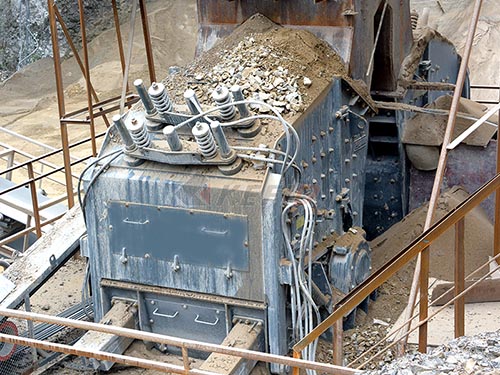
2.4 After-Sales and Warranty Inclusion
A low purchase price can be deceptive if the manufacturer excludes essential services. Competitive pricing often includes:
Section 3: Key Machine Types and Their Price Ranges
To provide objective context, the following are approximate price ranges (FOB, ex-works) for common stone crushers from competitive manufacturers as of 2025. Prices vary based on capacity, power, and brand.
3.1 Jaw Crushers (Primary Crushing)
3.2 Cone Crushers (Secondary/Tertiary Crushing)
3.3 Impact Crushers (Horizontal Shaft – HSI and Vertical Shaft – VSI)
3.4 Mobile Crushing Plants (Wheeled or Tracked)
Section 4: How to Identify Genuinely Competitive Pricing
Buyers must avoid the trap of “lowest price = best deal.” The following objective criteria help identify manufacturers offering true competitive pricing.
4.1 Request a Total Cost of Ownership (TCO) Analysis
Ask the manufacturer to provide:
4.2 Verify Quality Certifications
Reputable manufacturers hold ISO 9001 (quality management), CE (European safety), or GOST (Russian) certifications. These certifications require consistent production standards and third-party audits. A manufacturer with these certifications is more likely to deliver a machine that matches its quoted specifications.
4.3 Evaluate Spare Parts Availability and Cost
Competitive pricing extends to aftermarket parts. Some manufacturers offer low initial machine prices but charge exorbitant rates for proprietary wear parts. Inquire about the cost of a complete set of jaw plates, blow bars, or cone liners. Manufacturers that use standard, interchangeable parts (e.g., compatible with Metso or Sandvik designs) often provide better long-term value.
4.4 Assess Shipping and Logistics
A manufacturer located near a major port (e.g., Shanghai, Ningbo, Mundra) can offer lower freight costs. Additionally, manufacturers that have experience exporting to your region will have pre-negotiated shipping rates and customs clearance procedures, reducing hidden costs.
Section 5: Case Studies – Competitive Pricing in Action
Case Study A: Small Quarry in East Africa
A buyer needed a 50 tph jaw crusher and a 30 tph cone crusher. Quotes received:
Case Study B: Large Infrastructure Project in Southeast Asia
A contractor required a 300 tph mobile crushing plant. Quotes:
Section 6: Future Trends Affecting Pricing
6.1 Digitalization and Smart Crushers
Manufacturers are integrating IoT sensors, predictive maintenance algorithms, and remote monitoring into their machines. While this increases upfront costs, it reduces downtime and OPEX. Competitive pricing in the future will increasingly factor in digital service packages.
6.2 Sustainability and Energy Efficiency
Governments worldwide are imposing stricter emissions and energy efficiency standards. Manufacturers that invest in electric-drive crushers, hybrid power systems, and recyclable materials will have higher initial prices but lower operating costs. Buyers should consider long-term regulatory risks when evaluating price.
6.3 Supply Chain Volatility
Fluctuations in steel prices, shipping container rates, and geopolitical tensions (e.g., tariffs on Chinese goods) directly impact machine pricing. Competitive manufacturers hedge these risks through long-term supplier contracts and regional warehousing. Buyers should ask about price validity periods and escalation clauses.
Conclusion
The search for “Stone Crusher Machine Manufacturers Competitive Price” is a nuanced exercise that extends far beyond comparing price tags. Objective evaluation requires a deep understanding of manufacturing origins, cost drivers, machine specifications, and total cost of ownership. Chinese and Indian manufacturers dominate the volume market with aggressive pricing, while European and American brands command premiums for engineering excellence and service. Turkish and South Korean players offer a balanced alternative.
For the discerning buyer, the most competitive price is not the lowest upfront cost, but the one that delivers the highest value over the machine’s lifecycle—considering energy efficiency, wear part longevity, spare parts availability, and after-sales support. By requesting detailed TCO analyses, verifying certifications, and assessing logistical factors, procurement professionals can secure equipment that meets both their budget and operational requirements. In a market where quality and price are often inversely related, informed decision-making is the ultimate competitive advantage.
If you have any questions about our products, please feel free to contact us. We take all inquiries and suggestions very seriously.