Title: The Economics and Engineering of Affordable Iron Ore Crushing Plants: A Comprehensive Analysis of Production, Design, and Market Dynamics
Introduction
The global iron ore industry is the backbone of steel production, which in turn underpins modern infrastructure, transportation, and manufacturing. At the heart of this industry lies the crushing plant—a critical facility that reduces run-of-mine (ROM) ore to a size suitable for beneficiation, sintering, or direct shipping. The term “Iron Ore Crushing Plant Producer Affordable” encapsulates a growing demand for cost-effective, high-capacity, and durable crushing solutions that meet the rigorous standards of mining operations without inflating capital expenditure (CAPEX) or operational expenditure (OPEX). This article provides a professional, objective, and detailed examination of what constitutes an affordable iron ore crushing plant producer, the engineering principles behind cost-effective design, the market forces driving affordability, and the key considerations for buyers seeking long-term value.
1. Defining Affordability in the Context of Iron Ore Crushing Plants
Affordability in heavy industrial equipment is not merely a low initial purchase price. It is a composite metric that includes:
- Capital Cost (CAPEX): The upfront investment for equipment, installation, civil works, and commissioning.
- Operational Cost (OPEX): Ongoing expenses such as energy consumption, wear parts replacement, maintenance labor, and consumables (e.g., lubricants, screen media).
- Total Cost of Ownership (TCO): The sum of CAPEX and OPEX over the plant’s expected lifespan, typically 10–20 years.
- Productivity and Availability: The plant’s ability to consistently meet throughput targets (tons per hour) with minimal downtime.
- Scalability and Flexibility: The ease with which the plant can be expanded or reconfigured to handle different ore types or grades.
An affordable producer is one that optimizes all these factors, delivering a plant that is not only cheap to buy but also cheap to run and maintain. This requires a deep understanding of ore characteristics, crushing circuit design, and material handling.
2. Key Components of an Iron Ore Crushing Plant
A typical iron ore crushing plant consists of several stages, each designed to progressively reduce particle size:
- Primary Crushing: Usually a jaw crusher or gyratory crusher that reduces ROM ore (up to 1.5 meters in diameter) to 150–300 mm.
- Secondary Crushing: Cone crushers or impact crushers that further reduce material to 40–100 mm.
- Tertiary Crushing: High-pressure grinding rolls (HPGRs) or short-head cone crushers that produce a fine product (10–40 mm) suitable for beneficiation.
- Screening: Vibrating screens that separate material by size, ensuring that oversize particles are recirculated for further crushing.
- Conveying and Stockpiling: Belt conveyors, feeders, and stackers that transport material between stages and to storage.
The affordability of a plant depends on the selection and integration of these components. For example, using a single-stage jaw crusher for a high-tonnage operation may be cheap initially but will lead to high wear costs and low efficiency. Conversely, a multi-stage circuit with advanced automation may have a higher CAPEX but lower OPEX.
3. Engineering Principles for Cost-Effective Design
Affordable producers employ several engineering strategies to reduce costs without compromising performance:
- Modular Design: Modular plants are pre-engineered and fabricated in standardized sections. This reduces on-site construction time, minimizes civil works, and allows for rapid deployment. Modules can be easily transported, assembled, and disassembled, making them ideal for remote or temporary mining sites.
- Optimized Crushing Ratio: The reduction ratio (feed size to product size) is carefully balanced. Over-crushing wastes energy and increases wear; under-crushing reduces throughput. Modern crushers with variable speed drives and hydraulic adjustment allow operators to fine-tune the ratio in real time.
- Energy Efficiency: Crushing is one of the most energy-intensive processes in mining. Affordable plants use high-efficiency motors, regenerative drives, and advanced control systems to minimize kWh per ton. HPGRs, for instance, consume 20–30% less energy than conventional cone crushers for fine grinding.
- Wear Life Management: The cost of wear parts (liners, mantles, screens) can account for 30–50% of OPEX. Producers that use high-chrome alloys, ceramic inserts, or composite materials extend wear life. Additionally, designs that allow quick liner changes (e.g., hydraulic toggle systems) reduce downtime.
- Automation and Remote Monitoring: PLC-based control systems with sensors for power draw, temperature, vibration, and particle size distribution enable predictive maintenance. This reduces unplanned downtime and extends equipment life. Affordable producers often offer basic automation packages as standard, with optional advanced analytics.
4. Market Dynamics and Producer Profiles
The global market for iron ore crushing plants is dominated by a mix of multinational OEMs (Original Equipment Manufacturers) and regional fabricators. Affordable producers typically fall into two categories: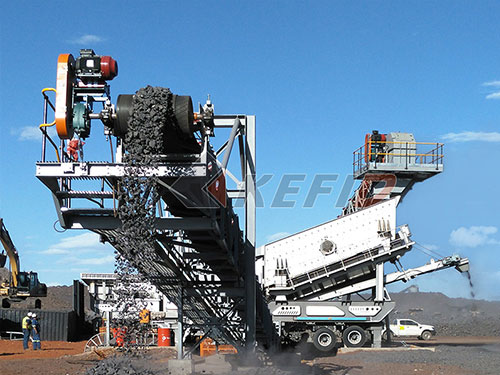
- Tier 1 OEMs with Cost-Effective Lines: Companies like Metso Outotec, Sandvik, and ThyssenKrupp offer premium plants with high reliability and advanced features. However, they also have “value” lines (e.g., Metso’s Nordberg® NP series) that strip away non-essential features to reduce price. These are suitable for large-scale operations where TCO is critical.
- Regional and Chinese Manufacturers: Producers such as Shanghai Shibang Machinery (SBM), Zhengzhou Yifan Machinery, and Henan Hongxing Mining Machinery offer significantly lower CAPEX. Their plants are often simpler in design, using proven technology with fewer automation options. While build quality and after-sales support may vary, many have improved significantly in recent years, offering competitive TCO for mid-sized operations in developing markets.
Affordability also depends on the producer’s ability to source raw materials locally, leverage low labor costs, and maintain efficient supply chains. For example, a Chinese manufacturer can produce a 200 tph iron ore crushing plant for 30–40% less than a European OEM, but may have higher freight costs and longer lead times.
5. Case Study: Affordable Plant for a Mid-Sized Mine
Consider a hypothetical iron ore mine in Western Australia with a throughput of 500 tph and an average ore hardness of 15–20 kWh/t (Bond Work Index). An affordable plant design might include:
- Primary: One 900×1200 mm jaw crusher (capacity 400–600 tph) with hydraulic adjustment.
- Secondary: Two 2200 mm cone crushers (medium chamber) in parallel.
- Tertiary: Two HPGRs (2.0 m diameter × 1.5 m width) with a closed-circuit screen.
- Screening: Two triple-deck vibrating screens (2.4 m × 6.0 m).
- Conveying: 1.2 m wide belt conveyors with impact idlers and dust covers.
The estimated CAPEX for such a plant from a regional producer might be $8–12 million, compared to $15–20 million from a Tier 1 OEM. However, the Tier 1 plant might have 5–10% higher availability (95% vs. 85–90%) and 10–15% lower energy consumption. Over a 10-year period, the TCO could be similar, depending on local energy costs and maintenance labor rates.
6. Key Considerations for Buyers
When evaluating an affordable iron ore crushing plant producer, buyers should:
- Conduct a Lifecycle Cost Analysis: Do not focus solely on the purchase price. Factor in energy, wear parts, and maintenance costs over the expected life.
- Verify After-Sales Support: Affordable producers may have limited service networks. Ensure that spare parts are readily available and that technical support is accessible (e.g., remote diagnostics).
- Inspect Build Quality: Visit the factory or request references. Look for weld quality, material thickness, and alignment tolerances.
- Test with Representative Ore: Send samples for pilot-scale testing to confirm that the proposed circuit can achieve the desired product size and throughput.
- Negotiate Performance Guarantees: Reputable producers will offer guarantees for throughput, product size, and power consumption. These should be backed by liquidated damages.
- Consider Local Content: In some jurisdictions, using local manufacturers can reduce import duties and lead times, and may qualify for tax incentives.
7. Future Trends in Affordable Crushing
The drive for affordability is pushing innovation in several areas:
- Mobile and Semi-Mobile Plants: Track-mounted or wheel-mounted crushing units that can be moved closer to the mining face, reducing haulage costs. These are increasingly affordable due to standardized designs.
- Digital Twins and AI: Virtual models of the plant that simulate performance under different conditions. This allows operators to optimize settings without risking equipment damage, reducing OPEX.
- Recycling and Circular Economy: Some producers are using recycled steel and remanufactured components to lower CAPEX. For example, refurbished cone crushers can be 40–60% cheaper than new ones.
- Hybrid Power Systems: Integrating solar or battery storage with diesel generators to reduce energy costs in remote locations.
Conclusion
An affordable iron ore crushing plant producer is one that delivers a balanced solution—combining reasonable initial cost with low operating expenses, high reliability, and strong after-sales support. The market offers a spectrum of options, from premium OEMs with cost-optimized lines to regional manufacturers with simpler designs. The key for buyers is to perform a rigorous total cost of ownership analysis, test the equipment with their specific ore, and negotiate clear performance guarantees. As technology advances and competition intensifies, the definition of “affordable” will continue to evolve, but the fundamental principle remains: the cheapest plant is not always the most affordable in the long run. By focusing on engineering efficiency, modularity, and lifecycle value, producers and buyers alike can achieve sustainable, cost-effective iron ore crushing operations.
