Title: An In-Depth Analysis of CE Marked Stone Crusher Machine Factories: Standards, Manufacturing Excellence, and Global Compliance
Introduction
In the global mining, construction, and aggregate processing industries, stone crusher machines are indispensable for reducing large rocks into smaller, usable aggregates. Among the myriad of manufacturers worldwide, those that produce CE marked stone crusher machines represent the pinnacle of quality, safety, and regulatory compliance. The CE marking, a mandatory conformity mark for products sold within the European Economic Area (EEA), signifies that a product meets stringent health, safety, and environmental protection requirements. This article provides a comprehensive, objective, and professional examination of CE marked stone crusher machine factories, covering the regulatory framework, manufacturing processes, quality control, key technologies, and the competitive landscape.
1. Understanding the CE Marking for Stone Crushers
The CE marking is not a quality mark per se, but a declaration by the manufacturer that the product complies with all applicable European Union (EU) directives and regulations. For stone crushers, the most relevant directives include:
- Machinery Directive 2006/42/EC: This is the primary directive for stone crushers. It covers essential health and safety requirements (EHSRs) related to mechanical hazards, electrical safety, noise, vibration, ergonomics, and guarding.
- Electromagnetic Compatibility (EMC) Directive 2014/30/EU: Ensures that the crusher’s electrical and electronic systems do not emit excessive electromagnetic interference and are immune to external disturbances.
- Low Voltage Directive 2014/35/EU: Applies to electrical equipment operating within certain voltage ranges, ensuring safety against electric shock, fire, and mechanical hazards.
- Noise Emission Directive 2000/14/EC: Sets limits on the noise levels of outdoor equipment, including crushers, to protect workers and the environment.
- ATEX Directive 2014/34/EU (if applicable): For crushers used in potentially explosive atmospheres (e.g., coal mines), additional certification is required.
A CE marked stone crusher machine factory must therefore implement a rigorous design and production process that integrates these requirements from the initial concept through final assembly. The manufacturer must compile a Technical File, conduct a risk assessment, and often involve a Notified Body (an independent testing organization) for certain types of machinery.
2. The Manufacturing Ecosystem of CE Marked Factories
Factories producing CE marked stone crushers are typically located in industrialized regions with strong engineering traditions, such as Germany, Italy, Spain, the United Kingdom, and increasingly in China and India (where many factories have achieved CE certification to access European markets). These factories share several common characteristics:
a) Advanced Engineering and R&D Capabilities:
CE compliance begins at the design stage. Factories employ mechanical, electrical, and safety engineers who use Computer-Aided Design (CAD) and Finite Element Analysis (FEA) to simulate stress points, fatigue life, and vibration patterns. They also conduct Failure Mode and Effects Analysis (FMEA) to identify potential hazards. For example, a jaw crusher’s toggle plate is designed as a sacrificial weak point to prevent catastrophic damage if uncrushable material enters the chamber.
b) High-Quality Material Sourcing:
The durability of a stone crusher depends heavily on the materials used. CE marked factories source high-grade manganese steel (e.g., 14% Mn, 2% Cr) for wear parts like jaw plates, cone liners, and hammers. They also use alloy steel for shafts, bearings, and frames. Suppliers must provide material certificates (EN 10204 type 3.1 or 3.2) to ensure traceability and compliance with EU standards.
c) Precision Manufacturing Processes: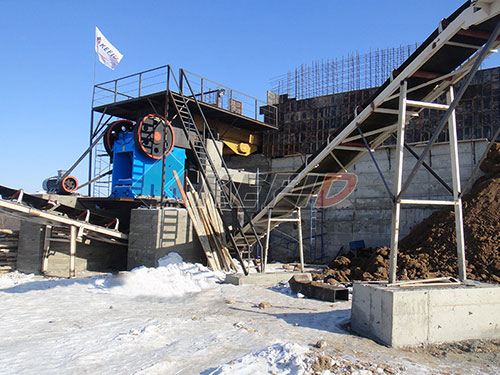
- Casting and Forging: Wear parts are often cast using sand casting or investment casting, followed by heat treatment (quenching and tempering) to achieve the desired hardness (typically 180-220 HB for manganese steel). Forged shafts and gears are machined to tight tolerances (e.g., ISO 2768-m).
- Welding: Structural frames are welded using robotic or semi-automatic welding systems. Welders must be certified to EN 287-1 or ISO 9606, and welds are inspected via non-destructive testing (NDT) such as ultrasonic or magnetic particle inspection.
- Machining: CNC machining centers produce components with high precision. For example, the eccentric shaft of a cone crusher must be machined to within 0.01 mm to ensure smooth rotation and proper gap adjustment.
- Assembly: Final assembly is performed in clean, controlled environments. Each crusher undergoes a dry run (no load) and a load test to verify performance, noise levels, and vibration.
d) Stringent Quality Control (QC) and Testing:
CE marked factories maintain ISO 9001:2015 quality management systems. QC includes:
- Incoming Inspection: Raw materials and purchased components (e.g., motors, bearings from brands like SKF, FAG, Siemens) are inspected for dimensions, hardness, and certifications.
- In-Process Inspection: Dimensional checks, hardness tests, and weld inspections are performed at critical stages.
- Final Inspection: Each crusher is tested for:
- Noise Level: Measured according to ISO 3744 or ISO 11201. Typical limits are below 85 dB(A) for operator position.
- Vibration: Measured using accelerometers; acceptable levels are usually below 7 mm/s RMS.
- Electrical Safety: Insulation resistance, ground continuity, and leakage current tests per IEC 60204-1.
- Performance: Throughput, power consumption, and product gradation are verified against design specifications.
3. Key Types of CE Marked Stone Crushers and Their Factory Specifics
a) Jaw Crushers:
Used for primary crushing. CE marked factories focus on:
- Safety Guards: Interlocked guards that prevent access to moving parts during operation.
- Hydraulic Adjustment: Allows safe and quick setting changes without manual intervention.
- Overload Protection: A hydraulic relief system or breakable toggle plate.
b) Cone Crushers:
Used for secondary and tertiary crushing. CE compliance emphasizes:
- Automation Systems: PLC-controlled systems that monitor oil temperature, pressure, and power draw, automatically adjusting the crusher setting to prevent overload.
- Anti-Spin Mechanism: Prevents the cone from spinning when no load is applied, reducing wear and safety risks.
- Dust Seals: Effective sealing to prevent dust ingress into bearings and hydraulic systems.
c) Impact Crushers (Horizontal Shaft Impactors – HSI, Vertical Shaft Impactors – VSI):
Used for shaping and fine crushing. Key CE features include:
- Rotor Locking System: Ensures safe maintenance by locking the rotor in place.
- Hydraulic Opening Mechanism: Allows easy access to the crushing chamber for wear part replacement.
- Noise and Dust Control: Enclosed designs with soundproofing panels and dust suppression systems.
d) Mobile Crushers (Track-Mounted or Wheel-Mounted):
These are increasingly popular. CE marked mobile crusher factories must comply with additional directives:
- Road Traffic Regulations: Lighting, braking, and towing systems must meet EU roadworthiness standards.
- Stability: The machine must be designed to prevent tipping during transport and operation.
- Remote Control: Wireless remote controls must comply with EMC and safety standards (e.g., EN 60204-32).
4. The Role of Notified Bodies and Certification Process
To obtain CE marking for a stone crusher, the manufacturer must follow a conformity assessment procedure. For most crushers, the manufacturer can self-declare conformity using Annex VIII of the Machinery Directive (internal production control). However, for certain high-risk machines (e.g., those with complex safety systems or used in explosive environments), a Notified Body (e.g., TÜV Rheinland, SGS, Bureau Veritas) must be involved.
The process typically involves:
- Risk Assessment: Documenting all hazards (mechanical, electrical, thermal, noise, vibration, ergonomic) and implementing risk reduction measures.
- Technical File Compilation: Including design drawings, calculations, test reports, manuals, and a Declaration of Conformity.
- Type Examination (if required): The Notified Body tests a sample of the crusher to verify compliance.
- Factory Production Control (FPC) Audit: The Notified Body inspects the factory’s quality system and production processes.
- CE Marking and Declaration: Once approved, the manufacturer affixes the CE mark and issues the EU Declaration of Conformity.
5. Global Landscape of CE Marked Stone Crusher Factories
a) European Manufacturers:
- Metso Outotec (Finland): A global leader, known for high-end, fully CE-compliant crushers like the Nordberg® HP series.
- Sandvik (Sweden): Produces the CH and CS series cone crushers, with advanced automation and safety features.
- Thyssenkrupp (Germany): Offers robust jaw and gyratory crushers for heavy-duty mining.
- Meka (Turkey): A major supplier of mobile and stationary plants, with CE certification for most models.
b) Asian Manufacturers:
- Shibang Industry & Technology Group (China): A large Chinese manufacturer that has obtained CE certification for many of its crushers, including the S series cone crusher and PE jaw crusher.
- Zhengzhou Yifan Machinery (China): Produces mobile crushers with CE marking, targeting European and Middle Eastern markets.
- Terex Finlay (UK/Ireland): A global brand with factories in Northern Ireland, producing CE marked mobile crushers.
- Puzzolana (India): An Indian manufacturer that has achieved CE certification for its crushers, particularly for export to Africa and the Middle East.
c) Key Differentiators:
- European Factories: Emphasize R&D, automation, and after-sales support. They often use premium components (e.g., SKF bearings, Siemens motors) and offer longer warranties (2-3 years).
- Asian Factories: Compete on price and delivery time. While many have CE certification, the quality of documentation and after-sales support can vary. However, top-tier Asian factories now match European standards in terms of safety and performance.
6. Challenges and Future Trends
a) Challenges:
- Cost of Compliance: Achieving CE marking requires significant investment in design, testing, and documentation. Small factories may struggle.
- Harmonized Standards Updates: EU directives are periodically updated (e.g., the new Machinery Regulation 2023/1230, effective from 2027), requiring factories to continuously adapt.
- Counterfeit CE Marks: Some factories illegally affix CE marks without proper compliance, undermining trust. Buyers must verify certification through Notified Body databases.
b) Future Trends:
- Digitalization and IoT: CE marked crushers are increasingly equipped with sensors and cloud connectivity for predictive maintenance and remote monitoring. Compliance with cybersecurity standards (e.g., EN 303 645) is emerging.
- Sustainability: Factories are focusing on energy efficiency (e.g., variable frequency drives, hybrid power systems) and recyclability of components. CE marking now also covers eco-design requirements under the Ecodesign Directive.
- Modular and Mobile Solutions: Demand for compact, easy-to-transport crushers is rising, especially for urban recycling and small-scale mining.
- Autonomous Operation: Semi-autonomous and fully autonomous crushers are being developed, requiring new safety standards (e.g., ISO 18497 for autonomous machinery).
Conclusion
CE marked stone crusher machine factories represent a commitment to safety, quality, and regulatory compliance. From the rigorous design phase to final testing, these factories adhere to a comprehensive set of EU directives that ensure their products are safe for operators, environmentally responsible, and reliable in demanding applications. While European manufacturers continue to lead in innovation and premium quality, many Asian factories have successfully achieved CE certification and are closing the gap. For buyers, choosing a CE marked crusher is not just a legal requirement for the European market but also a guarantee of superior engineering and long-term value. As the industry moves toward digitalization and sustainability, the role of CE marking will only grow, ensuring that stone crushers remain safe, efficient, and environmentally friendly for decades to come.
