Title: Chinese Crushing and Screening Equipment Exporters: Global Leaders in Mining and Construction Machinery
Introduction
The global mining, quarrying, and construction industries rely heavily on robust, efficient, and cost-effective machinery. Among the most critical equipment in these sectors are crushing and screening machines, which are used to reduce large rocks and ores into smaller, more manageable sizes for further processing. Over the past two decades, China has emerged as a dominant force in the manufacturing and export of this equipment. Chinese crushing and screening equipment exporters have transitioned from being low-cost producers to offering a wide spectrum of products that compete on quality, technology, and after-sales service. This article provides a detailed, professional, and objective analysis of the landscape of Chinese exporters in this sector, examining their market position, product range, competitive advantages, challenges, and future outlook.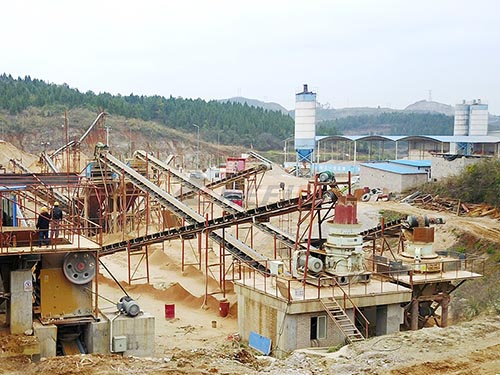
1. The Scale and Structure of the Chinese Export Market
China is currently the world’s largest producer and consumer of crushing and screening equipment. The domestic market, driven by massive infrastructure projects, urbanization, and a thriving mining sector, has fostered a highly competitive and innovative manufacturing base. This domestic strength has naturally extended to international markets. According to industry reports, China accounts for a significant share of global exports in this machinery category, with shipments reaching every continent.
The export ecosystem is not monolithic. It comprises three main tiers:
- Tier 1: Large State-Owned and Publicly Listed Enterprises (SOEs and PLCs) – Companies like CITIC Heavy Industries, SBM (Shanghai Shibang Machinery), and Shanghai Zenith Mining and Construction Machinery. These firms have decades of experience, extensive R&D budgets, and global service networks. They export complete turnkey solutions, including large-scale jaw crushers, cone crushers, and high-capacity screening plants.
- Tier 2: Specialized Mid-Sized Manufacturers – Companies such as Zhengzhou Yifan Machinery, Henan Liming Heavy Industry, and Shandong Chengming Construction Machinery. These exporters focus on specific product lines (e.g., mobile crushers, impact crushers, vibrating screens) and often offer customized solutions for niche applications.
- Tier 3: Small and Medium Enterprises (SMEs) and Trading Companies – Hundreds of smaller factories and trading firms that export standard, low-to-medium capacity equipment. These players are highly price-competitive and are particularly active in emerging markets in Africa, Southeast Asia, and South America.
2. Product Range and Technological Capabilities
Chinese exporters offer a comprehensive portfolio that covers the entire crushing and screening process:
- Primary Crushing Equipment: Jaw crushers (single toggle and double toggle), gyratory crushers, and impact crushers. Chinese manufacturers have made significant strides in improving the wear life of jaw plates and the efficiency of eccentric shafts.
- Secondary and Tertiary Crushing: Cone crushers (spring, hydraulic, and multi-cylinder), vertical shaft impact (VSI) crushers, and high-pressure grinding rolls (HPGR). In recent years, Chinese hydraulic cone crushers have closed the gap with European and American brands in terms of crushing force and automation.
- Screening Equipment: Vibrating screens (circular, linear, and banana screens), trommel screens, and high-frequency dewatering screens. Innovations in screen media (polyurethane and modular systems) have improved screening efficiency and reduced downtime.
- Mobile and Track-Mounted Plants: A rapidly growing segment. Chinese exporters now produce fully mobile jaw, cone, and impact crushing plants with advanced hydraulic drives and remote monitoring capabilities. These are particularly popular in recycling and small-to-medium scale quarrying.
- Washing and Conveying Systems: Sand washing machines, log washers, belt conveyors, and feeders are often exported as part of complete processing lines.
3. Key Export Destinations and Market Penetration
Chinese crushing and screening equipment is exported to over 150 countries. The primary markets can be categorized as follows:
- Southeast Asia (Indonesia, Vietnam, Philippines, Thailand): This region is the largest market for Chinese exporters. The demand is driven by infrastructure development (roads, ports, dams) and nickel, coal, and copper mining. Chinese equipment is preferred due to its lower initial cost, proximity (reducing shipping costs), and the availability of Chinese-language technical support.
- Africa (Nigeria, South Africa, Ghana, Tanzania, Zambia): Chinese exporters have a strong foothold in Africa, particularly in gold, diamond, and aggregate mining. The “Belt and Road Initiative” (BRI) has further facilitated exports through infrastructure projects and financing. Chinese equipment is often seen as a practical alternative to expensive European brands.
- South America (Brazil, Peru, Chile, Colombia): This is a more challenging market due to the presence of established American and European brands (Metso, Sandvik, Terex). However, Chinese exporters are gaining ground in mid-range applications, especially in iron ore, copper, and gold mines. Local service centers and spare parts warehouses are being established to improve reliability.
- Central Asia and Russia (Kazakhstan, Uzbekistan, Russia): These markets value heavy-duty, cold-weather resistant equipment. Chinese exporters have adapted their designs to handle extreme temperatures and abrasive materials.
- Middle East (Saudi Arabia, UAE, Oman): Demand is driven by construction aggregates and limestone for cement production. Chinese mobile crushers are popular for recycling construction and demolition waste.
4. Competitive Advantages of Chinese Exporters
The success of Chinese crushing and screening equipment exporters can be attributed to several key factors:
- Cost Leadership: The most obvious advantage is price. Chinese equipment typically costs 30% to 50% less than equivalent European or American models. This is achieved through lower labor costs, a highly integrated supply chain (many components are manufactured in-house or sourced from nearby specialized clusters), and economies of scale.
- Customization and Flexibility: Chinese manufacturers are often willing to modify standard designs to meet specific customer requirements, such as adjusting feed openings, motor power, or conveyor lengths. This flexibility is highly valued in smaller or unconventional mining operations.
- Rapid Delivery and Production Capacity: Chinese factories can produce and ship large quantities of equipment in a short time frame. Lead times for standard models can be as low as 30-45 days, compared to 4-6 months for some Western competitors.
- Improved Quality and Reliability: While early Chinese exports suffered from quality issues, the situation has improved dramatically. Many Tier 1 and Tier 2 manufacturers now use imported bearings (SKF, FAG), high-quality steel (from Baosteel or Nippon Steel), and advanced heat treatment processes. ISO 9001 and CE certifications are now common.
- Comprehensive After-Sales Support: Leading exporters have established overseas warehouses, service centers, and technical support teams. They offer training for local operators, remote diagnostics, and a steady supply of wear parts (liners, hammers, screens). Some even provide financing and leasing options.
5. Challenges and Criticisms
Despite their success, Chinese exporters face several significant challenges:
- Perception of Lower Quality: The legacy of early low-quality exports persists in some markets. Buyers in developed countries (Europe, North America, Australia) often remain skeptical about the long-term durability and reliability of Chinese equipment, especially for high-tonnage, continuous operations.
- Intellectual Property (IP) Concerns: There have been instances of design copying and patent infringement. This has led to legal disputes and trade barriers in some jurisdictions. However, leading Chinese companies are now investing heavily in their own R&D and patent portfolios.
- Service and Spare Parts Gaps: While Tier 1 exporters have good global coverage, smaller exporters often lack local service infrastructure. This can lead to long downtime if a critical component fails, especially in remote mining sites.
- Trade Tariffs and Non-Tariff Barriers: Some countries have imposed anti-dumping duties or stricter certification requirements (e.g., CE, GOST, ASME) on Chinese machinery. Compliance with these standards increases costs and complexity.
- Currency Fluctuations and Raw Material Costs: The Chinese yuan’s exchange rate and the volatility of steel prices directly impact export pricing and profitability.
6. Quality Standards and Certifications
To compete globally, Chinese exporters have increasingly adopted international quality standards:
- ISO 9001:2015 – Quality management systems are now standard for most reputable manufacturers.
- CE Marking – Mandatory for export to the European Union. This requires compliance with safety, health, and environmental protection directives.
- GOST-R / EAC – Required for exports to Russia and the Eurasian Economic Union.
- ASME – Occasionally required for pressure vessels and heavy structural components in North America.
- SGS, BV, and Intertek Inspections – Many buyers require third-party inspection during manufacturing and before shipment.
7. Future Trends and Outlook
The future of Chinese crushing and screening equipment exports looks promising, driven by several trends:
- Automation and Digitalization: Chinese manufacturers are integrating IoT (Internet of Things) sensors, remote monitoring, and predictive maintenance software into their equipment. This allows operators to track performance, optimize settings, and reduce unplanned downtime.
- Eco-Friendly and Energy-Efficient Designs: Stricter environmental regulations in China and abroad are pushing manufacturers to develop equipment with lower fuel consumption, reduced noise, and dust suppression systems. Electric-powered mobile crushers are gaining traction.
- Expansion into High-End Markets: Chinese companies are increasingly targeting developed markets (Australia, Canada, Western Europe) by offering premium models with advanced features and longer warranties. Joint ventures and acquisitions of foreign brands are also occurring.
- Aftermarket and Service Growth: As the installed base of Chinese equipment grows globally, there is a huge opportunity for spare parts sales, refurbishment services, and technical support. Exporters are building dedicated service networks to capture this recurring revenue.
- Belt and Road Initiative (BRI) Synergy: The BRI continues to drive demand for Chinese machinery in partner countries, often financed by Chinese banks. This creates a captive market for exporters.
Conclusion
Chinese crushing and screening equipment exporters have evolved from low-cost imitators into serious global competitors. They offer a broad range of products that combine affordability with increasingly reliable performance. While challenges related to quality perception, IP protection, and service infrastructure remain, the industry is actively addressing these issues through technological innovation, certification, and global expansion. For buyers in emerging markets and cost-sensitive applications, Chinese equipment often represents the best value proposition. For those in high-end markets, the gap is narrowing, and Chinese exporters are becoming viable alternatives to traditional Western suppliers. As the global demand for minerals and aggregates continues to grow, Chinese exporters are well-positioned to play a leading role in shaping the future of the crushing and screening industry.
