Title: The Role and Technical Considerations of a Slag Crusher Plant Fabricator: A Comprehensive Overview
Introduction
In the metallurgical and construction industries, the efficient processing of industrial by-products is critical for both environmental sustainability and economic viability. One such by-product is slag, a non-metallic residue generated during the smelting of ores in blast furnaces, steelmaking furnaces, and other pyrometallurgical processes. Slag, if left unprocessed, poses disposal challenges and represents a lost opportunity for resource recovery. This is where the expertise of a Slag Crusher Plant Fabricator becomes indispensable. A slag crusher plant fabricator is a specialized engineering and manufacturing entity that designs, builds, and commissions complete crushing and screening systems tailored to convert slag into valuable, reusable aggregates. This article provides a detailed, professional, and objective examination of the role, technical specifications, design considerations, and operational aspects of a slag crusher plant fabricator.
1. Understanding Slag and Its Processing Requirements
Before delving into the fabricator’s role, it is essential to understand the material being processed. Slag is not a uniform substance; its physical and chemical properties vary significantly depending on its source. Common types include:
- Blast Furnace Slag (BFS): Generated during iron production, it is glassy and granular when water-quenched.
- Steel Slag: Produced during steelmaking, it is denser, harder, and often contains free lime (CaO) and iron oxides.
- Ferroalloy Slag: Generated during the production of ferroalloys like ferromanganese or ferrochrome, it may contain valuable metals.
A competent slag crusher plant fabricator must design a system that can handle the abrasive, hard, and sometimes metallic nature of slag. The primary processing goals are:
- Size reduction (crushing) to produce aggregates of specific gradations.
- Magnetic separation to recover metallic iron or steel.
- Screening to classify material into different product sizes.
- De-dusting to control airborne particulate matter.
2. Core Responsibilities of a Slag Crusher Plant Fabricator
A fabricator is not merely a supplier of equipment; they are a solution provider. Their responsibilities encompass the entire project lifecycle:
2.1. Feasibility Study and Material Testing
The process begins with a thorough analysis of the client’s slag. The fabricator typically conducts or commissions tests to determine:
- Abrasion Index: To select appropriate wear-resistant materials for crushers and screens.
- Compressive Strength: To determine the required crushing force and crusher type.
- Moisture Content: To assess the need for drying or wet processing.
- Magnetic Susceptibility: To design efficient magnetic separation stages.
2.2. Plant Design and Engineering
Based on the material analysis and the client’s target output (e.g., 0-5mm, 5-20mm, 20-40mm aggregates), the fabricator engineers a complete flow sheet. This includes:
- Primary Crushing: Typically a jaw crusher or gyratory crusher to reduce large slag boulders (up to 1 meter) to 100-200mm.
- Secondary Crushing: Cone crushers or impact crushers for further reduction.
- Tertiary Crushing: Vertical Shaft Impactors (VSI) or roll crushers for fine shaping.
- Screening: Multi-deck vibrating screens to separate products.
- Magnetic Separation: Overband magnets, drum magnets, and eddy current separators to extract ferrous and non-ferrous metals.
- Conveying and Storage: Belt conveyors, stockpile conveyors, and silos.
2.3. Fabrication and Manufacturing
This is the core of the fabricator’s work. They manufacture the structural steelwork, chutes, hoppers, and support frames. They also integrate purchased components (crushers, motors, gearboxes) into a cohesive system. Key fabrication standards include:
- Welding Quality: Adherence to AWS (American Welding Society) or equivalent standards.
- Material Selection: Use of high-tensile steel (e.g., Hardox 400/500) for wear-prone areas.
- Modularity: Designing plants that can be easily transported, assembled, and disassembled.
2.4. Automation and Control Systems
Modern slag crusher plants are highly automated. The fabricator integrates:
- PLC (Programmable Logic Controller) Systems: For start/stop sequences, interlocking, and fault detection.
- VFDs (Variable Frequency Drives): To control conveyor speeds and crusher motor loads.
- Remote Monitoring: IoT-enabled sensors for real-time data on throughput, power consumption, and wear status.
2.5. Installation, Commissioning, and After-Sales Support
The fabricator typically supervises on-site installation, conducts trial runs, and trains the client’s operators. They also provide:
- Spare Parts Management: Recommending critical spares (jaw plates, mantle liners, screen meshes).
- Maintenance Contracts: Scheduled inspections and repairs.
- Performance Optimization: Adjusting crusher settings and screen angles to maximize yield.
3. Technical Specifications and Design Considerations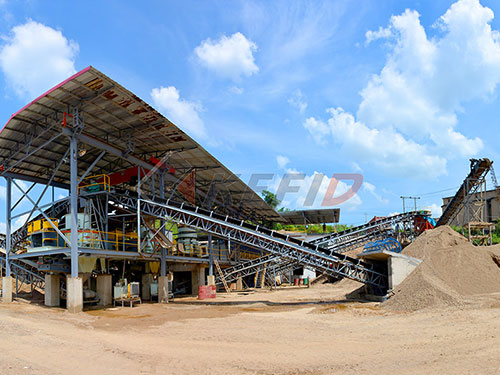
A professional slag crusher plant fabricator must address several critical technical parameters:
3.1. Crusher Selection
- Jaw Crushers: Ideal for primary crushing due to their high capacity and ability to handle large feed sizes. However, they are less efficient for producing fine aggregates.
- Cone Crushers: Suitable for secondary and tertiary crushing of hard, abrasive slag. They offer good particle shape but require a stable feed.
- Impact Crushers (HSI/VSI): Excellent for producing cubical aggregates and breaking down slag with high metallic content. However, wear costs can be high.
- Roll Crushers: Used for fine crushing of brittle slag, often in ferroalloy applications.
3.2. Magnetic Separation Efficiency
Slag often contains 5-15% metallic iron or steel. The fabricator must design a multi-stage magnetic separation system:
- Primary Magnet: Installed over the main discharge conveyor to remove large ferrous pieces.
- Secondary Magnet: Placed after the secondary crusher to recover smaller particles.
- Final Clean-Up: Drum magnets or magnetic pulleys at the final product discharge.
3.3. Dust Control
Slag crushing generates significant dust, particularly from fine aggregates. A responsible fabricator incorporates:
- Water Spray Systems: Suppression nozzles at crusher inlets and transfer points.
- Baghouse Filters: For dry processing, high-efficiency pulse-jet dust collectors.
- Enclosures: Sealing of crushers and screens to contain fugitive emissions.
3.4. Energy Efficiency
Crushing slag is energy-intensive. Modern fabricators design plants with:
- High-Efficiency Motors (IE3/IE4): Reducing power consumption.
- Load Sensing Controls: Automatically adjusting crusher speed based on feed rate.
- Regenerative Conveyors: Capturing energy from downhill conveyors.
4. Quality Assurance and Certification
A reputable slag crusher plant fabricator operates under strict quality management systems. Common certifications include:
- ISO 9001:2015: For quality management in design and manufacturing.
- ISO 14001:2015: For environmental management, particularly relevant for slag processing.
- OHSAS 18001/ISO 45001: For occupational health and safety.
- CE Marking: For plants exported to the European Union, ensuring compliance with safety and performance standards.
5. Economic and Environmental Impact
5.1. Economic Benefits
- Revenue Generation: Processed slag aggregates sell for $10-$30 per ton, depending on quality and local market.
- Metal Recovery: Recovered scrap metal can be sold to steel mills, offsetting plant operating costs.
- Waste Reduction: Eliminates landfill disposal fees, which can be $50-$100 per ton.
5.2. Environmental Benefits
- Resource Conservation: Replaces natural aggregates (sand, gravel) in road construction, concrete, and asphalt.
- Carbon Footprint Reduction: Using slag in cement production reduces CO2 emissions by up to 30% compared to clinker.
- Landfill Diversion: A typical 100 TPH (tons per hour) slag plant can divert over 500,000 tons of waste from landfills annually.
6. Challenges Faced by Slag Crusher Plant Fabricators
Despite the benefits, fabricators face several challenges:
- Material Variability: Slag composition can change daily, requiring flexible plant designs.
- High Wear Costs: Abrasive slag can wear out crusher liners in 200-500 hours, increasing maintenance costs.
- Regulatory Compliance: Stricter environmental norms (e.g., PM2.5 limits) demand advanced dust control.
- Space Constraints: Many slag processing sites are within existing steel plants, limiting footprint.
7. Case Study: A Typical Slag Crusher Plant Layout
To illustrate, consider a 150 TPH steel slag processing plant designed by a leading fabricator:
- Feed: 0-600mm steel slag with 8% moisture.
- Primary Crushing: Jaw crusher (1200x900mm) with a hydraulic gap adjustment.
- Magnetic Separation: Overband magnet (1500mm width) on the primary conveyor.
- Secondary Crushing: Cone crusher (HP300) with a closed side setting of 25mm.
- Screening: Two-deck vibrating screen (2400x6000mm) producing 0-5mm, 5-20mm, and 20-40mm.
- Tertiary Crushing: VSI crusher (Barmac 9100) for shaping the 5-20mm fraction.
- Final Magnetic Separation: Drum magnet at the product discharge.
- Dust Control: Baghouse filter with 10,000 CFM capacity.
- Automation: Siemens PLC with remote monitoring via SCADA.
The plant produces three aggregate sizes and recovers approximately 12 tons of scrap metal per hour. The payback period for such a plant is typically 18-24 months.
8. How to Select a Slag Crusher Plant Fabricator
When choosing a fabricator, clients should evaluate:
- Experience: Number of slag plants delivered and operational references.
- Customization: Willingness to design for specific slag types (e.g., stainless steel slag vs. carbon steel slag).
- After-Sales Service: Availability of local service engineers and spare parts inventory.
- Technology: Use of advanced simulation software (e.g., DEM, FEA) for plant design.
- Cost Transparency: Clear breakdown of equipment, fabrication, installation, and commissioning costs.
Conclusion
A Slag Crusher Plant Fabricator plays a pivotal role in the circular economy of the metallurgical industry. By transforming a problematic waste stream into valuable construction materials and recovered metals, these fabricators enable steel plants and ferroalloy producers to achieve both economic and environmental goals. The design and fabrication of such plants require deep expertise in material science, mechanical engineering, and process automation. As global demand for sustainable construction materials grows, the role of the slag crusher plant fabricator will only become more critical. For any organization looking to monetize its slag waste, partnering with a professional, experienced fabricator is not just an option—it is a strategic necessity.
