Industrial Stone Crusher Plant Factories: Engineering, Operations, and Global Significance
Introduction
The term “Industrial Stone Crusher Plant Factory” refers to a specialized manufacturing facility dedicated to the design, fabrication, assembly, and testing of complete stone crushing and screening systems. These plants are not merely collections of heavy machinery; they are integrated, engineered solutions that transform raw rock—granite, basalt, limestone, river gravel, and recycled concrete—into graded aggregates essential for construction, infrastructure, and mining. The factories that produce these plants are themselves complex industrial operations, requiring advanced metallurgy, precision machining, heavy fabrication, electrical engineering, and rigorous quality assurance. This article provides a comprehensive, professional examination of industrial stone crusher plant factories, covering their core products, manufacturing processes, technological innovations, quality control protocols, market dynamics, and the operational challenges they address.
1. Core Products and System Architecture
An industrial stone crusher plant factory does not simply sell a single crusher; it delivers a complete process line. The typical product portfolio includes:
- Primary Crushers: Jaw crushers and gyratory crushers, designed to handle feed sizes up to 1.5 meters. These machines reduce rock to a manageable size (150–300 mm) using compressive forces.
- Secondary and Tertiary Crushers: Cone crushers, impact crushers (horizontal shaft and vertical shaft), and roll crushers. These further reduce material to 20–60 mm and produce cubical shapes required for asphalt and concrete.
- Screening Equipment: Vibrating screens (inclined, horizontal, and banana-type) that classify crushed material into multiple size fractions (e.g., 0–5 mm, 5–10 mm, 10–20 mm).
- Conveying Systems: Heavy-duty belt conveyors, including radial stackers for stockpiling, with capacities ranging from 100 to 2,000 tons per hour.
- Feeding and Washing Units: Apron feeders, grizzly feeders, and sand washing plants for removing clay, dust, and organic impurities.
- Control Systems: PLC-based automation panels, remote monitoring interfaces, and integrated sensor networks for load monitoring, vibration analysis, and automatic gap adjustment.
Factories often offer both stationary (fixed) and mobile (track-mounted or wheel-mounted) configurations. Mobile plants are increasingly popular for temporary projects, while stationary plants are designed for high-capacity, long-term quarry operations.
2. Manufacturing Processes Inside the Factory
The production of a stone crusher plant is a multi-stage, capital-intensive process. A typical factory layout includes:
a) Engineering and Design (CAD/CAM): Every plant begins with 3D modeling and finite element analysis (FEA). Engineers simulate stress distribution on crusher frames, eccentric shafts, and toggle plates to ensure fatigue life under cyclic loading. Design for manufacturability (DFM) is critical to reduce welding distortion and machining time.
b) Steel Fabrication and Welding: The main frames, bases, and chutes are fabricated from high-strength structural steel (e.g., S355J2 or equivalent). Factories employ CNC plasma cutting, robotic welding cells, and submerged arc welding (SAW) for thick sections. Post-weld heat treatment (stress relieving) is applied to critical components to prevent cracking. Welding quality is verified via ultrasonic and magnetic particle testing.
c) Machining and Precision Components: Crusher shafts, eccentric sleeves, and bearing housings are machined on large horizontal boring mills and CNC lathes. Tolerances are typically within ±0.05 mm for bearing seats. Gear cutting (for cone crushers) and spline milling are performed using dedicated gear hobbing machines.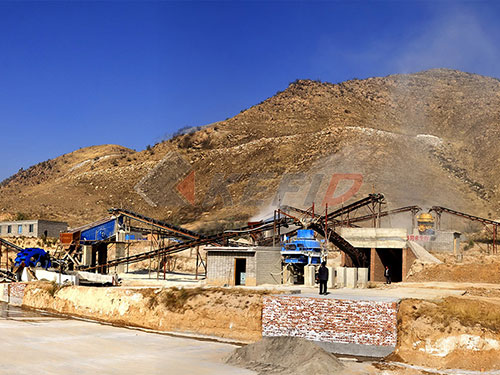
d) Casting and Forging: Many wear parts—such as jaw plates, mantle liners, and blow bars—are produced via high-chrome iron casting or manganese steel casting (Hadfield steel). Factories often operate their own foundries or maintain long-term contracts with specialized foundries. Forged shafts are used for high-stress applications.
e) Assembly and Sub-Assembly: The factory assembles major sub-systems: the crusher main frame with eccentric assembly, the hydraulic adjustment system, the lubrication unit, and the drive motor base. Each sub-assembly is tested independently before final integration.
f) Painting and Surface Treatment: Heavy-duty epoxy primers and polyurethane topcoats are applied to resist abrasion, corrosion, and UV degradation. Zinc-rich primers are used for marine or high-humidity environments.
g) Pre-Delivery Testing (PDT): Before shipment, the complete plant (or major modules) is dry-run tested. This includes no-load operation for 8–24 hours, checking bearing temperatures, vibration levels, oil pressure, and electrical interlocks. Some factories use load banks to simulate motor torque.
3. Technological Innovations and Modernization
The modern industrial stone crusher plant factory has evolved significantly from the simple fabrication shops of the 20th century. Key innovations include:
- Automation and IoT Integration: Modern plants are equipped with smart sensors that monitor crusher liner wear, feed rate, and power draw. Factories now integrate these sensors with cloud-based platforms, allowing quarry operators to receive predictive maintenance alerts. The factory itself uses digital twin technology to simulate plant performance before physical assembly, reducing commissioning time by up to 30%.
- Energy Efficiency: Crushers are now designed with optimized eccentric throw and speed to reduce specific energy consumption (kWh/ton). Factories also manufacture hybrid plants that combine electric drives with diesel backup, reducing carbon footprint.
- Modular and Containerized Design: To reduce on-site civil works, factories now produce pre-engineered modules that fit into standard shipping containers. This allows rapid deployment in remote locations.
- Wear-Resistant Materials: Advanced composite liners, ceramic-embedded blow bars, and bi-metallic wear plates extend service life by 50–100% compared to traditional manganese steel. Factories conduct in-house metallurgical research to develop proprietary alloys.
- Safety Engineering: Modern factories incorporate safety interlocks, emergency stop systems, dust suppression nozzles, and noise enclosures into the plant design. The manufacturing process itself follows ISO 45001 standards.
4. Quality Control and International Standards
Reputable industrial stone crusher plant factories adhere to stringent quality management systems:
- ISO 9001:2015 for quality management, covering design, procurement, production, and after-sales service.
- CE Marking for European markets, requiring compliance with Machinery Directive 2006/42/EC.
- GOST-R or EAC certification for Russian and Eurasian Economic Union markets.
- ASTM and EN standards for material specifications (e.g., ASTM A36 for structural steel, EN 10025 for hot-rolled products).
Quality control is multi-layered:
- Incoming Material Inspection: Chemical analysis via spectrometers and mechanical testing (tensile, hardness, impact) for every heat of steel.
- In-Process Inspection: Dimensional checks using CMM (coordinate measuring machines) for critical machined surfaces. Weld inspection includes dye penetrant and radiographic testing for load-bearing welds.
- Final Functional Testing: Each crusher is tested with a calibrated torque wrench and vibration analyzer. The factory maintains a test bay with a variable-frequency drive (VFD) to simulate different motor speeds.
5. Global Market Dynamics and Leading Manufacturing Regions
The global market for stone crusher plants is driven by urbanization, infrastructure spending, and mining activities. Key manufacturing hubs include:
- China: The largest producer, with factories concentrated in Henan, Shanghai, and Zhejiang provinces. Chinese factories offer a wide range of capacities at competitive prices, but quality varies significantly. Leading brands (e.g., Sandvik-owned units, Metso Outotec joint ventures, and domestic giants like Shibang and Zenith) have modernized facilities with robotic welding and automated assembly lines.
- India: A major exporter to Africa, the Middle East, and Southeast Asia. Indian factories (e.g., Terex Finlay, Puzzolana, and Propel Industries) emphasize cost-effective, robust designs for hard rock applications.
- Europe: German, Italian, and Austrian factories (e.g., Kleemann, SBM, and Rockster) focus on premium quality, high automation, and environmental compliance. They often produce custom-engineered plants for specialized aggregates.
- North America: US and Canadian factories (e.g., KPI-JCI, Cedarapids, and Superior Industries) prioritize safety, durability, and aftermarket support. They often integrate advanced dust collection and noise reduction technologies.
6. Operational Challenges and Factory Solutions
Industrial stone crusher plant factories must address several persistent challenges:
- Wear and Tear: The abrasive nature of rock causes rapid wear on liners, screens, and conveyor belts. Factories respond by offering wear-part replacement programs and designing quick-change systems (e.g., hydraulic toggle adjustment, wedge-lock liners).
- Downtime: Unplanned breakdowns are costly. Factories now provide remote diagnostics via satellite or 4G connectivity, allowing their engineers to troubleshoot from the factory floor.
- Logistics: Shipping a 50-ton crusher frame requires specialized heavy-haul trailers and cranes. Factories design plants in modular sections, each under 40 tons, to simplify transport and on-site assembly.
- Environmental Compliance: Dust and noise are major concerns. Factories now supply water spray systems, enclosed transfer points, and acoustic enclosures as standard options. Some factories offer fully electric plants to eliminate diesel emissions.
7. The Future of Industrial Stone Crusher Plant Factories
Looking ahead, these factories are moving toward:
- Artificial Intelligence (AI): Using machine learning algorithms to optimize crusher settings in real time based on feed material hardness and moisture content.
- Circular Economy: Designing crushers that can process 100% recycled construction and demolition waste, producing high-quality aggregates for new concrete.
- Additive Manufacturing: 3D printing of complex wear parts (e.g., custom-shaped blow bars) to reduce inventory and lead times.
- Carbon-Neutral Manufacturing: Factories themselves are adopting solar power, electric arc furnaces for steel recycling, and hydrogen-based heat treatment processes.
Conclusion
Industrial stone crusher plant factories are the backbone of the global aggregates industry. They are not simple assembly shops but sophisticated engineering enterprises that combine metallurgy, mechanical design, automation, and logistics. From the initial CAD model to the final load test, every stage demands precision and expertise. As global infrastructure continues to expand—particularly in developing nations—the role of these factories becomes ever more critical. Their ability to innovate in materials, energy efficiency, and digitalization will determine not only their own competitiveness but also the sustainability of the construction sector at large. For any stakeholder—from quarry owners to engineering consultants—understanding the inner workings of these factories is essential for making informed procurement decisions and ensuring long-term operational reliability.
