
Title: Quarry Ballast Crushing Equipment ODM Manufacturer Testing: Standards, Processes, and Quality Assurance
Introduction
In the global railway and infrastructure construction industry, ballast—the coarse aggregate layer that supports railway tracks—is a critical component. The quality of ballast directly influences track stability, drainage, and long-term maintenance costs. To produce ballast that meets stringent specifications (e.g., EN 13450, AREMA, or Indian Railway standards), quarry operators rely on specialized crushing equipment. Original Design Manufacturer (ODM) suppliers of such equipment play a pivotal role, as they design, engineer, and manufacture machinery tailored to specific quarry conditions. However, the performance of this equipment must be rigorously tested before deployment. This article provides a comprehensive, objective analysis of the testing protocols, quality benchmarks, and technical considerations for ODM-manufactured quarry ballast crushing equipment.
1. Understanding the Role of ODM in Quarry Ballast Crushing
An ODM manufacturer designs and produces equipment based on a client’s specifications, often incorporating proprietary technologies. Unlike Original Equipment Manufacturers (OEMs) that sell standardized products, ODMs offer customization—adjusting crusher types (jaw, cone, impact, or gyratory), screen configurations, and conveyor systems to match the quarry’s rock type (e.g., granite, basalt, limestone) and desired ballast gradation. Testing is essential to validate that the ODM’s design meets the client’s production capacity, particle shape, and wear resistance requirements.
2. Key Performance Indicators (KPIs) for Ballast Crushing Equipment
Before delving into testing methodologies, it is crucial to define the KPIs that ODM equipment must satisfy:
3. Pre-Installation Testing: Design Validation and Component Inspection
ODM manufacturers conduct extensive pre-installation tests to ensure design integrity:
4. On-Site Performance Testing: The Core of ODM Validation
Once the equipment is installed at the quarry, a series of field tests are conducted. These tests are typically supervised by the ODM’s engineers and third-party inspectors (e.g., SGS, Bureau Veritas) to ensure objectivity.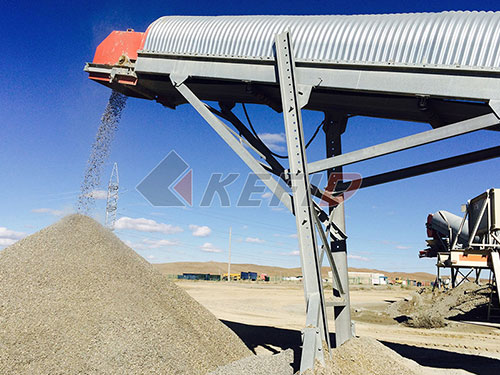
4.1. Load Testing and Capacity Verification
The equipment is operated at 100% rated capacity for a continuous period (e.g., 8 hours). Key measurements include:
4.2. Particle Shape and Gradation Analysis
Ballast samples are collected from the crusher discharge and tested in a laboratory:
4.3. Wear and Maintenance Interval Testing
ODM equipment is often tested over a prolonged period (e.g., 500–1000 operating hours) to assess wear rates:
4.4. Environmental and Safety Compliance
5. Case Study: Testing a Customized Cone Crusher for Basalt Ballast
To illustrate the testing process, consider an ODM manufacturer supplying a 300 t/h cone crusher for a basalt quarry in India. The client required ballast conforming to Indian Railway Specification IRS-GE-1.
6. Common Challenges in ODM Testing and Mitigation Strategies
7. Certification and Documentation
After successful testing, the ODM provides a comprehensive report including:
8. Conclusion
Testing of ODM-manufactured quarry ballast crushing equipment is a multi-stage, rigorous process that ensures the machinery meets the demanding requirements of railway ballast production. From design validation through on-site performance and wear tests, every parameter—capacity, particle shape, durability, and environmental impact—is scrutinized. For quarry operators, partnering with an ODM that offers transparent, third-party-verified testing is essential to minimize operational risks and achieve long-term cost efficiency. As railway networks expand globally, the role of ODM manufacturers in delivering customized, high-performance crushing solutions will only grow, making robust testing protocols a cornerstone of industry trust.
If you have any questions about our products, please feel free to contact us. We take all inquiries and suggestions very seriously.