
Stone Crusher Plant Exporter Price: A Comprehensive Market Analysis and Procurement Guide
The global demand for crushed stone, sand, and gravel—collectively known as aggregates—has been steadily rising, driven by urbanization, infrastructure development, and the expansion of the construction and mining sectors. At the heart of this supply chain lies the stone crusher plant, a complex assembly of machinery designed to reduce large rocks into smaller, usable sizes. For buyers looking to import such equipment, understanding the exporter price is critical. This article provides a detailed, professional, and objective analysis of stone crusher plant exporter prices, covering the factors that influence pricing, typical price ranges for different plant types, regional variations, and strategic considerations for procurement.
1. Understanding the Stone Crusher Plant
A stone crusher plant is not a single machine but a complete system that typically includes a feeder, primary crusher (e.g., jaw crusher), secondary crusher (e.g., cone crusher or impact crusher), vibrating screens, conveyors, and sometimes washing units. The plant can be stationary, skid-mounted, or mobile (track-mounted or wheeled). The choice of configuration directly impacts the exporter price.
2. Key Factors Influencing Exporter Price
The price quoted by an exporter is not arbitrary. It is determined by a combination of technical, economic, and logistical factors. Understanding these helps buyers evaluate quotes and negotiate effectively.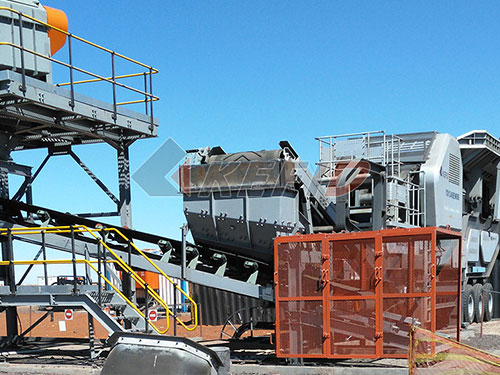
2.1. Capacity and Throughput
The most significant price driver is the plant’s capacity, measured in tons per hour (TPH). A small plant (e.g., 30–50 TPH) may cost between $50,000 and $150,000, while a large-scale plant (e.g., 500–1000 TPH) can range from $500,000 to over $3 million. Higher capacity requires larger crushers, more robust frames, and more powerful motors, all of which increase material and manufacturing costs.
2.2. Crusher Type and Configuration
The type of crusher used in the primary, secondary, and tertiary stages heavily influences price:
2.3. Automation and Control Systems
Modern plants often feature PLC-based automation, remote monitoring, and integrated control panels. These systems improve efficiency, reduce downtime, and enhance safety but add 10–20% to the base price. Basic manual plants are cheaper but require more operator intervention.
2.4. Material Quality and Components
Exporters use different grades of steel, bearings, motors, and wear parts. Plants with European or Japanese motors, high-chrome wear parts, and heavy-duty frames command a premium. Cheaper plants may use lower-grade components, leading to higher maintenance costs and shorter lifespan.
2.5. Mobility and Chassis
Mobile plants include a tracked or wheeled chassis, hydraulic legs, and often a diesel engine for self-propulsion. This adds $100,000 to $500,000 to the price compared to a stationary equivalent. The cost of the chassis itself, including tracks, travel motors, and control systems, is substantial.
2.6. Brand and Origin
Exporter prices vary by country of manufacture:
2.7. Shipping, Insurance, and Customs
The exporter price is usually quoted as FOB (Free on Board) or CIF (Cost, Insurance, Freight). FOB prices exclude shipping and insurance, while CIF includes them. For a typical 200 TPH plant, shipping from China to Africa or South America can add $20,000–$80,000. Customs duties, taxes, and inland transport further increase the total landed cost.
2.8. After-Sales Support and Warranty
Exporters offering comprehensive warranties (e.g., 2 years), spare parts packages, and on-site commissioning services will charge higher prices. A basic warranty (e.g., 6 months) is standard for low-cost exporters.
3. Typical Price Ranges by Plant Type
The following are approximate exporter prices (FOB, in USD) for new stone crusher plants as of 2025. These are indicative and subject to negotiation, market conditions, and customization.
| Plant Type | Capacity (TPH) | Price Range (USD) | Typical Exporter Origin |
|---|---|---|---|
| Small Stationary | 30–50 | $50,000 – $150,000 | China, India |
| Medium Stationary | 100–200 | $150,000 – $400,000 | China, India, Turkey |
| Large Stationary | 300–500 | $400,000 – $1,200,000 | China, Europe |
| Very Large Stationary | 600–1000 | $1,200,000 – $3,000,000 | Europe, China |
| Mobile (Tracked) | 100–200 | $250,000 – $600,000 | China, Turkey, Europe |
| Mobile (Tracked) | 300–500 | $600,000 – $1,500,000 | Europe, China |
| Semi-Mobile (Skid) | 100–300 | $200,000 – $500,000 | India, China |
4. Regional Market Dynamics and Price Variations
4.1. China
China is the world’s largest exporter of stone crusher plants, accounting for over 60% of global exports. Prices are highly competitive due to economies of scale, abundant raw materials, and lower labor costs. However, quality varies widely. Reputable Chinese exporters (e.g., SBM, Liming Heavy Industry) offer reliable machines, while smaller factories may produce substandard equipment. Buyers should request third-party inspections and references.
4.2. India
India has a robust crushing equipment industry, with exporters like Puzzolana, Terex India, and Propel. Prices are 10–20% higher than Chinese equivalents but often include better documentation, English-speaking support, and adherence to international standards (e.g., ISO, CE). Indian plants are popular in Africa, the Middle East, and South Asia.
4.3. Europe
European exporters (Metso Outotec, Sandvik, Kleemann) focus on high-end, durable, and technologically advanced plants. Prices are premium, but the total cost of ownership (TCO) can be lower due to higher efficiency, lower fuel consumption, and longer component life. These plants are preferred for large-scale, long-term projects in developed markets.
4.4. Turkey
Turkey has emerged as a significant exporter, especially for mobile and semi-mobile plants. Turkish manufacturers (e.g., FABO, MEKA, Constmach) offer good quality at prices between Chinese and European levels. They are particularly competitive in the Middle East, North Africa, and Eastern Europe.
5. Hidden Costs and Total Cost of Ownership (TCO)
The exporter price is only the beginning. Buyers must consider:
A plant with a lower exporter price may have higher TCO if it requires frequent repairs, consumes more fuel, or has poor after-sales support.
6. Procurement Strategy for Buyers
To secure the best exporter price, buyers should:
7. Conclusion
The exporter price of a stone crusher plant is a multifaceted figure, influenced by capacity, technology, origin, and market conditions. While Chinese and Indian exporters offer the most competitive upfront prices, European and Turkish manufacturers provide higher quality and lower long-term costs. Buyers must look beyond the initial quote and assess the total cost of ownership, including shipping, installation, spare parts, and maintenance. By conducting thorough research, obtaining multiple quotes, and engaging in careful negotiation, importers can secure a stone crusher plant that meets their production needs and budget constraints. As the global aggregates market continues to grow, understanding these pricing dynamics will remain essential for successful procurement.
If you have any questions about our products, please feel free to contact us. We take all inquiries and suggestions very seriously.