Bespoke Quarry Ballast Crushing Equipment Maker: Engineering Precision for the Backbone of Global Infrastructure
In the vast and demanding world of mineral processing, few applications are as unforgiving as the production of railway ballast. This angular, durable, and precisely graded aggregate forms the literal foundation of the world’s rail networks, bearing immense static and dynamic loads while facilitating drainage and track stability. The machinery required to produce this critical material is not generic; it must be engineered to withstand extreme wear, deliver consistent product geometry, and operate with high throughput under punishing conditions. This is the domain of the Bespoke Quarry Ballast Crushing Equipment Maker—a specialized niche within the heavy engineering sector that combines metallurgical science, mechanical design, and deep process knowledge to create custom solutions for quarry operators worldwide.
Defining the Niche: What Makes Ballast Crushing Unique?
Unlike general construction aggregates, railway ballast has stringent specifications defined by international standards (e.g., AREMA in North America, EN 13450 in Europe, or AS 2758.7 in Australia). The key requirements include:
- Particle Shape: Ballast must be cubical, with a high percentage of fractured faces. Flaky or elongated particles are unacceptable as they pack poorly and degrade under load.
- Size Gradation: Typically, ballast ranges from 20 mm to 63 mm, with very few fines. Oversize and undersize fractions must be minimized.
- Durability: The rock must resist abrasion (Los Angeles Abrasion test) and weathering (Magnesium Sulphate Soundness test). The crushing process must not induce micro-fractures that weaken the stone.
- Cleanliness: The product must be virtually free of dust and clay coatings to ensure proper drainage and interlock.
Standard off-the-shelf crushers—such as generic jaw crushers, cone crushers, or impactors—are often ill-suited for this task. They may produce excessive fines, generate poor particle shape, or wear out prematurely when processing hard, abrasive rock like granite, basalt, or quartzite. A bespoke equipment maker addresses these challenges through tailored design, material selection, and system integration.
Core Technologies in Bespoke Ballast Crushing Systems
A dedicated ballast crushing plant is typically a multi-stage process, and a bespoke maker will customize each stage to the specific rock type, feed size, and desired output.
1. Primary Crushing: The Jaw Crusher with a Purpose
The primary crusher reduces run-of-quarry rock (often up to 1 meter in diameter) to a manageable size (150–250 mm). A bespoke maker does not simply supply a standard jaw crusher. Instead, they engineer the machine with:
- Custom Chamber Geometry: The crushing chamber profile is optimized for the specific feed material’s fracture characteristics. For highly abrasive rock, a deep, steep chamber with a large feed opening reduces bridging and minimizes recirculating loads.
- Wear Part Metallurgy: Standard manganese steel (12-14% Mn) may be replaced with high-chromium iron or bi-metallic alloys for extreme abrasion resistance. The maker may also design interchangeable jaw plates with different tooth profiles (e.g., corrugated, smooth, or chevron) to control product shape and throughput.
- Hydraulic Adjustment: To maintain consistent product size as jaw plates wear, bespoke systems often include automated hydraulic wedge or toggle plate adjustment, reducing downtime for manual shimming.
2. Secondary and Tertiary Crushing: The Cone Crusher Revolution
For ballast, the secondary and tertiary stages are where the magic happens. The cone crusher is the workhorse, but a bespoke maker will modify it extensively:
- Eccentric Throw and Stroke: The eccentric throw (the distance the mantle gyrates) is critical for particle shape. A shorter throw with a higher stroke frequency produces more cubical particles. Bespoke machines allow for field-adjustable eccentric assemblies, enabling the operator to fine-tune the machine for different rock types.
- Chamber Design (CSS Profile): The crushing chamber is not a simple cone. Bespoke makers use computational fluid dynamics (CFD) and discrete element modeling (DEM) to design chambers with multiple zones: a feed zone for gripping, a crushing zone for size reduction, and a parallel zone for shaping. The parallel zone length is extended specifically for ballast to ensure that particles are repeatedly compressed and sheared into cubical shapes.
- Dust Seal and Lubrication: Ballast production generates fine dust that can destroy standard seals. Bespoke systems incorporate labyrinth seals, pressurized air curtains, and oil recirculation systems with high-capacity filters to protect bearings and bushings.
3. Impact Crushers for Specific Applications
In some quarries, especially those processing limestone or softer sedimentary rock, horizontal shaft impactors (HSI) or vertical shaft impactors (VSI) are used. A bespoke maker may design:
- Adjustable Apron Settings: To control the reduction ratio and minimize fines, the aprons (breaker plates) are designed with multiple adjustment points and wear-resistant liners.
- Rotor Design: The rotor’s weight, diameter, and hammer configuration are tailored to the feed size. For ballast, a heavy-duty rotor with a high moment of inertia ensures consistent impact energy, reducing the risk of producing flat or elongated particles.
- Wear Parts: Hammers and blow bars are often cast from high-chrome alloys or ceramic composites, and the maker designs them for easy replacement without removing the entire rotor.
4. Screening and Classification: The Unsung Hero
No ballast plant is complete without a high-performance screening system. Bespoke makers design vibrating screens with:
- Deck Configurations: Multi-deck screens (typically 2 or 3 decks) separate ballast into multiple fractions (e.g., 20–40 mm, 40–63 mm). The screen media—woven wire mesh, polyurethane panels, or rubber mats—is selected based on the material’s abrasiveness and moisture content.
- Vibration Mechanism: Linear or circular motion is chosen based on the desired stratification. For ballast, a high-frequency, low-amplitude vibration is often used to prevent blinding (clogging of screen apertures) while maintaining sharp separation.
- Washing Systems: If the rock contains clay or fines, bespoke makers integrate spray bars or trommel scrubbers to clean the ballast before final screening.
Material Science and Wear Management
The economic viability of a ballast quarry hinges on equipment uptime and wear part life. A bespoke maker invests heavily in metallurgical research. For example:
- Manganese Steel Work Hardening: Standard Hadfield manganese steel work-hardens under impact but can be insufficient for high-stress applications. Bespoke makers may develop proprietary alloys with higher carbon content (1.2–1.4%) or add chromium, molybdenum, or vanadium to enhance hardness without sacrificing toughness.
- Ceramic Inserts: For extreme wear zones (e.g., the lower chamber of a cone crusher), ceramic inserts (alumina or zirconia) are embedded into the manganese steel. This composite material can extend wear life by 200–300% compared to standard steel.
- Wear Monitoring Systems: Bespoke equipment often includes sensors (e.g., ultrasonic thickness gauges, load cells) that monitor wear in real time. This data is fed into a predictive maintenance system, allowing the quarry to schedule liner changes during planned downtime rather than during catastrophic failure.
System Integration and Automation
A bespoke ballast crushing plant is not a collection of standalone machines; it is a synchronized system. The maker provides:
- PLC-Based Control: Programmable logic controllers (PLCs) manage the entire process, from feed rate (via variable frequency drives on feeders) to crusher power draw and screen load. The system automatically adjusts crusher settings to maintain product quality even as feed conditions change.
- Recirculation Loops: Oversize material from screens is returned to the tertiary crusher via conveyors. Bespoke makers design these loops with surge bins and belt scales to prevent overloading the crusher.
- Dust Suppression: Ballast plants generate significant dust. Bespoke systems integrate water spray nozzles at transfer points, crusher inlets, and screen decks. For dry operations, baghouse filters or wet scrubbers are custom-sized to meet local environmental regulations.
Case Study: A Bespoke Solution for a Hard Rock Quarry
Consider a hypothetical quarry in Norway processing gneiss (a hard, abrasive metamorphic rock) for European rail ballast. A standard cone crusher might produce 30% flaky particles and require liner replacement every 200 hours. A bespoke maker would:
- Analyze the Rock: Conduct petrographic analysis and Bond Work Index tests to determine fracture behavior.
- Design a Two-Stage Cone Circuit: Use a heavy-duty secondary cone with a 1.8-meter head diameter and a tertiary cone with a 1.2-meter head, both with extended parallel zones.
- Select Wear Materials: Specify a proprietary manganese alloy with 18% Mn and 2% Cr for the secondary crusher, and a ceramic composite for the tertiary crusher’s lower chamber.
- Optimize Screening: Install a triple-deck banana screen with polyurethane panels to handle the high fines content.
- Automate: Implement a control system that monitors crusher power and adjusts the closed side setting (CSS) every 30 seconds to maintain a consistent product gradation.
The result: A plant producing 500 tonnes per hour of ballast with less than 5% flaky particles, liner life exceeding 800 hours, and 95% uptime.
The Business Case for Bespoke Equipment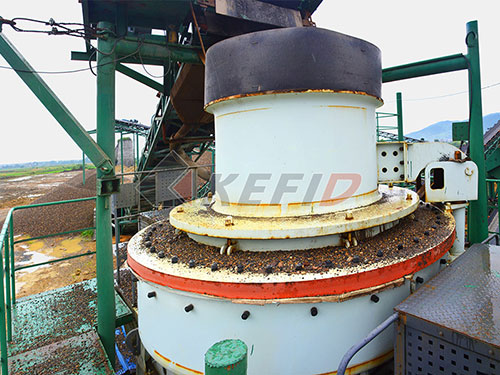
Why would a quarry operator choose a bespoke maker over a global OEM like Metso, Sandvik, or Terex? The answer lies in total cost of ownership (TCO). While bespoke equipment may have a higher initial capital cost (10–20% more), it offers:
- Higher Throughput: Tailored chamber designs can increase production by 15–25% for the same installed power.
- Lower Operating Costs: Extended wear life reduces consumable costs and downtime for liner changes.
- Better Product Quality: Consistent particle shape and gradation command a premium price in the ballast market.
- Local Support: Many bespoke makers are regional specialists who understand local rock types, regulations, and logistics, offering faster service and spare parts availability.
Challenges and Future Trends
The bespoke ballast crushing equipment market faces several challenges:
- Customization Complexity: Each plant is unique, requiring extensive engineering and prototyping. Lead times can be 12–18 months.
- Skilled Labor Shortage: Designing and building these machines requires experienced metallurgists, mechanical engineers, and field service technicians.
- Sustainability Pressure: Quarries are under increasing scrutiny to reduce energy consumption and carbon emissions. Bespoke makers are responding with electric-drive systems (eliminating diesel), regenerative braking on conveyors, and energy-efficient crusher designs.
Future trends include the integration of artificial intelligence (AI) for predictive maintenance, the use of 3D printing for rapid prototyping of wear parts, and the development of mobile or semi-mobile bespoke plants that can be relocated to new quarry sites.
Conclusion
The Bespoke Quarry Ballast Crushing Equipment Maker is far more than a fabricator of heavy machinery. They are a partner in the quarry’s success, combining deep geological knowledge, advanced metallurgy, and precision engineering to solve one of the most demanding challenges in the aggregates industry. In a world where rail infrastructure is expanding—from high-speed trains in Europe and Asia to heavy-haul freight lines in Australia and the Americas—the demand for high-quality ballast will only grow. Those who invest in bespoke, purpose-built crushing equipment will not only meet these demands but will do so with greater efficiency, lower costs, and a smaller environmental footprint. The art and science of making ballast is, in the hands of a skilled bespoke maker, a testament to human ingenuity in the service of global connectivity.
