
Quarry Ballast Crushing Equipment Manufacturing Datasheet: A Comprehensive Technical Overview
Introduction
In the global railway infrastructure and construction industries, ballast—typically composed of crushed granite, basalt, or other hard, angular stone—plays a critical role in providing stability, drainage, and load distribution for rail tracks. The production of high-quality ballast demands specialized crushing equipment capable of delivering consistent particle size, shape, and durability. This datasheet provides an in-depth technical analysis of the manufacturing specifications, design parameters, operational principles, and quality control measures for quarry ballast crushing equipment. The document is intended for engineers, procurement specialists, quarry operators, and equipment manufacturers seeking a rigorous understanding of the machinery required for ballast production.
1. Equipment Classification and Core Components
Quarry ballast crushing equipment is typically part of a multi-stage crushing circuit. The primary machinery includes jaw crushers, cone crushers, impact crushers, and vibrating screens. Each component is engineered to meet the specific demands of ballast production, which requires a nominal particle size range of 25 mm to 50 mm (1 to 2 inches) with a high proportion of cubical shapes and minimal flakiness.
1.1 Primary Crushers: Jaw Crushers
Jaw crushers are the first stage in ballast crushing. They are designed to handle large, run-of-quarry rocks (up to 1,200 mm in diameter) and reduce them to a manageable size (150–300 mm). Manufacturing specifications for jaw crushers used in ballast production include:
1.2 Secondary Crushers: Cone Crushers
Cone crushers are the workhorses for secondary and tertiary crushing in ballast plants. They produce a more cubical product than jaw crushers and are essential for achieving the required particle shape. Key manufacturing parameters include:
1.3 Tertiary Crushers: Vertical Shaft Impact (VSI) Crushers
For premium ballast requiring superior cubicity and low flakiness index, VSI crushers are employed. They utilize a high-speed rotor (40–80 m/s tip speed) to accelerate material against anvils or a rock-lined chamber. Manufacturing specifications include:
2. Design and Engineering Standards
All ballast crushing equipment must comply with international standards for safety, performance, and durability. The following design principles are integral to manufacturing:
2.1 Structural Integrity
Frames and main shafts are designed using finite element analysis (FEA) to withstand cyclic loading, impact forces, and torsional stresses. Steel grades such as S355J2 or equivalent are used for welded structures, with stress-relief heat treatment applied to eliminate residual stresses.
2.2 Wear Life Optimization
Wear parts are engineered for extended service life. For example, jaw crusher liners are designed with a tooth profile that maximizes crushing efficiency while minimizing wear. Cone crusher liners are manufactured with a stepped or curved profile to ensure uniform wear and consistent product gradation. Manufacturers often provide wear life guarantees of 8,000–12,000 operating hours for manganese liners under normal conditions.
2.3 Automation and Control
Modern ballast crushing equipment is equipped with programmable logic controllers (PLCs) and human-machine interfaces (HMIs) for remote monitoring and adjustment. Key features include:
3. Manufacturing Process and Quality Control
The production of ballast crushing equipment involves precision machining, welding, assembly, and rigorous testing. The following steps are standard in reputable manufacturing facilities:
3.1 Material Procurement and Inspection
All raw materials—steel plates, castings, bearings, and motors—are sourced from certified suppliers. Incoming inspection includes chemical analysis, ultrasonic testing for internal defects, and dimensional verification.
3.2 Machining and Fabrication
Critical components such as eccentric shafts, main frames, and crushing chambers are machined on CNC lathes and boring mills to tolerances of ±0.05 mm. Welding is performed by certified welders using gas-shielded arc processes, followed by non-destructive testing (NDT) such as magnetic particle inspection (MPI) and radiographic testing (RT).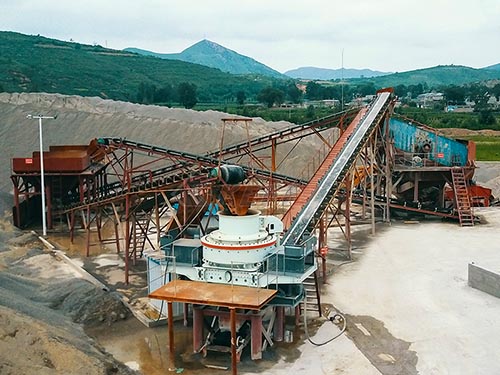
3.3 Assembly and Run-In
Each crusher is assembled in a controlled environment. Bearings are pre-loaded and lubricated, and all hydraulic and electrical systems are tested for leaks and functionality. A run-in test is conducted for 4–8 hours at 50% load to ensure proper seating of wear parts and alignment.
3.4 Performance Testing
Before shipment, each unit undergoes a full-load performance test using a standardized feed material (e.g., granite with a compressive strength of 200–250 MPa). Key metrics measured include:
4. Application-Specific Considerations for Ballast Production
Ballast crushing equipment must be tailored to the specific geological and operational conditions of the quarry. The following factors influence equipment selection and manufacturing:
4.1 Rock Hardness and Abrasiveness
For hard, abrasive rocks (e.g., quartzite, basalt), cone crushers with high-chrome liners and VSI crushers with ceramic wear parts are recommended. For softer rocks (e.g., limestone), impact crushers may suffice but require careful control of fines generation.
4.2 Moisture Content
Wet or sticky materials can cause clogging in screens and crushers. Equipment manufacturers often incorporate heated screen decks, rubber liners, and hydraulic clearing systems to mitigate these issues.
4.3 Mobility and Site Constraints
For temporary or remote quarry operations, mobile crushing plants (track-mounted or wheeled) are available. These units integrate jaw or cone crushers with screens and conveyors on a single chassis, reducing installation time and civil works.
5. Maintenance and Lifecycle Management
To ensure maximum uptime and return on investment, manufacturers provide detailed maintenance schedules and spare parts support. Key recommendations include:
6. Environmental and Safety Compliance
Ballast crushing equipment must meet stringent environmental regulations regarding dust, noise, and emissions. Manufacturers incorporate:
7. Conclusion
The manufacturing of quarry ballast crushing equipment is a highly specialized field that demands expertise in metallurgy, mechanical design, and process engineering. From primary jaw crushers to tertiary VSI crushers, each machine must be precisely engineered to produce a consistent, cubical product that meets railway standards. By adhering to rigorous manufacturing protocols, employing advanced materials, and integrating automation, equipment manufacturers can deliver reliable, high-performance solutions that optimize ballast production efficiency and longevity. This datasheet serves as a technical reference for stakeholders seeking to specify, procure, or maintain such equipment in demanding quarry environments.
References
If you have any questions about our products, please feel free to contact us. We take all inquiries and suggestions very seriously.